We Held Our Breath at the Checkout. He Said Okay.
A tense Target trip over duplicate toys became a reflection on clear limits, disappointment, preparation and the deep breath I noticed at Kohl’s.
The Parenting Playbook — Part 8: The Supermarket Meltdown That Didn’t Happen
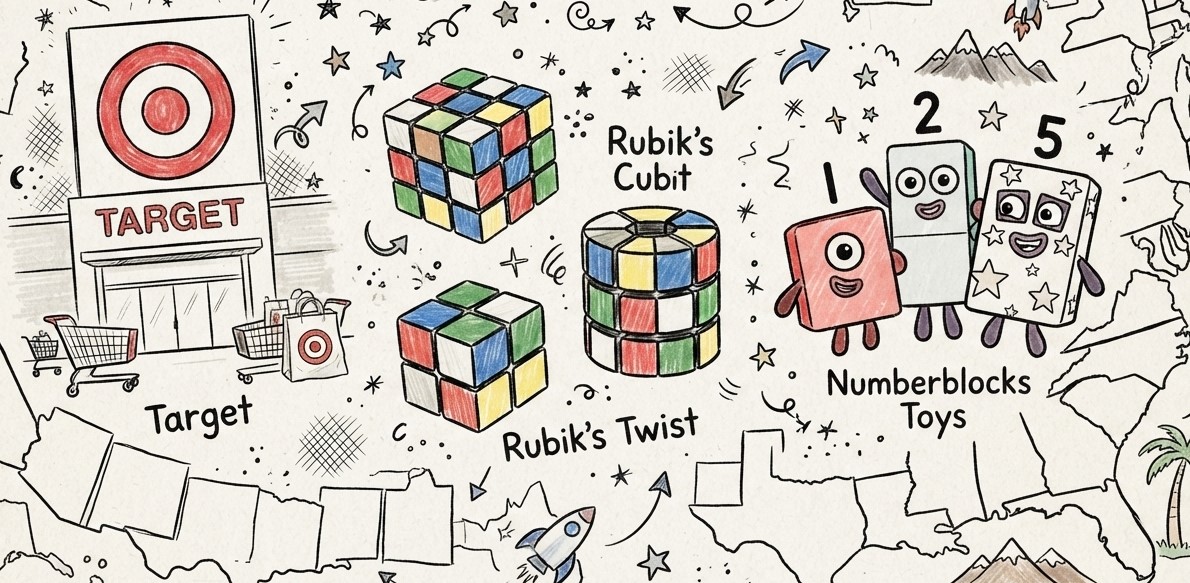
Our son woke up one Sunday and wanted to go to Target. We live in Canada. A small geographical complication.
So my husband, whose only day off was Sunday, drove us to Target in Plattsburgh. Our six-year-old wanted Rubik’s cubes and Numberblocks toys. We went looking. The Numberblocks selection consisted of things he already had. The One and Two tandem bike set he wanted was not there. The Rubik’s cubes were not much more helpful. There was only one kind he did not already own. The others were familiar members of his collection.
He wanted the duplicates anyway. We said no. He said “NO.” Louder. Several times. He did not want us browsing other aisles. He wanted those toys, and the fact that the same toys were already at home was not doing much to improve our argument.
My husband and I recognised the signs of a difficult situation developing. We were tired, and we had reached an unspoken agreement: we were not buying another ordinary 3×3 cube after already saying we would not. We put the toys back on the shelf. He put them back in the trolley. We put them back. He returned them. Eventually, we let them remain in the trolley, although our answer had not changed, and we made it clear to him. Excellent. The disagreement now had wheels.
Then we reached the checkout
My husband asked whether we were taking the duplicate. I answered before my son did. “No, he is a reasonable boy. We said we are not taking duplicates of toys he already has. It becomes moo.”
Moo is something I say when something loses its point. Another copy of the same toy, when we are looking for something different to add to a collection? Moo.
We removed the duplicates at checkout. And waited. My husband and I were holding our breath for the scream we thought might arrive any second. It did not.
Our son looked disappointed. We told him we understood that he had not found what he wanted. We still had some time; we could look elsewhere and see whether another shop had something different. But we were not buying the same things again. He agreed. Not enthusiastically. No declaration that he now appreciated our household’s approach to spending. A sad okay. We both exhaled.
Later, we found an Impossible Cube elsewhere in the same mall. We also came across another Numberblocks toy at Kohl’s. “I don’t have these, do I?” he asked. I told him he did. Was I sure? Why couldn’t he have another? We went through the reasoning again. We were looking for something he did not already have, rather than spending money on another copy. I saw him take a deep breath before putting the box back on the shelf. That was the moment I kept thinking about afterward.
We went shopping with different expectations
Before presenting this as a successful demonstration of parenting, a few details belong in the story. We had not sat down before leaving and agreed on what we would buy. He wanted to go to Target for cubes and Numberblocks. That was essentially the plan. I mentioned duplicates in the car, and we often talk about why buying the same things again feels pointless to us. But we had not properly discussed what would happen if the specific toys were unavailable.
I cannot tell you exactly what he expected. I can say that he wanted particular things and arrived to find that the shelves did not match those wishes. My son is autistic. Guidance on supporting autistic children through change recommends preparation and help with unexpected situations. That does not explain every reaction he has, but it gives me something useful to consider: had we helped him prepare for the possibility of leaving without the toy he imagined finding? Guidance on coping with change
There was another detail. He had not eaten before shopping. We fed him a big pretzel afterward, then had lunch. So, yes. The adults had organised an international toy-shopping expedition without first feeding the child. Perhaps the preparation section requires some work.
Hunger can make frustration harder to manage. Seattle Children’s identifies hunger, tiredness and feeling overwhelmed among the circumstances that can contribute to outbursts. I cannot know how much hunger affected this particular trip, but it belongs in the account. Seattle Children’s guidance
His behaviour was something to respond to. Our planning was something to examine too.
How does this compare with permissive parenting?
The American Psychological Association describes authoritative parenting as combining responsiveness with firm limits. Permissive parenting involves warmth with less consistent limit-setting and fewer expectations. These describe broader patterns, rather than a family’s entire philosophy being revealed by one checkout. APA guide to parenting styles
In our situation, we kept the purchasing limit while acknowledging his disappointment and offering an alternative we could manage. A possible permissive pattern would have been repeatedly abandoning that limit mainly because we wanted to avoid the reaction, without reconsidering the underlying arrangement later.
But buying a duplicate once would not automatically establish permissive parenting. Families buy duplicates for different reasons. A replacement, an item kept somewhere else, a particular way a child plays—there can be a purpose. Our son did not owe us agreement that all duplicates everywhere are moo. This was our decision about these purchases.
Here is the distinction I find useful:
| Part of the trip | What we did | What a permissive pattern might look like | What I would reconsider |
|---|---|---|---|
| The toys he wanted were unavailable. | We explained that we would not buy copies of things he already owned. | Repeatedly dropping a reasonable limit because disappointment is difficult to face. | Prepare him beforehand for unavailable stock and possible alternatives. |
| He protested and kept returning toys to the trolley. | We repeated the answer, then temporarily left the toys there. | Letting the repeated request determine the purchase whenever resistance continues. | Make it clearer that a toy remaining in the trolley does not mean it is being bought—or avoid that ambiguity altogether. |
| We reached checkout. | We removed the duplicates and maintained the decision. | Buying them primarily to prevent a public scene, as a recurring response. | Address the decision clearly before the pressure of checkout. |
| He was disappointed. | We acknowledged it and offered to look elsewhere. | Treating every disappointment as something that must immediately be removed with a purchase. | Keep alternatives realistic, without promising we will definitely find something. |
| He asked again at Kohl’s. | We answered his questions and repeated our reasoning. | Avoiding any explanation or follow-through because another conversation feels inconvenient. | Remember that another question can be a request for clarification, not automatically an attempt to defeat us. |
The authoritative element was not that we managed to prevent a scream. It was that we maintained a limit, stayed in the conversation and gave him another possible way forward.
Was finding another cube giving in?
We offered to look elsewhere because he had wanted something different for his collection, and we still had time. Finding an alternative fitted that aim. It did not require buying the duplicates we had declined.
That does not mean every no needs a consolation purchase. There will be trips when we cannot keep searching, when the budget does not stretch, or when nothing suitable is available. The promise we could reasonably make was that we would look. We could not promise what another shelf would contain. Target had already demonstrated the limits of our influence over retail inventory.
The Impossible Cube seemed to help his mood. We asked him whether it had. But it came after he had already accepted the checkout decision. I do not want to rewrite the sequence so that his okay only counts because another toy appeared later.
About my “reasonable boy”
I meant that I trusted him to understand. But looking back, I can see something worth adjusting in my wording. “He is a reasonable boy” puts his identity into the conversation. What if he had cried? Would that have made him unreasonable? What if he understood our answer and still found the disappointment too much?
I would rather describe the decision and the difficulty: “We’re not buying duplicates. I know you’re disappointed. We can look elsewhere for something different.”
That keeps the expectation without making his status as a good or reasonable child depend on his response. After everything I have written in this series about being a “good girl,” that is something I want to notice in my own language too. Not another reason to declare myself a terrible mother. Something I can say differently next time.
I was proud. I was also relieved.
We told him we were proud. Honestly, I was immensely relieved that the checkout had not become the scene we were bracing for. Both things are true.
But the part I want to recognise is more specific than “you did not scream.” At Kohl’s, he asked questions. He checked whether I was sure. He wanted to understand why he could not have another. Then I saw him take a breath and return the box. That was an effort I could actually observe.
I cannot know everything he was feeling. I can say that he remained disappointed and found a way to go along with a decision he did not like. A child does not need to look cheerful for that to matter. Nor would crying have erased the effort.
The title of this planned article was “The Supermarket Meltdown.” We ended up in a department store, preparing for an outburst that never arrived. I cannot tell you whether the distress we anticipated would have become a tantrum, an autistic meltdown or something else. I can tell you what happened instead: he protested, we repeated ourselves, we offered an alternative, and he said okay. Later, he took a breath and put a box back.
What I would take into the next trip
Food first. Apparently, I too benefit from a clear instruction.
Then a more specific conversation before we leave: what we are looking for, what we are willing to spend, and what we can do if the shop does not have it. I also want to avoid letting a disputed item travel all the way to checkout while expecting him to understand that nothing about its position in the trolley changes our answer.
And I want to remember that my husband’s day off, our effort to make the trip, and our tiredness matter—but they do not make a six-year-old responsible for giving us a perfectly appreciative outing. He was disappointed. We had limits. We all needed to get through the shop.
For me, the useful question is whether we helped him manage that disappointment while making our decision clear. I think there were parts we managed well. There were parts to improve.
But that deep breath?
I noticed.
About this series: The Parenting Playbook explores parenting philosophies through lived experience and research. This is one family outing, not proof that a parenting style guarantees cooperation. A purchasing limit can coexist with empathy, and a child’s distress deserves attention whether or not the answer changes. Explore all articles in The Parenting Playbook →