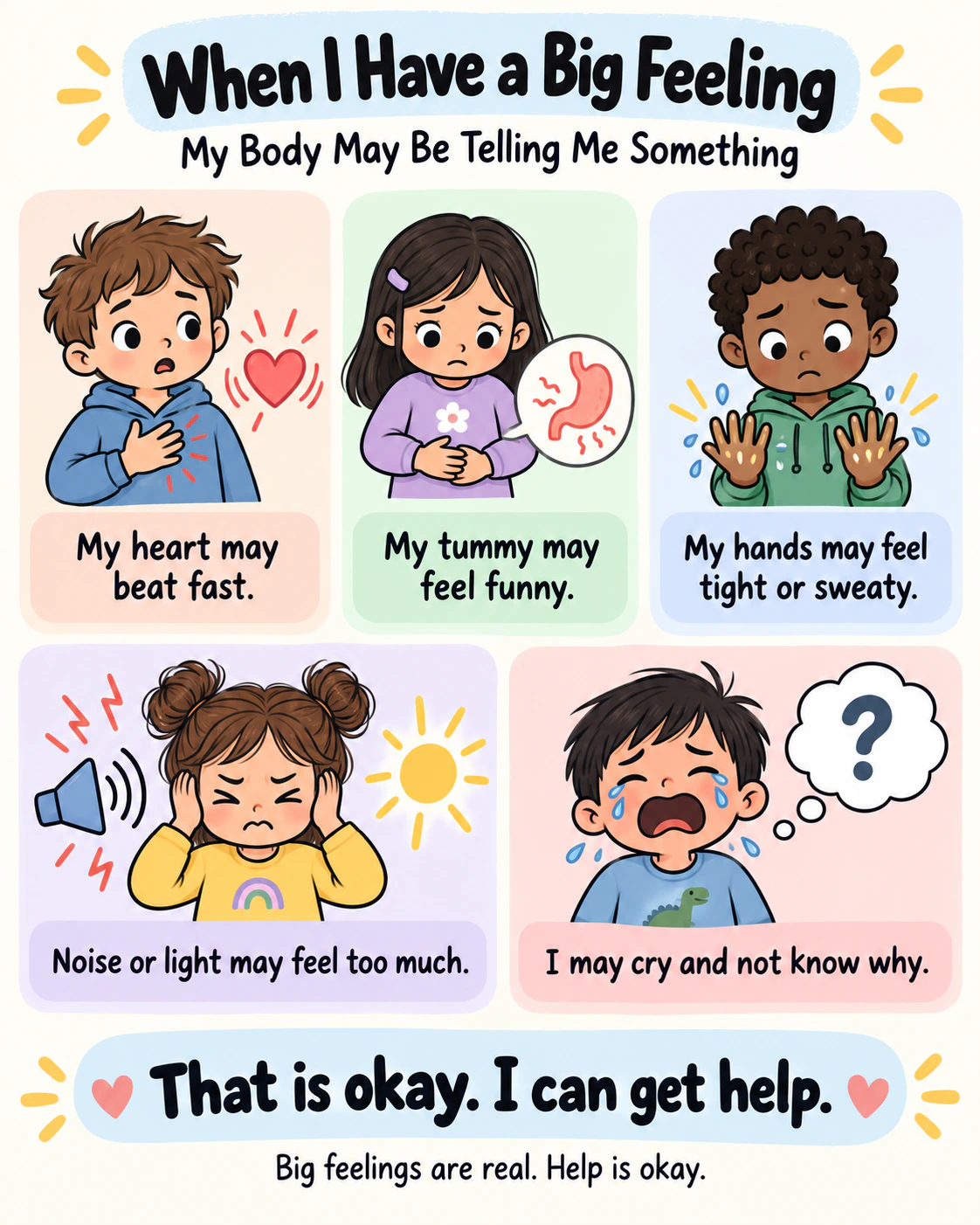
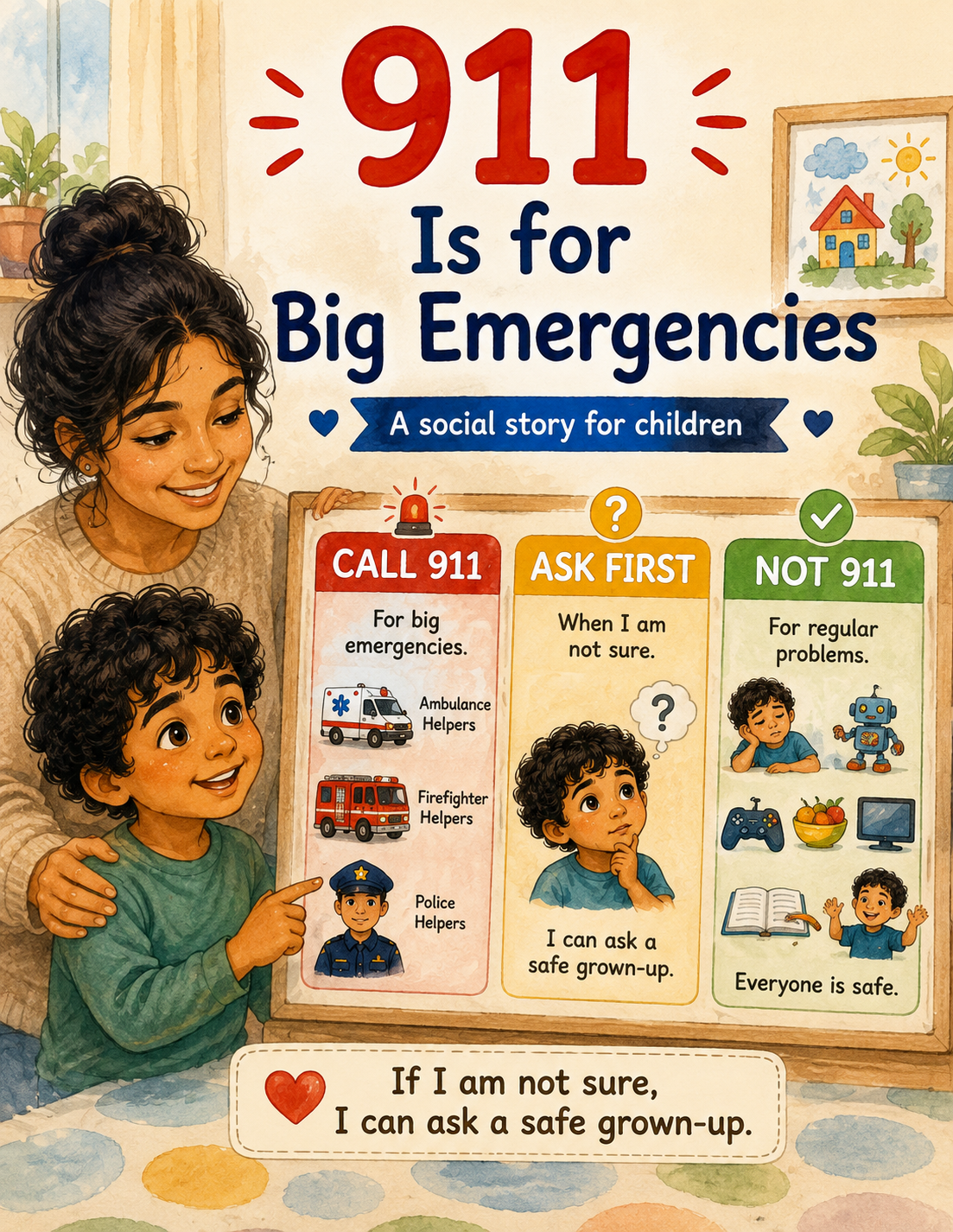
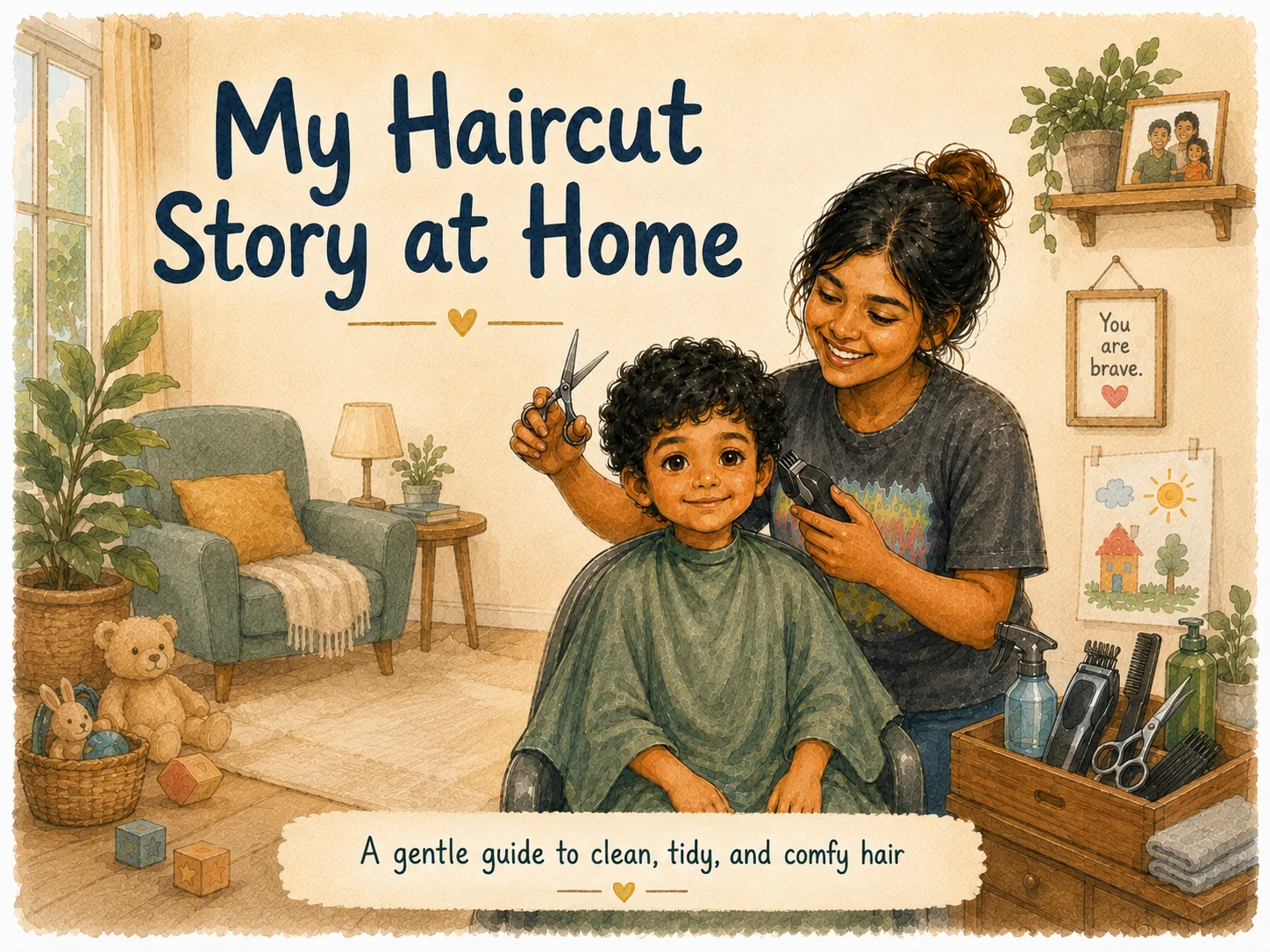
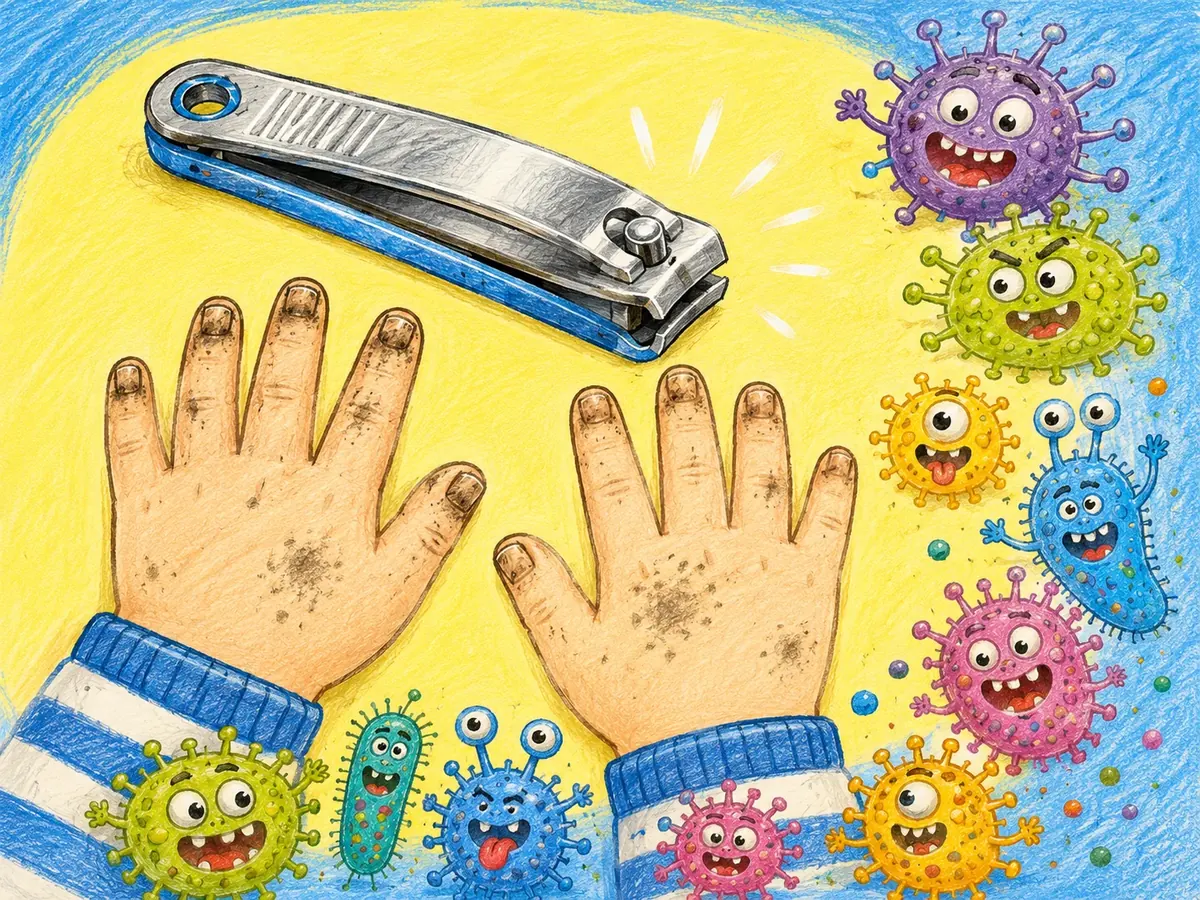
Social Stories™ were developed by educator Carol Gray around 1990. They were originally created to support autistic people, although similar stories and social narratives may also help neurodivergent children and adults with different support needs.
A Social Story is a short, personalized narrative that explains a particular experience, situation, skill, or concept. It may use words, pictures, audio, or video to describe:
- What is likely to happen.
- Where it will happen.
- Who may be there.
- What the person might see, hear, smell, taste, or feel.
- Why certain steps may be necessary.
- What choices, coping tools, or ways to ask for help are available.
A Social Story should not simply be a disguised list of commands. Its purpose is not to demand compliance. It is meant to offer information in a patient, respectful, and emotionally safe way so that the person has a clearer idea of what to expect.
Genuine Social Stories™ followspecific criteria developed by Carol Gray. The stories on this page are inspired by that respectful, information-sharing approach and are designed to be adapted to the individual using them.
Why are these stories so detailed?
Many neurodivergent children experience unpredictability, transitions, and sensory information differently. When part of an experience is left unexplained, the brain may fill in the missing information with its own expectations.
If reality suddenly differs from those expectations, it may not feel like a small surprise. It can feel like a sensory shock, a loss of control, or even a threat to safety.
Relevant, specific details can provide a mental roadmap:
- Predictability can reduce anxiety. Knowing what something may look, sound, smell, or feel like removes some of the uncertainty.
- Clear information creates more accurate expectations.A child is less likely to feel ambushed by an unfamiliar step or piece of equipment.
- Sensory information allows preparation. Bright lights, loud machines, unusual clothing, physical touch, and unfamiliar smells may all matter.
- Choices return some control. The story can explain whether the child can ask questions, request a pause, use headphones, bring a comfort item, or say that something hurts.
- Honest uncertainty protects trust. A useful story can explain that plans sometimes change—and what will happen if they do.
The goal is not to include every imaginable detail until the story itself becomes overwhelming. The goal is to include as manyrelevant and foreseeable details as that particular person needs.
Are Social Stories evidence-based?
Social narratives—and Social Stories™ specifically—have been recognized as evidence-based practices for autistic children and young people. Research suggests that individualized stories can support social, communication, behavioral, academic, safety, and adaptive skills.
However, results vary between individuals and studies. Some reviews have identified limitations in research quality, consistency, and evidence of long-term benefits. “Evidence-based” does not mean guaranteed to work for every person.
A story should be individualized, respectful, and suited to the person’s communication, sensory, and support needs. It should also be changed—or discontinued—when it is not helping.
What Kabbo taught me
Missing details can change everything
A missing detail can mean the difference between trust and terror.
I learned the importance of detail the hard way.
Early on, I made a video social story for Kabbo about going to the dentist. I thought the story was good. It covered the basic idea of the appointment—but it did not explain everything that would happen.
I had not included the big reclining chair. I had not explained that the dentist would ask him to open his mouth wide. Most importantly, I had not shown or explained the mask that would be placed over his face.
When the dentist reached toward him with that mask, Kabbo completely freaked out. He was beyond inconsolable. Because the mask had never appeared in his story, he had no reason to expect it. From his perspective, something unfamiliar was suddenly being placed on his body without warning.
At the time, he had to be held down so that the mask could be placed. The appointment eventually ended, but his distress did not end with it. He felt ambushed. More importantly, he felt that his trust had been broken. Nobody had told him that this was going to happen to his body.
That experience changed the way I create these stories.
Now I try to include every relevant step: the room, the equipment, the people, the sounds, the sensations, and the ways someone may need to enter his personal space. I also explain what he can do if he feels uncomfortable and what choices may be available to him.
I prepare him for uncertainty too—but I no longer want “be flexible” to mean “quietly tolerate whatever adults decide to do.”
“Sometimes the plan may change. If something changes, an adult will explain it to me. I can ask what is happening. I can ask for help or request a pause.”
Since I began giving Kabbo clearer and more complete information, these stories have made a genuine difference. The details have not overwhelmed him. They have helped return some of his control—and, most importantly, his trust.
That is why my social stories are detailed.
Not because every experience can be controlled perfectly, but because every person deserves to know what may happen to them.