Social story
My big feelings
A gentle visual story about noticing body clues, finding a feeling word, choosing sensory supports, and asking for help when emotions feel big.
This is a family-made learning resource, not medical advice. Different strategies help different people. Use only supports that feel safe and comfortable, and ask a trusted adult or appropriate professional for help when needed.
Page 1 of 5
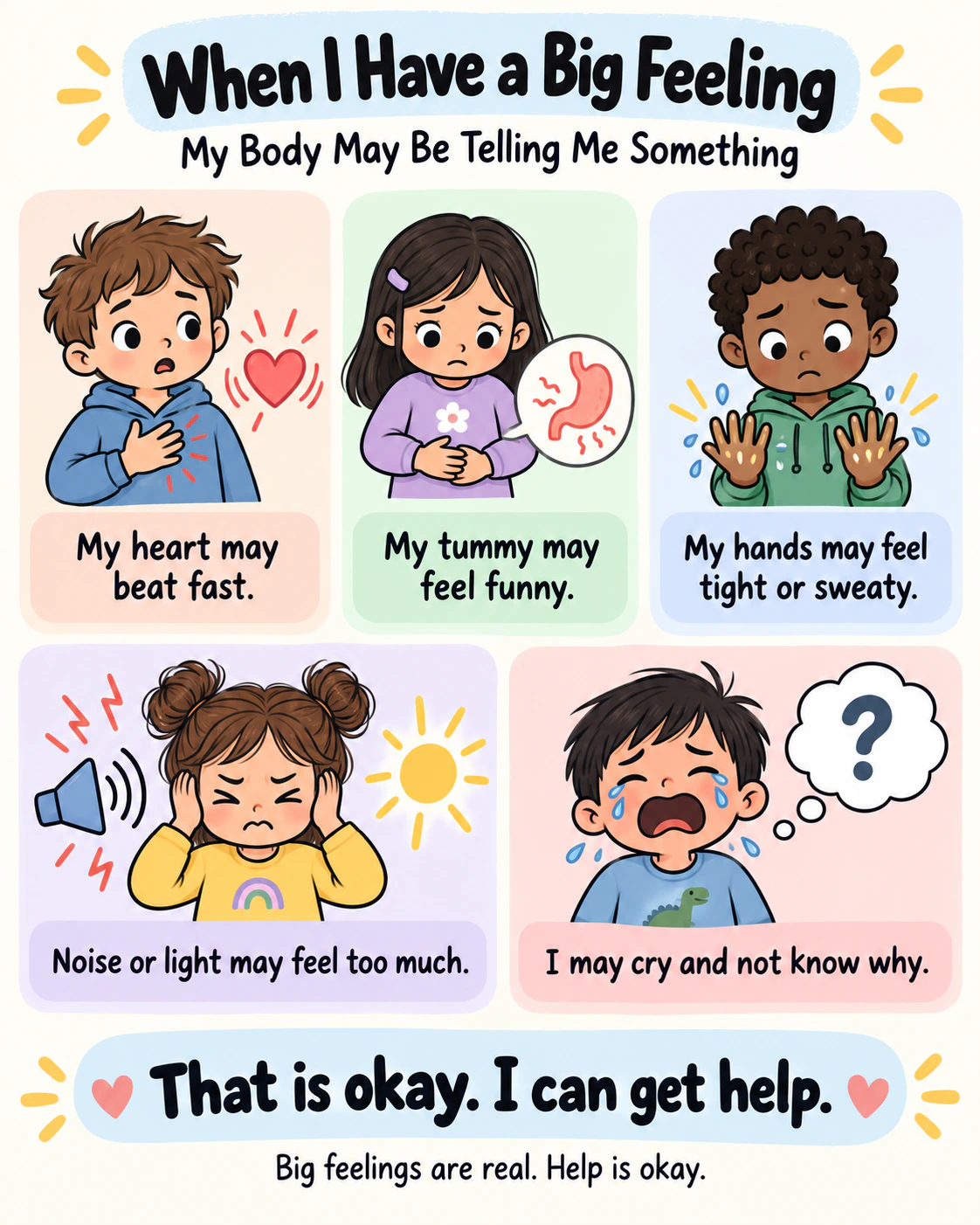
Page 1 When I have a big feeling, my body may be telling me something. My heart may beat fast. My tummy may feel funny. My hands may get tight. Noise or light may feel too much. I may cry and not know why. That is okay. I can get help.
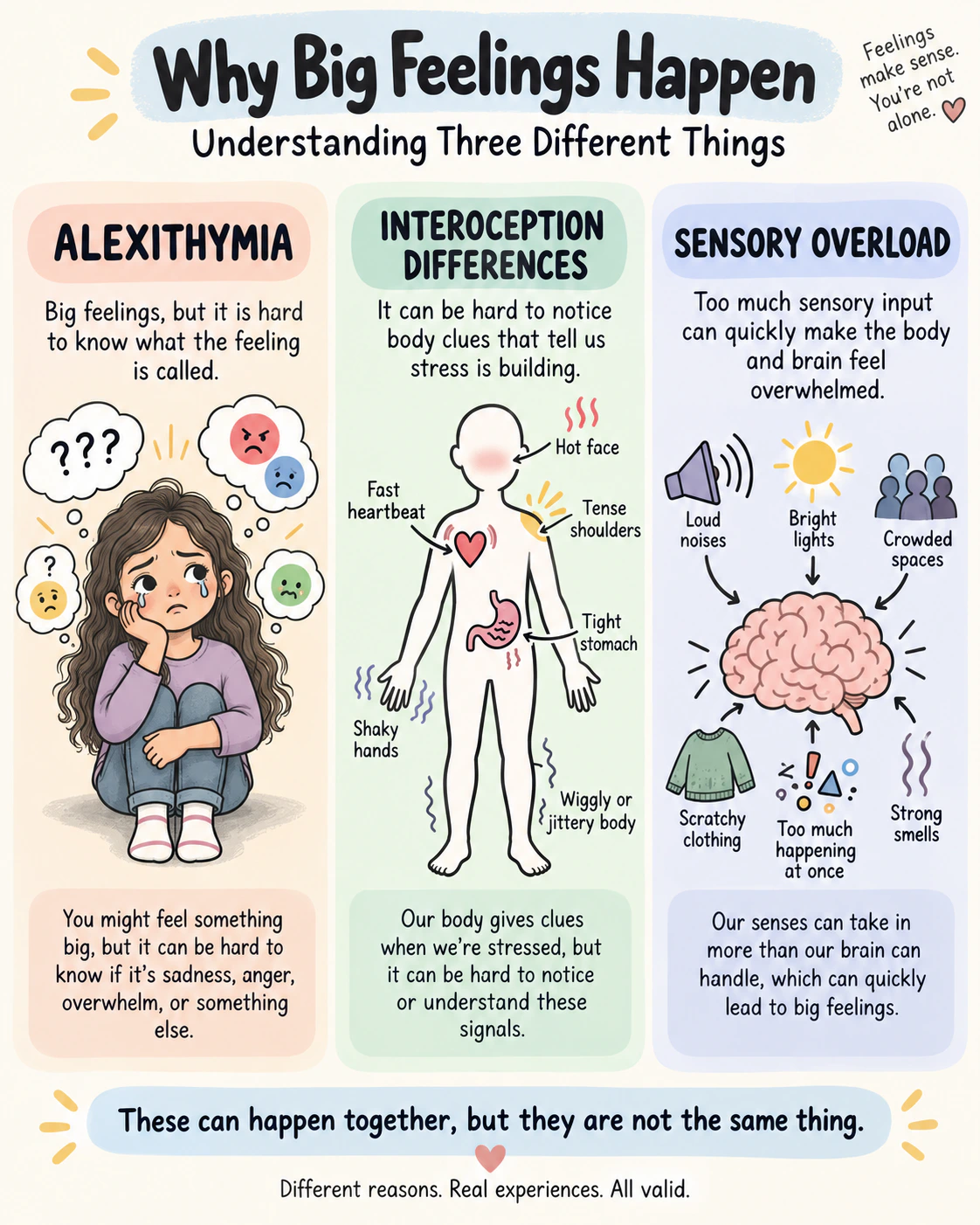
Page 2 Big feelings can have different causes. Sometimes it is hard to name a feeling, notice body signals, or manage too much sensory input. These can happen together, but they are not the same thing. Different reasons, real experiences, and all are valid.
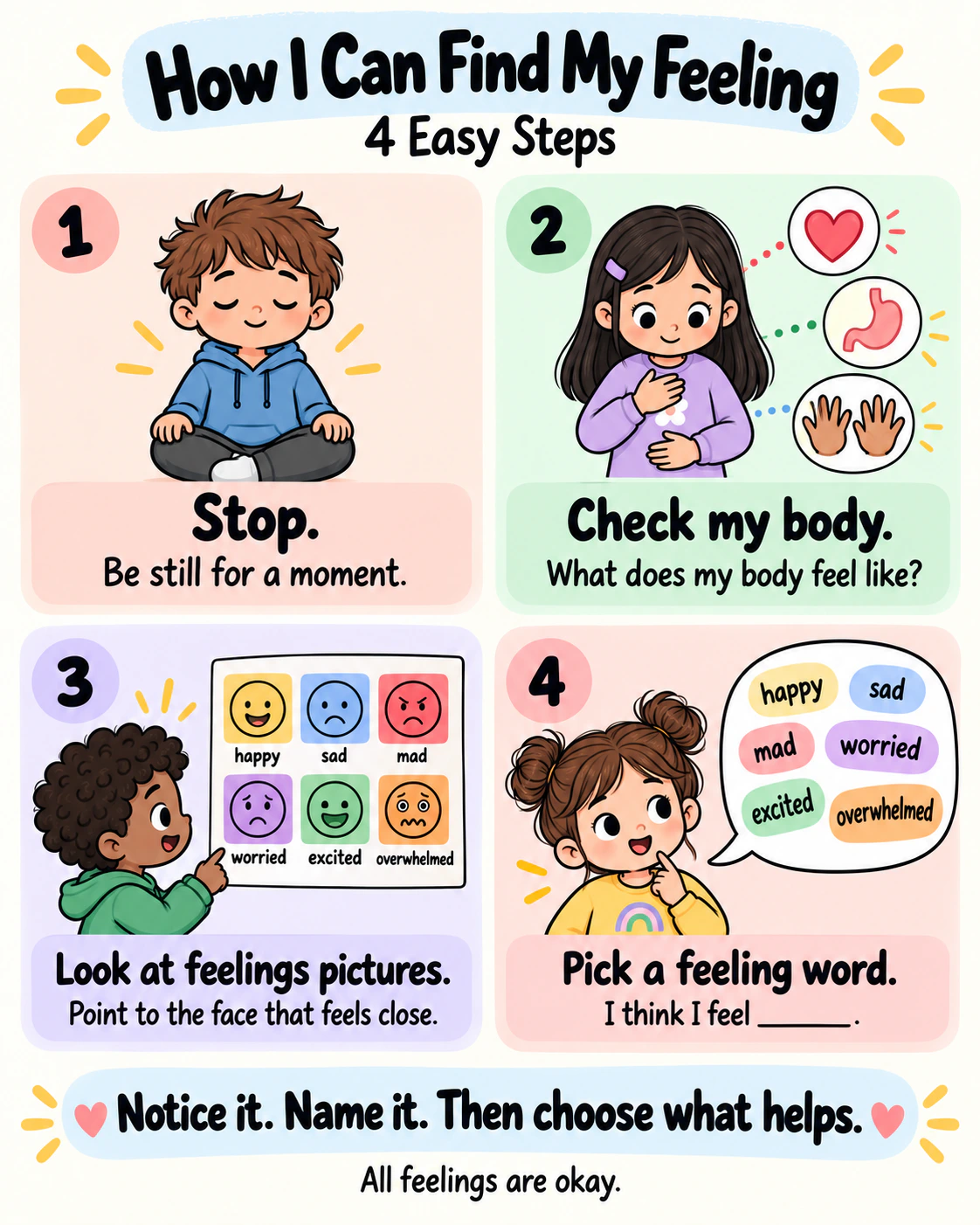
Page 3 To find my feeling, I can stop and be still for a moment. I can check my body and ask, ‘What does my body feel like?’ I can look at the feelings pictures and point to the face that feels closest. I can pick a feeling word. I might feel happy, sad, mad, worried, excited, or overwhelmed. I can say, ‘I think I feel…’ and then choose a feeling word.
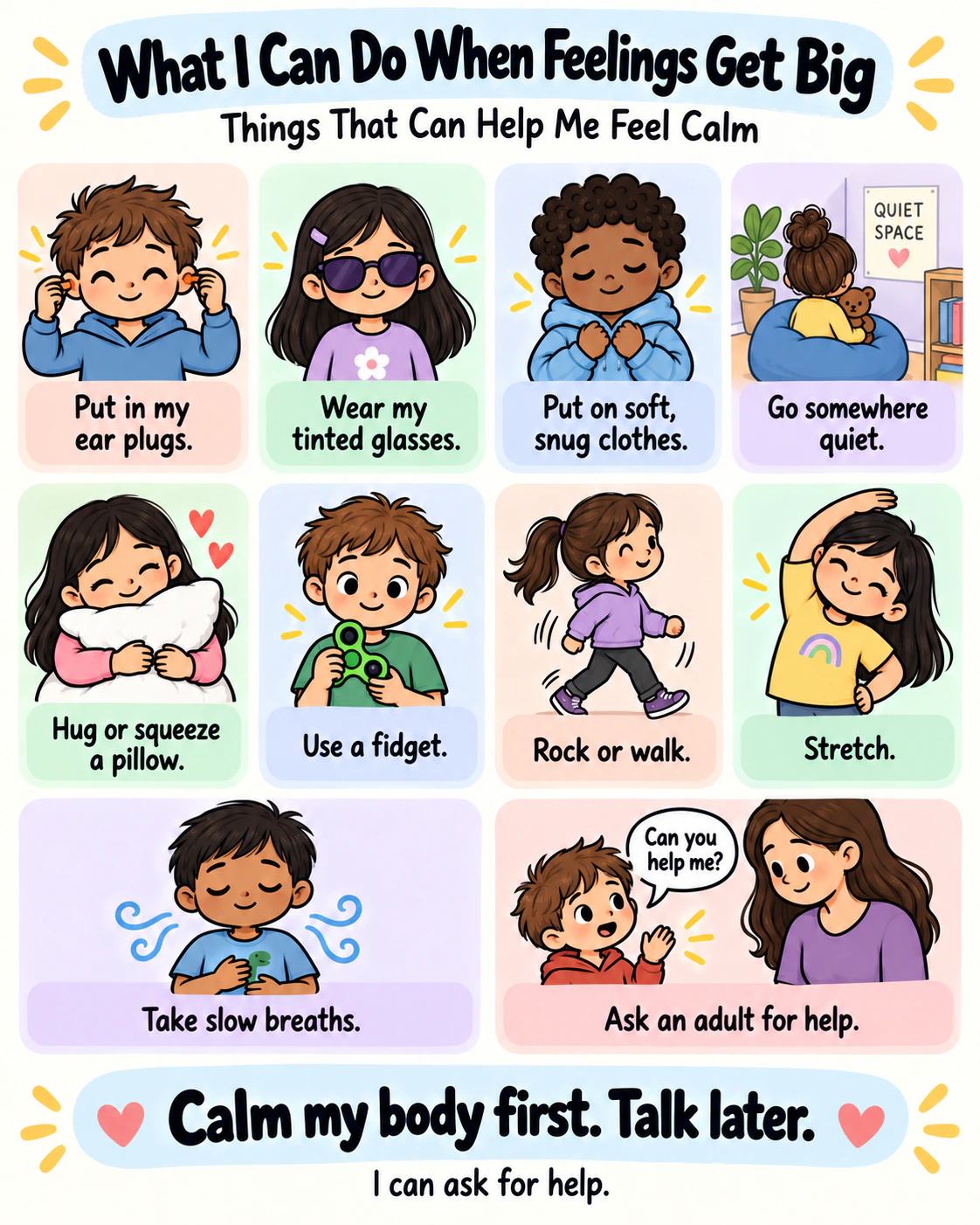
Page 4 When feelings get big, I can choose something that helps my body feel calm. I can put in my ear plugs, wear tinted glasses, put on soft snug clothes, go somewhere quiet, hug or squeeze a pillow, use a fidget, rock or walk, stretch, take slow breaths, or ask an adult for help. I can say, ‘I need a break,’ or ‘Please help me.’ Calm my body first. Talk about it later.
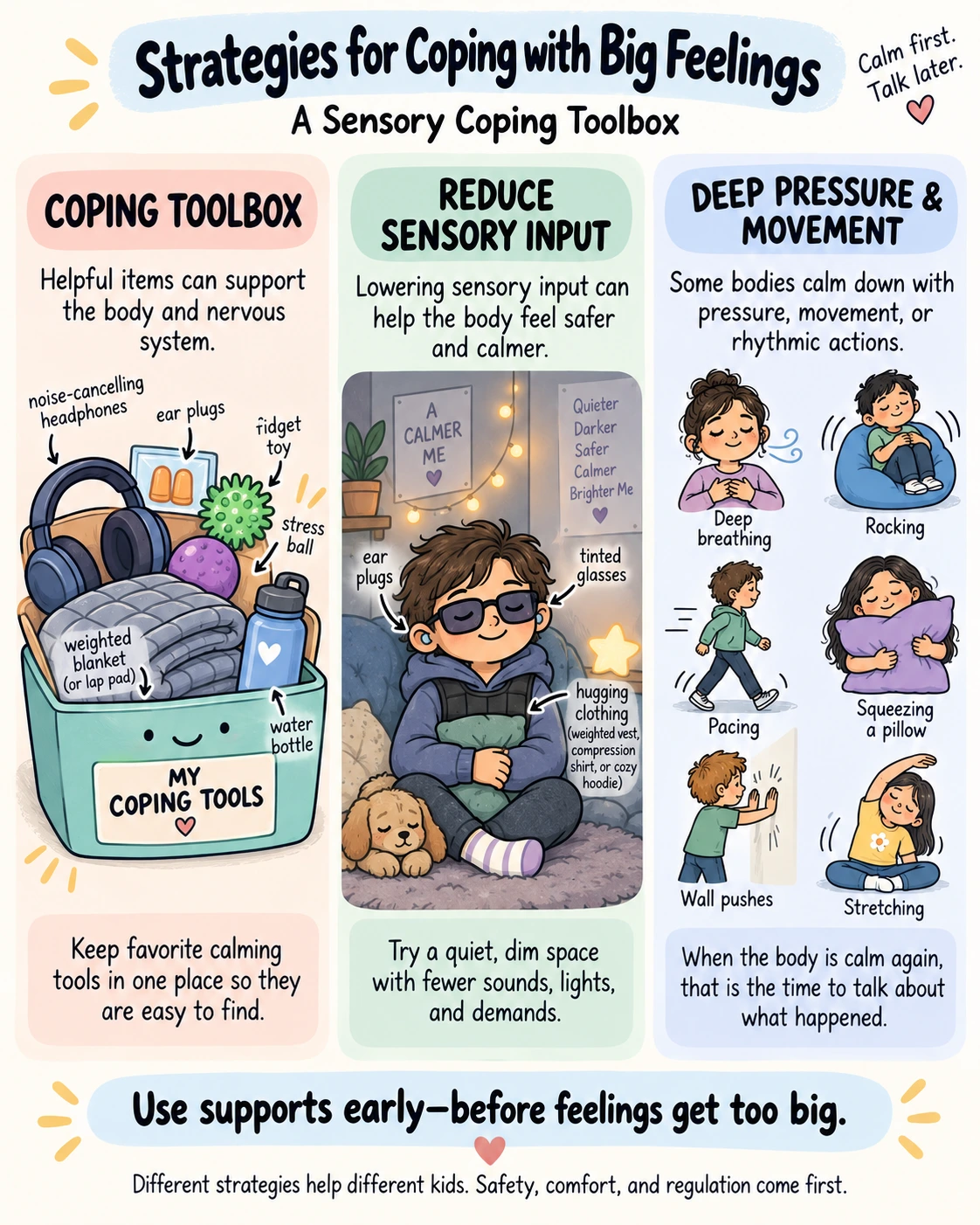
Page 5 I can keep helpful coping tools together in one easy place. I can lower sensory input with ear plugs, tinted glasses, and a quiet, dim space. Deep breathing, rocking, pacing, squeezing a pillow, wall pushes, and stretching may help. I can use supports early, before feelings get too big. When my body is calm again, that is the time to talk about what happened. Different strategies help different kids. Safety, comfort, and regulation come first.
You can also swipe or scroll sideways between pages.
Read the story as text
Page 1
When I have a big feeling, my body may be telling me something. My heart may beat fast. My tummy may feel funny. My hands may get tight. Noise or light may feel too much. I may cry and not know why. That is okay. I can get help.
Page 2
Big feelings can have different causes. Sometimes it is hard to name a feeling, notice body signals, or manage too much sensory input. These can happen together, but they are not the same thing. Different reasons, real experiences, and all are valid.
Page 3
To find my feeling, I can stop and be still for a moment. I can check my body and ask, ‘What does my body feel like?’ I can look at the feelings pictures and point to the face that feels closest. I can pick a feeling word. I might feel happy, sad, mad, worried, excited, or overwhelmed. I can say, ‘I think I feel…’ and then choose a feeling word.
Page 4
When feelings get big, I can choose something that helps my body feel calm. I can put in my ear plugs, wear tinted glasses, put on soft snug clothes, go somewhere quiet, hug or squeeze a pillow, use a fidget, rock or walk, stretch, take slow breaths, or ask an adult for help. I can say, ‘I need a break,’ or ‘Please help me.’ Calm my body first. Talk about it later.
Page 5
I can keep helpful coping tools together in one easy place. I can lower sensory input with ear plugs, tinted glasses, and a quiet, dim space. Deep breathing, rocking, pacing, squeezing a pillow, wall pushes, and stretching may help. I can use supports early, before feelings get too big. When my body is calm again, that is the time to talk about what happened. Different strategies help different kids. Safety, comfort, and regulation come first.