Ask clearly · listen carefully · stop when the answer changes
“Would You like a hug?”: Understanding Consent with My Son
Using tea, hugs, and everyday examples to understand consent as clear, freely given, informed, specific, and reversible permission—and to teach both saying no and listening to no.
- Published
- Last reviewed
Seven visual guides
Understanding consent through tea and affection
Use the arrows, numbered buttons, keyboard arrow keys, or swipe to move through the seven examples.
1 / 7Step 1: A clear yes
Consent is one of those words we hear all the time, yet many of us do not fully understand what it means.
The funny part is that the basic idea is not particularly complicated. The complicated part begins when feelings, relationships, age, authority, embarrassment, family expectations, and our lifelong conditioning get involved. Then the boundary between yes, no, and I did not feel like I was allowed to say no can become terribly blurry.
So I wanted to break consent down—not only for my son, but for myself.
Why?
Because I do not want to teach him only how to say no. I want him to understand when another person has said no, even if they did not use that exact word. I want him to know how to ask, how to listen, and how to stop. I also want him to understand that someone agreeing once does not mean they have agreed forever.
And, if I am completely honest, I am still learning some of this myself.
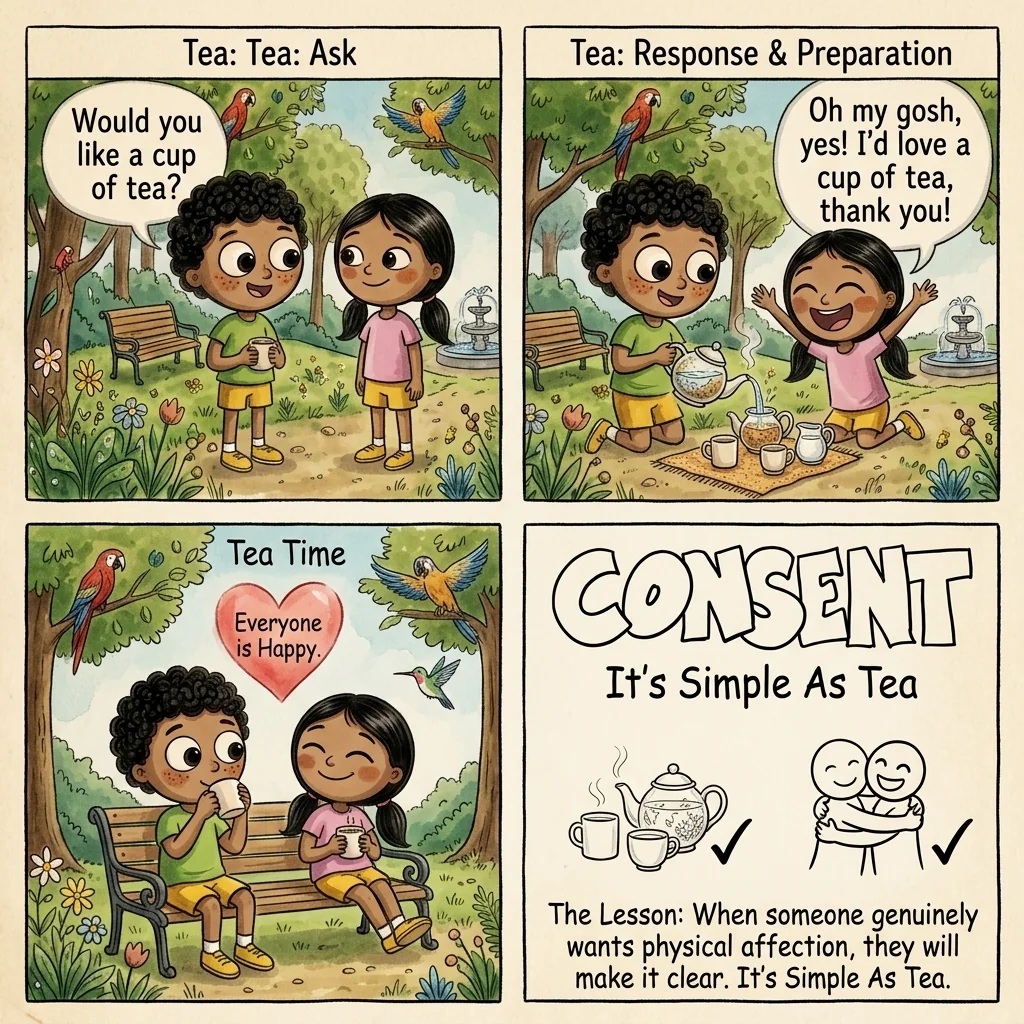
There is a wonderful animated video on YouTube called Tea Consent, created by Blue Seat Studios. I love how it uses little stick figures and cups of tea to spoon-feed us a concept that adults have somehow managed to make confusing.
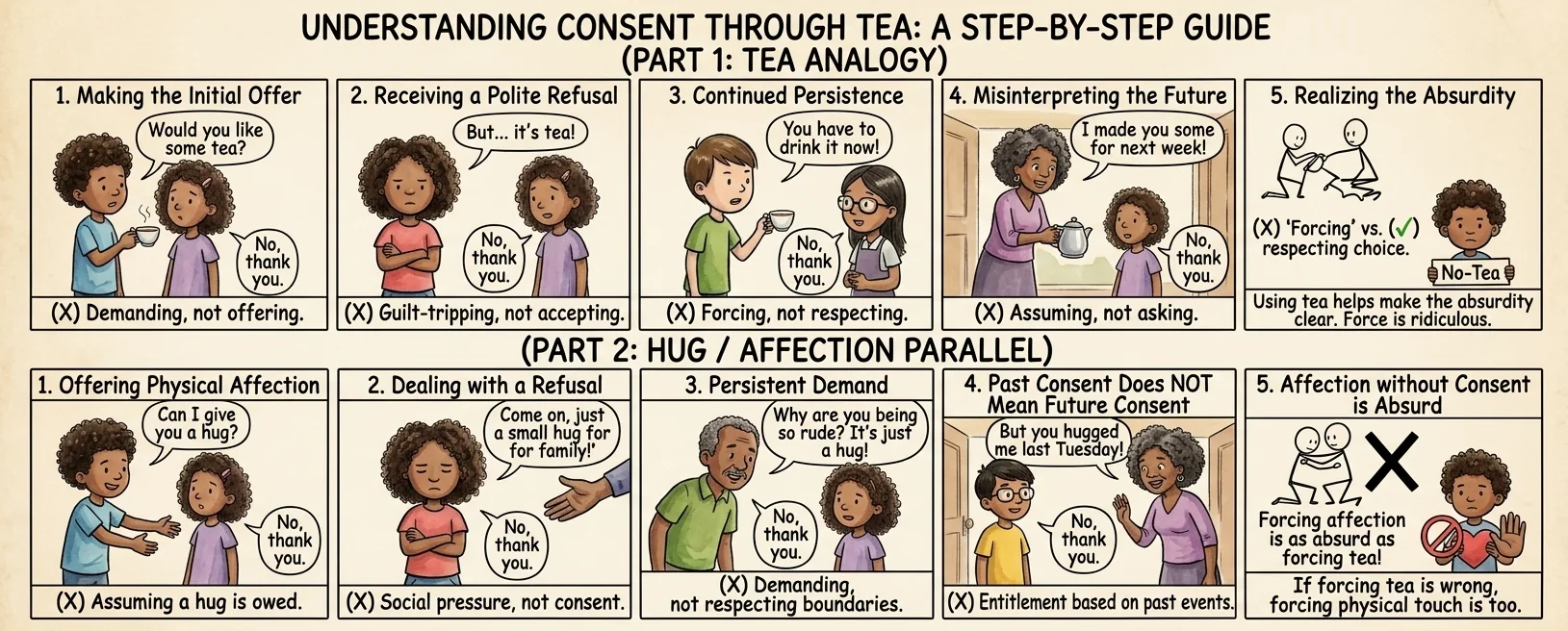
The video asks us to imagine offering someone tea.
“Would you like a cup of tea?”
They reply:
“Oh my gosh, yes! I would love a cup of tea!”
You make the tea. They drink it. Everyone is happy.
That is the easy version of consent.
The same principle applies to physical affection. You ask:
“Can I give you a hug?” Or: “Would you like a hug?”
The person says yes and willingly moves toward you. That is consent.
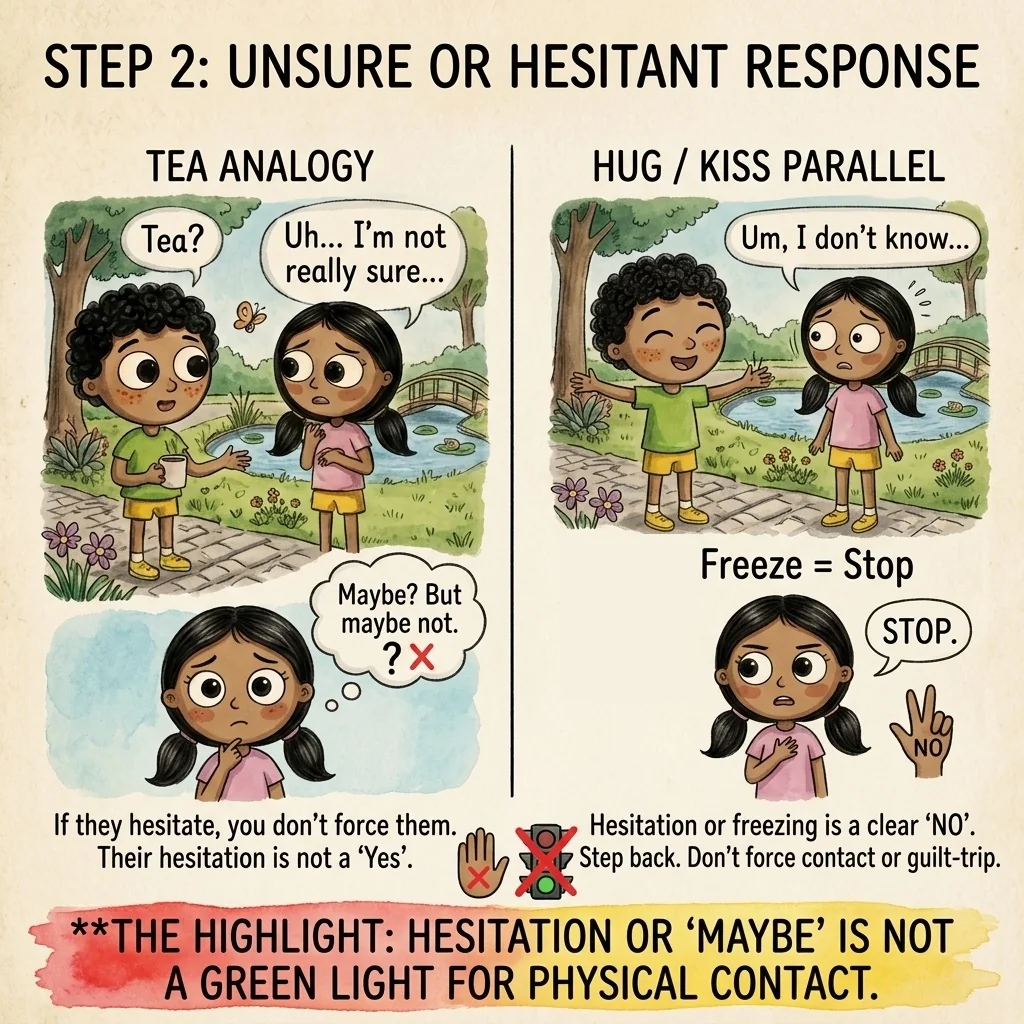
Consent can be communicated through words or clear actions. Not everyone will express it with the same amount of excitement—especially people who communicate differently—but it still needs to be freely and clearly given. If you are uncertain, you ask. You do not interpret silence, stillness, nervous laughter, freezing, or a lack of resistance as permission.
But not every situation is that obvious.
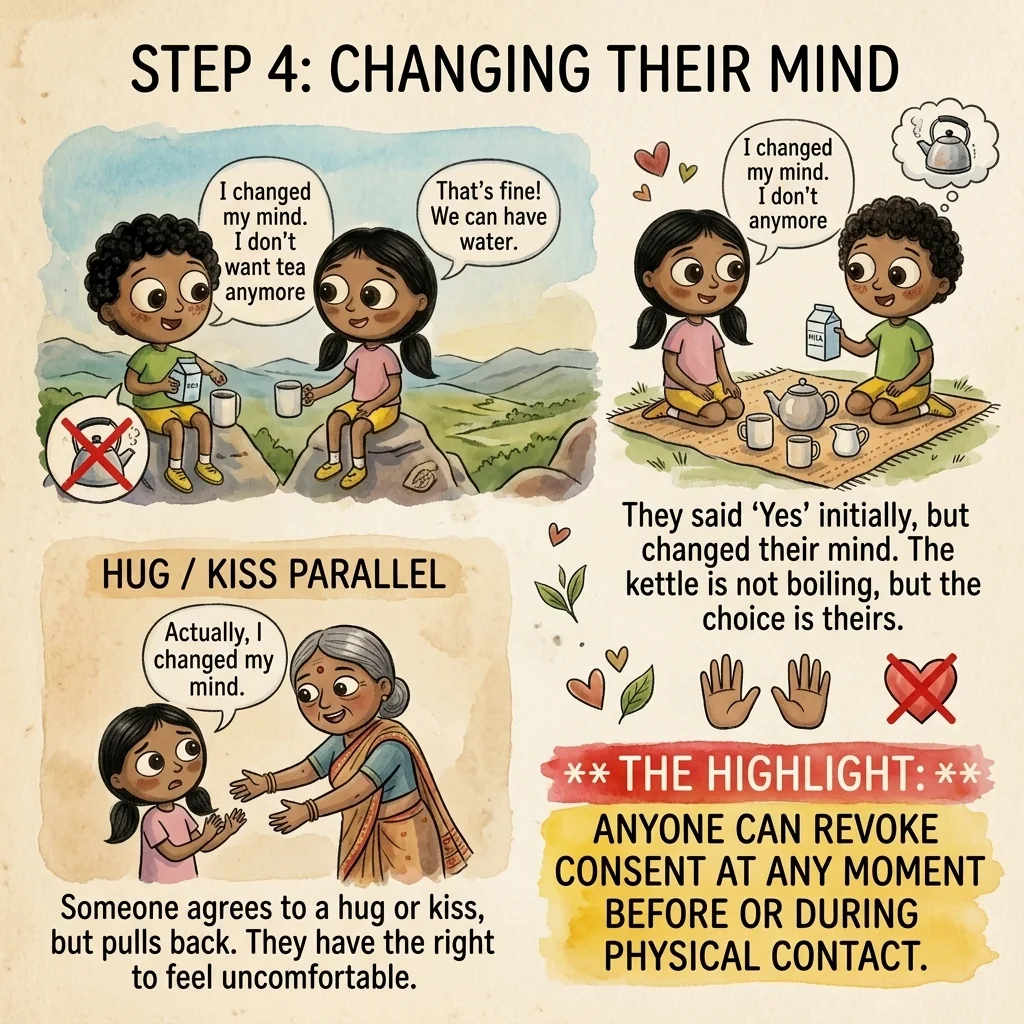
Suppose someone says yes to tea, but changes their mind while you are making it. You do not force them to drink it because you have already gone through the trouble.
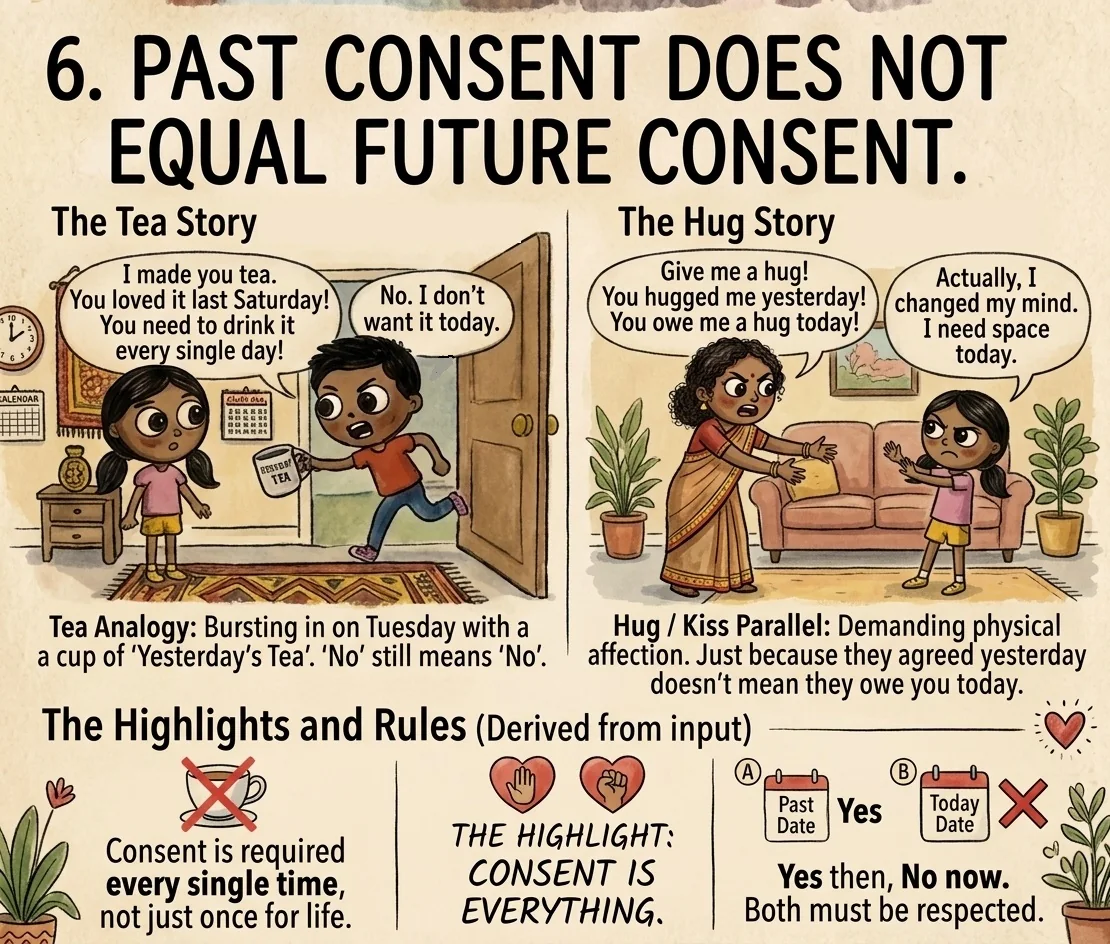
Suppose they enjoyed tea with you yesterday. That does not mean you can pour it into their mouth today without asking.
Suppose they say:
“I’m not sure.”
You do not keep asking until they become too exhausted or uncomfortable to continue saying no.
Suppose they say yes because they are frightened of disappointing you. That is not freely given consent. It is compliance under pressure.
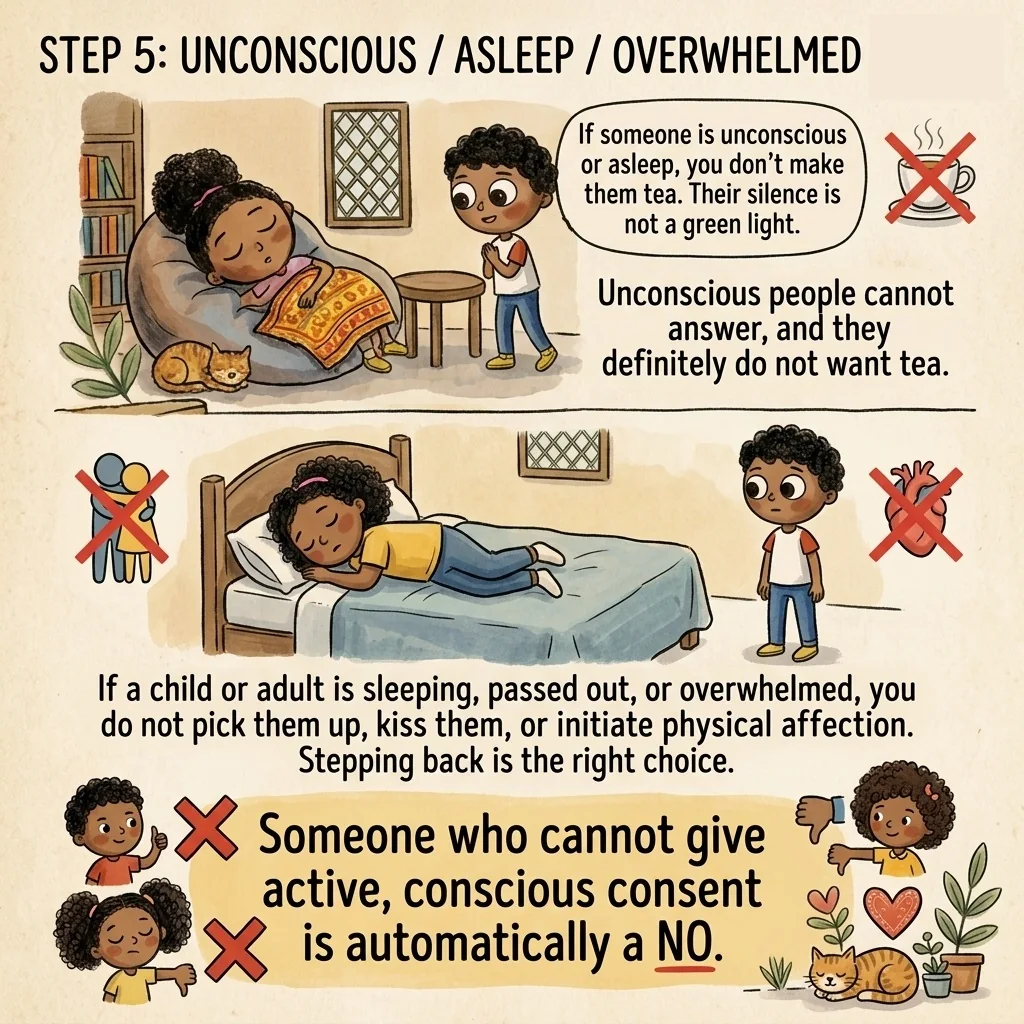
And if someone is unconscious or asleep, you obviously do not try to force tea into their mouth. They cannot answer. Their inability to say no does not magically become a yes.
Why, then, does that distinction suddenly become confusing when we are talking about kissing, hugging, touching, or sex?
An unconscious or sleeping person cannot consent to sexual activity. With ordinary affection, silence or unresponsiveness should never be treated as permission either. And if a child or adult is so overwhelmed or shut down that they cannot communicate a clear choice—even through speech, gestures, AAC, or another established method—then optional physical contact should wait.
Necessary caregiving is different. Sometimes a child must be lifted away from danger, helped with hygiene, examined by a doctor, or given essential care. But necessity does not erase dignity. We can explain what is happening, ask whenever possible, offer choices, pay attention to distress, and use the least intrusive approach available.
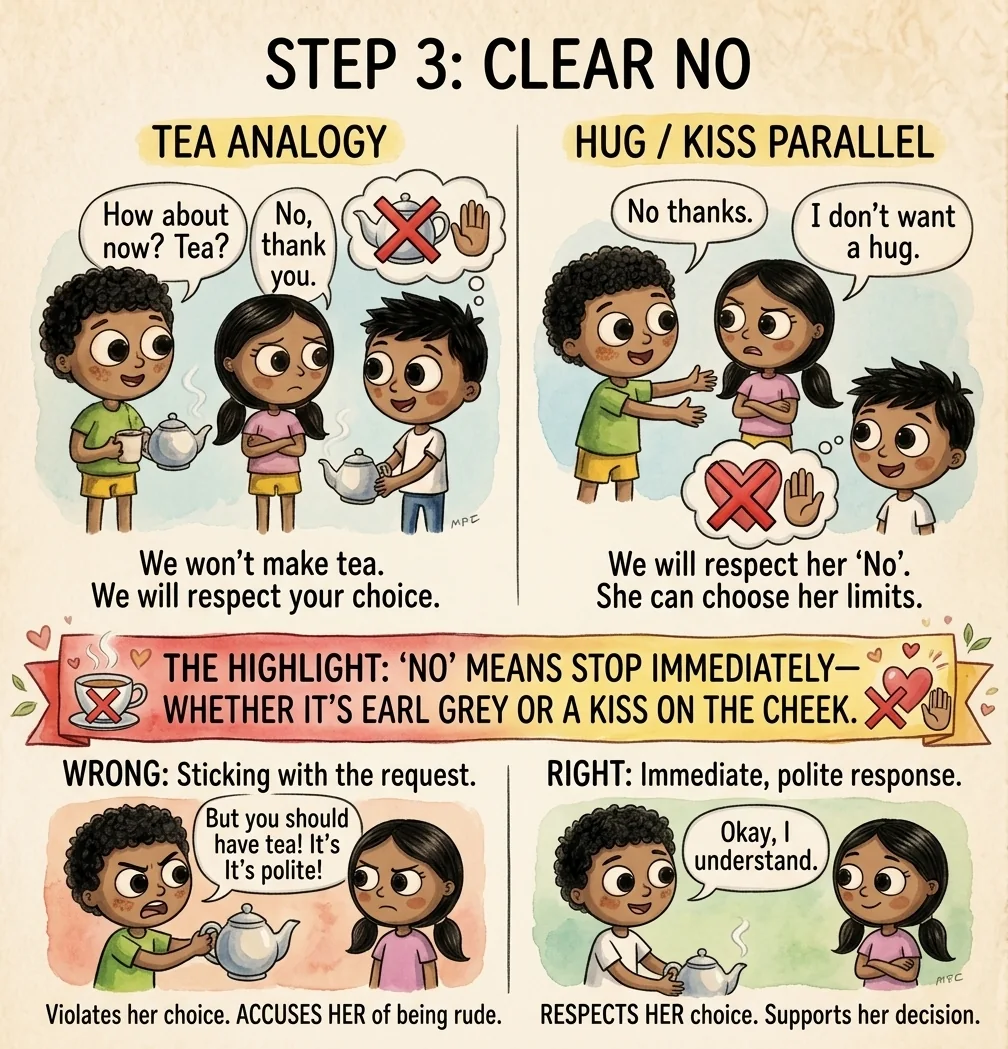
Consent is not simply the absence of the word no.
It is permission that is freely given, informed, specific, and reversible.
It means:
Yes, I want this.
Yes, I understand what I am agreeing to.
Yes, I am choosing without pressure.
And yes, I can change my mind.
That last part is important.
Consent is not a contract someone signs once and can never escape. A yes can become a no halfway through. A person can enjoy one kind of touch and refuse another. They can hug one person and not someone else. They can want affection today and need space tomorrow.
None of that makes them rude, confusing, manipulative, or difficult.
It makes them a person with ownership over their own body.
I prepared these visual aids to help me understand these distinctions and teach them to my son. Because children need more than the instruction to “be good.” They need usable words. They need examples. They need to know how consent feels from both sides—not only how to protect their own boundaries, but how to recognize and respect somebody else’s.
And perhaps some of us adults need those lessons too.