Our family’s experience · finding support through URS
Autism and Elopement: The Fear, the Exhaustion, and the Help We Found
How CHEO’s Urgent Response Services helped our family—and why parents need support.
- Published
- Last reviewed
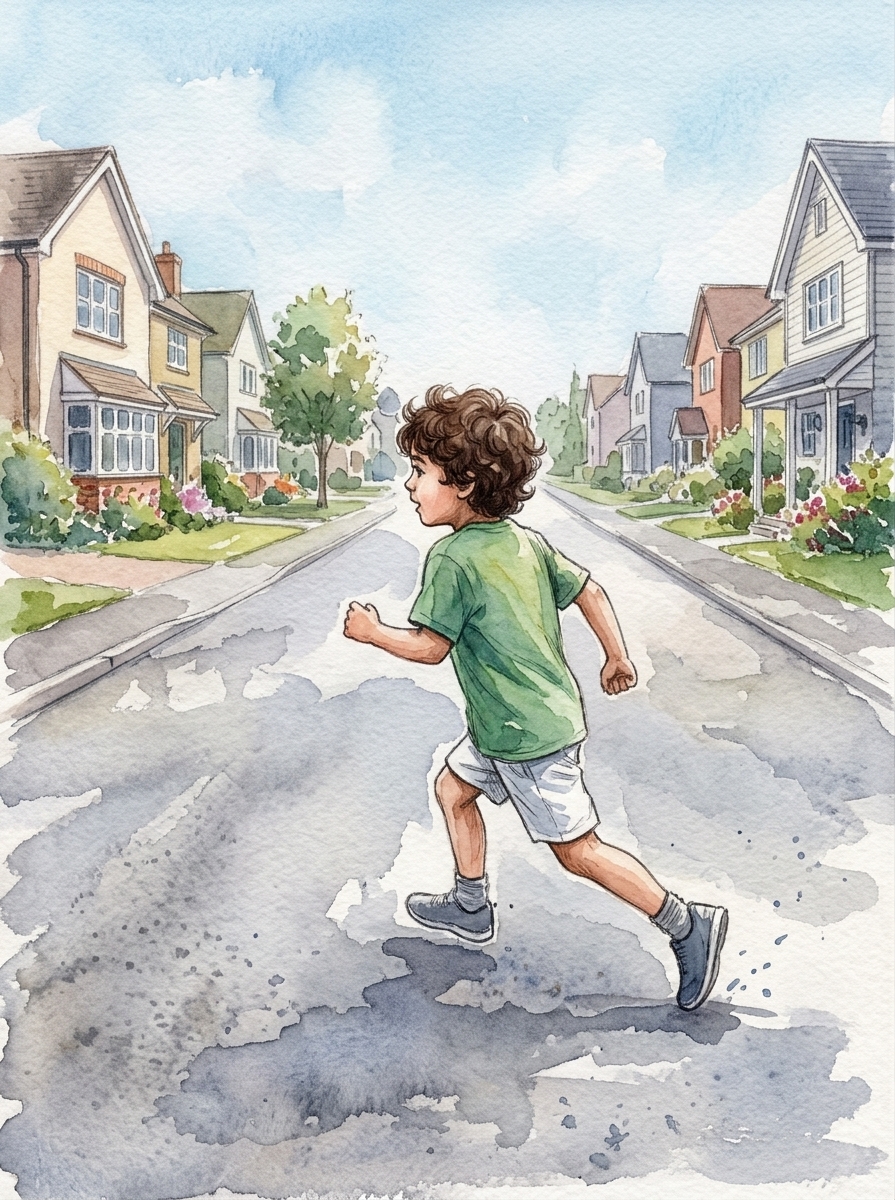
Yesterday, around four in the afternoon, my six-year-old son opened the front door and ran out.
Nothing obvious happened beforehand. No argument, no meltdown. He wanted a Numberblock 6 that we had promised him if his time with Miss K went well and he completed a couple of agreed tasks. We kept our promise and ordered it. If we could have found it in a shop in town, we would have bought it there rather than waited for delivery. But he was done waiting. He had no idea where to find the toy. He just opened the door and went.
I was behind him about two seconds later. Barefoot. On the asphalt.
“Stop.” “Please stop.” “I need you to stop.”
Nothing stopped him. We thankfully live on a crescent with little traffic, and I caught up with him as he reached its exit. Children are fast. I am not particularly athletic. This was not a competition I ever wanted to enter.
While running, I was also calculating how to catch him without scraping his skin. Because apparently, even while terrified for his life, my brain had enough capacity to consider the hours of crying and the Band-Aid/no-Band-Aid battle that scraped knees might bring. I know. Priorities, right?
He was not hurt. No bruises, no cuts. I was completely drained. I explained as calmly as I could how frightened I had been, but I could not hold back my tears. He wiped them away. When I told him how dangerous it was to run in the middle of the road, he promised that next time he would stay at the sides.
Not quite the lesson I had hoped for.
He had heard something, but running away more carefully was not the solution. I still needed to help him understand that wanting something does not mean leaving the house alone to find it. The hardest part was knowing that we had already spent twelve weeks working on this through CHEO’s Urgent Response Services. And it had helped.
That is why I want to talk about the programme. Not as something that magically fixes everything, but as a resource other parents might not know exists—and one I am grateful we found.
What is URS?
URS stands for Urgent Response Services. It is part of the Ontario Autism Program, or OAP, and offers eligible families up to twelve weeks of free support for an urgent, high-risk concern. The aim is to reduce danger and prevent the situation from escalating. Ontario
For us, the concern was running away. You may hear this called elopement, wandering or bolting. In this context, it means leaving a safe area or caregiver in a way that creates a safety risk. On URS information, it appears as flight risk. CDC · CHEO
Who can get URS?
There are three main requirements:
- The child is registered in the Ontario Autism Program.
- A high-risk behaviour has started or become worse within the previous fourteen days.
- The intake assessment determines that the situation meets the programme’s urgency criteria.
Those fourteen days refer to a recent change in the behaviour, not how recently the child received an autism diagnosis. Registration or a referral does not automatically mean acceptance. Ontario
Running away is only one of the risks covered. Others include aggression, self-injury, property damage, suicidal thoughts or behaviour, violent thinking, fire-setting, harm to animals, exploitation risk and inappropriate sexual behaviour. The team assesses the particular situation. Ontario
In our case, the information I need to share is straightforward: my son left the house, ran into the road and did not stop when I called. That is the current concern, even though we have already worked on elopement before.
How do I apply?
You can refer your child yourself. You do not need to wait for a doctor to make the referral. CHEO coordinates URS for Ottawa, Prescott–Russell, Renfrew County and Stormont–Dundas–Glengarry, including our Cornwall area. Its current referral route is through 1Call1Click. A clinician or another professional supporting your family can also refer you. CHEO
| What I need | Where to go |
|---|---|
| Start a referral | 1Call1Click online self-referral |
| Speak with 1Call1Click | 613-260-2360, extension 2, or 1-877-377-7775 toll-free |
| Ask CHEO about URS | 613-737-7600, extension 7770, or [email protected] |
| Read CHEO’s programme information | CHEO Urgent Response Services |
These are the contacts currently listed by CHEO and 1Call1Click.
Ontario says the lead organisation will make initial contact within two business days to discuss next steps. That means contact, not a guarantee that treatment begins within two days. Intake helps determine whether URS or another service is appropriate. Ontario
For families elsewhere in Ontario, the provincial URS page lists the agency serving each area.
My suggestion is to write down what happened, when it happened, how it has changed and what made it dangerous. I would also mention the safeguards already in place and any previous support. I do not need to understand every reason behind the behaviour before asking for an assessment.
What if my child is not registered in the OAP?
Registration is through AccessOAP. A child must be under 18, live in Ontario and have a written autism diagnosis from a qualified professional. The application requires documents supporting those details. For help getting started, call 1-833-425-2445. AccessOAP
That means URS is not a general programme for every child with a risky behaviour; OAP registration is part of eligibility. However, if screening finds that URS is not suitable, CHEO says it will help connect families with other supports. Asking what else is available is still worthwhile. CHEO
How can URS help?
A coordinator works with the family on a plan for the urgent concern. Depending on need, this may include professional consultation, caregiver coaching, involvement from school or other providers, time-limited respite, and help finding ongoing services. Progress is reviewed during the programme and before discharge. Not every family receives every option. Ontario
An important detail: CHEO describes its behavioural support as a mediator model. In ordinary language, clinicians help the adults supporting the child put strategies into practice. It is not advertised as a standard course of direct, one-to-one child therapy, and caregivers need to participate actively. CHEO
URS is not a round-the-clock crisis service, permanent respite arrangement, residential placement, cash payment or fast track into other services. It is focused, time-limited support. Ontario
Children can receive URS while also accessing other OAP services. Ontario
What did it look like for us?
A behavioural analyst and a therapist gathered information about my son: when he ran, what happened beforehand and what he appeared to be trying to avoid. Then they developed a plan around him. Much of our work concerned situations he wanted to escape—activities, classes or demands he found difficult. We worked on building tolerance and helping him communicate what he needed instead of immediately running. There was also a specific safety skill: responding to his name followed by a firm “STOP.”
They practised repeatedly and checked his response over time. His therapist even made sure we covered the stop cues in the different languages spoken in our family. That mattered. A safety skill needs to fit the people and situations around him, not just the wording on a worksheet.
And honestly, it worked. He did so well that I told his school about it with considerable pride. His tendency to bolt had not vanished, but the stop cue was helping. His teachers saw that improvement too. When I say he passed with flying colours, I mean we saw real, data-based progress. I do not mean there was a certificate declaring him safe in every possible situation.
Yesterday made that distinction painfully clear.
Why did he run again? Can we go back?
I keep thinking about the difference between running away from something and running towards something. Earlier, much of our work concerned escape from situations he disliked. Yesterday, he appeared to be trying to find a toy. Children may wander to escape distress, but they may also leave to explore or reach something they want. It does not always begin with a visible meltdown. CDC
That is a possible explanation worth exploring, not a conclusion I can establish from one incident. I want to ask about waiting, asking an adult for help and practising safety responses across different situations. I also want to review exactly what happened yesterday, including the cues I used.
Re-referrals are possible, including for the same high-risk concern. Ontario’s programme framework explicitly accounts for them. But current eligibility still has to be assessed; completing URS once does not guarantee another identical twelve-week course. Ontario
So my next step is to contact the team. Not to announce that everything failed, but to explain what has changed and ask what support is appropriate now.
For those wondering whether I have taken precautions, let me tell you: I already have sensors on doors and windows and child locks on doors. This is not a danger I had never considered. But it looks like I need to review how those safeguards are working. His teachers at school already know what to do if he leaves.
Should I tell the neighbours?
This is the part I have not done yet. I know it could help if neighbours recognised my son and understood that seeing him outside alone was a reason to act. Informing neighbours and school staff is part of the CDC’s wandering-safety advice. CDC
But honestly, I am hesitant. I worry they will think, Why is her child outside alone? Why isn’t she watching him? Why should this be my problem? I worry about disturbing people or asking for help they do not want to give. That is my fear. I have not had the conversation, so I do not know how they would actually respond.
I am not asking neighbours to supervise my child. I am considering speaking privately to a few trusted people so they know not to assume everything is fine if they see him alone. I can share only what is necessary, with people I trust. I do not need to make his private information a neighbourhood announcement.
Yesterday, I was already running after him, and there was still a distance between us. Another person noticing him during that time might have helped in bringing him to a safer spot faster.
What if my child gets out and we cannot find them?
First and foremost, call 911 immediately! Do not wait twenty-four hours, and do not wait for the therapy team to respond. The RCMP states there is no minimum waiting time for reporting a missing person. RCMP
Whatever we have heard in old TV shows or someone else saying, screw it all. Call 911.
Tell dispatch when and where the child was last seen, what they are wearing, their communication needs and whether they may not respond to their name. Provide a recent photograph. Mention nearby water, busy roads and places they may try to reach. Water is a particular search priority in autism-related wandering emergencies. CDC
After contacting police, MissingKids.ca can be contacted at 1-866-543-8477 for additional support. That does not replace calling 911 or reporting the child missing. MissingKids.ca contact information
Now you might ask, why am I writing this all here? Isn’t this supposed to be URS information? But here is the thing: I am a mother who has had that fright, and I am including this because nobody should have to research the right number while that terrified. It is not a state I wish any mother to ever be in, and that level of stress is extremely draining.
Honestly? I am tired. Really tired.
I can explain the programme, review the sensors and make the next phone call. But underneath that, I am a mum who sometimes cannot see the end of this struggle. We work on something, make progress, and then something happens that leaves me wondering how much more there is to figure out. My mind does not politely stay with yesterday. It goes straight to his future. Will he be able to live independently? Will he understand risks well enough to keep himself safe? What happens when I cannot be two seconds behind him? What happens if I can’t catch up to him the next time? What if a car was on the road and the driver didn’t notice? What happens when I am not there at all?
I do not know. Yesterday does not tell me what his adult life will look like, but it certainly brought those fears up. I am not predicting his future. I am admitting what frightens me.
I love him. I am proud of what he has learnt. I am grateful for the support we have received. I am also exhausted. None of those things cancels the others out.
This is also where being there for a partner matters enormously. In a frightening situation, it is easy to reach for, “Why weren’t you watching?” “Why didn’t you stop him?” “You should have…” Some things are very easy to say and much harder to take back. I am not describing an argument that happened yesterday. I am talking about something I want us to be careful about.
Of course we need to review what happened, clarify responsibilities and change anything that is not working. But “What do we need to do differently?” is not the same as “This is your fault.”
We need to help each other recover enough to think clearly. Take over for a while when the other person is drained. Make the call together. Listen without immediately producing a list of everything the other person should have done. We are learning how to support our child, but we also need to learn how to support each other through it. That is part of the process too. It is difficult. It is worth doing.
Be a gardener to yourself too
At the Jimmy Carr show, he spoke about parents being gardeners who do not yet know what kind of plant they are tending. I wrote about that in my Jimmy Carr reflection, Normalized by Laughter. That idea has stayed with me. Observe the child. Learn what they need. Help them grow without deciding in advance exactly what they must become.
But I want to add something: be a gardener to your child, and be one to yourself too. Where possible, help your partner do the same. You cannot keep nourishing your child while treating your own nourishment as optional. I do not mean an exhausted parent cannot be a loving, capable parent. I mean exhaustion is not something we should have to keep proving we can endure.
We need rest, practical help, reassurance and someone who notices when we are struggling too. The respite that allowed my husband and me to enjoy that comedy show mattered for exactly this reason. Our son was safe and having a good time, and we got to be together without spending every minute on alert. That was not separate from caring for our family. It was part of it.
Thanks, Jimmy, for the philosophy. I went for comedy and came home with more.
So why am I still recommending URS?
Because it helped us. We had people who paid attention, gathered information and worked with us on a specific danger. We saw progress at home and at school. That matters. Yesterday matters too. My son ran, and the safety response we had been practising did not stop him. Both things are true: the support helped, and we need more support now.
To another mum reading this and thinking, we need help with this too: you do not have to arrive with a complete explanation. Start with what happened. Ask about an assessment. Ask what is available if URS is not the right service. I want to understand my son better, help him build safer ways to get what he needs and make sure the adults around him are prepared. I also need to take care of the person doing the barefoot running.
Yesterday, I caught him. He was safe. Today, I am thinking of going back.
Not because the work we have done meant nothing. Because it mattered—and we need to keep building on it.
This is our family’s experience, alongside information checked against official programme and safety sources in October 2026. It is not a CHEO-endorsed article or an individual treatment plan. Eligibility, available supports and contact details can change; check the linked programme pages when applying.