Understand what is happening
Mind & Mental Health
Plain-language guides to emotions, anxiety, trauma, overwhelm, therapy language, and finding the right kind of support.
Mental-health language can help us understand ourselves, but it can also feel clinical, vague, or frightening. This section translates difficult ideas into ordinary words without turning a guide into a diagnosis.

Read the guides
Newest first
Mind & Mental Health
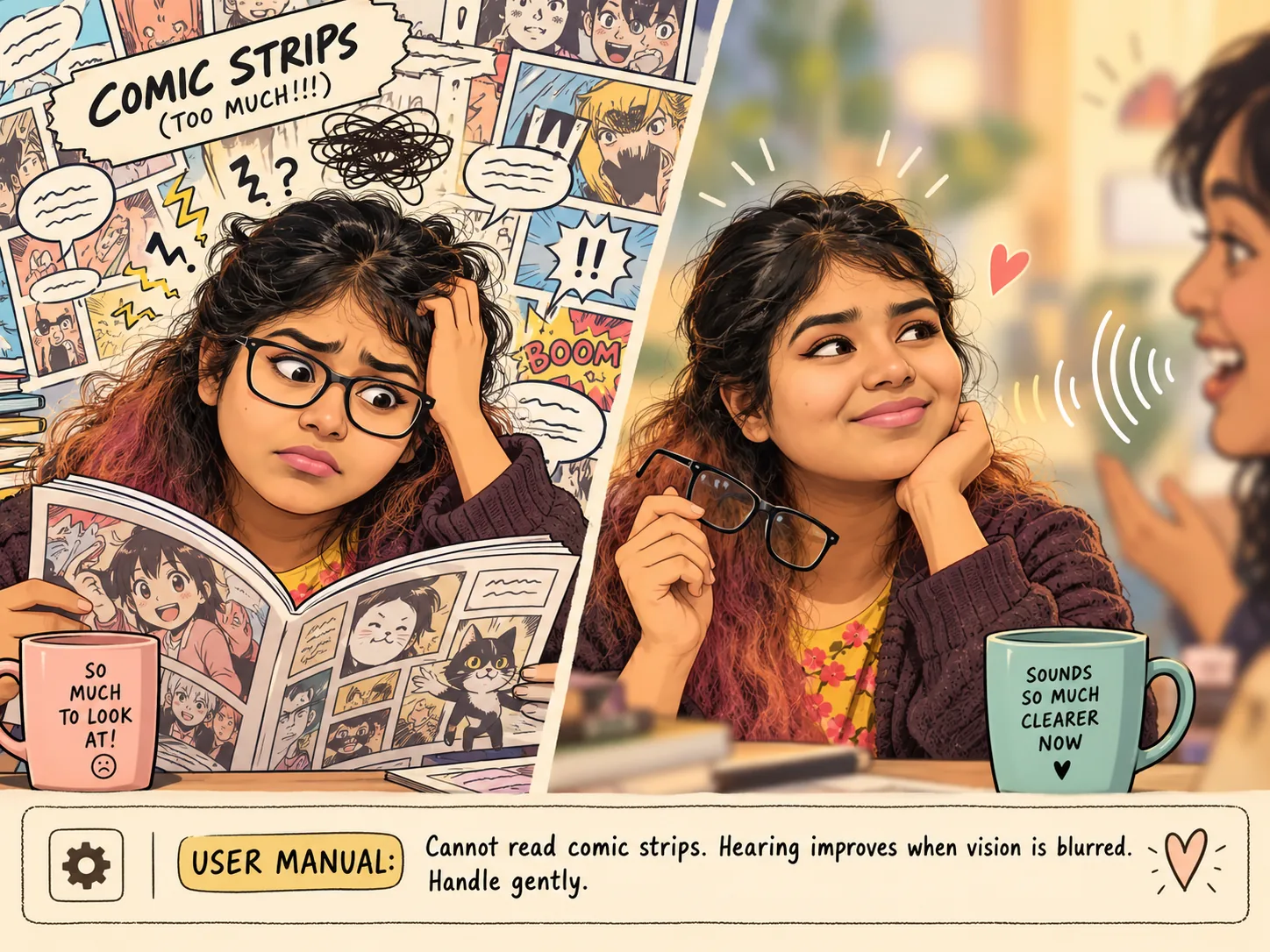
When My Eyes Are Too Loud
Comic Strips, Blurry Vision, and Cognitive Overload
Read the guide →
Mind & Mental Health
Hypnagogia — The Idea That Escaped Me by Morning
A bedtime idea felt like a whole article. By morning, only its emotional fingerprint remained—a personal essay about hypnagogia, creativity, memory, and finding a way to leave morning-me a breadcrumb.
Read the guide →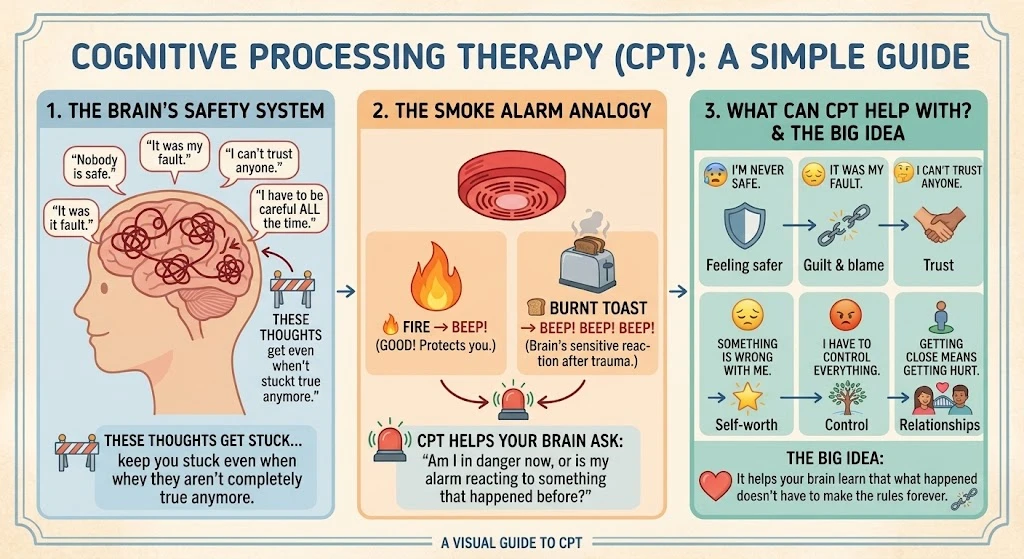
Mind & Mental Health
CPT — COGNITIVE PROCESSING THERAPY
Helping your brain get unstuck after something scary or painful happens.
Read the guide →
Mind & Mental Health
Panic, OCD, and the Checklist Before I Spiral
A personal checklist for interrupting panic and OCD loops: distract, talk, move, ground—and do not immediately obey the spiral.
Read the guide →
Mind & Mental Health
CBT can help everyone
A practical introduction to how CBT connects thoughts, feelings, and behaviours—and how its everyday tools can help us notice patterns, question assumptions, and respond with more choice.
Read the guide →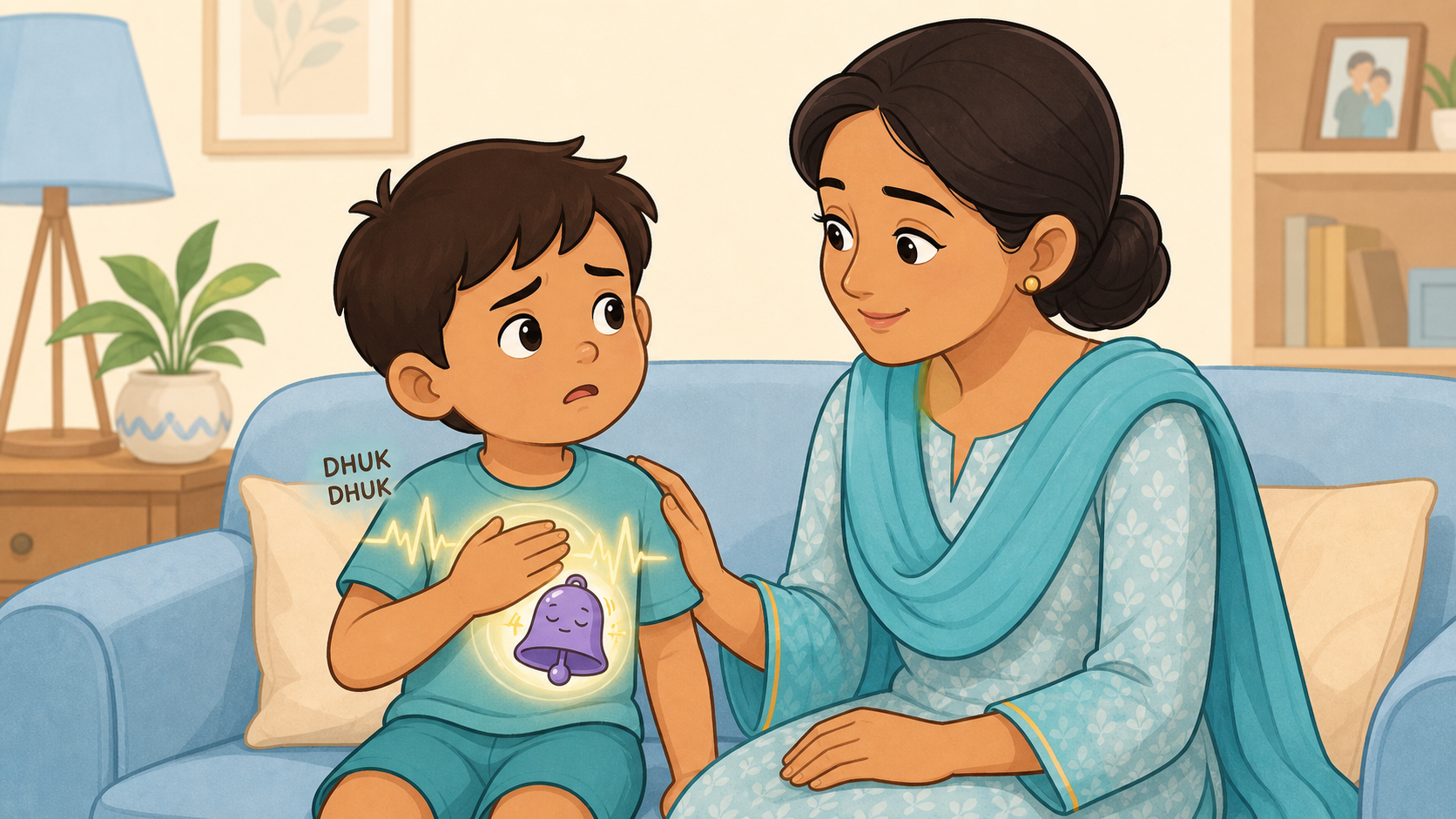
Mind & Mental Health
The “Dhuk Dhuk” in His Chest
Teaching My Son What Anxiety Means—One Small Win at a Time
Read the guide →
Mind & Mental Health
Anxiety on the Spectrum
A personal reflection on living with social anxiety, autistic overwhelm, and the relief that can come from finally finding words for what is happening.
Read the guide →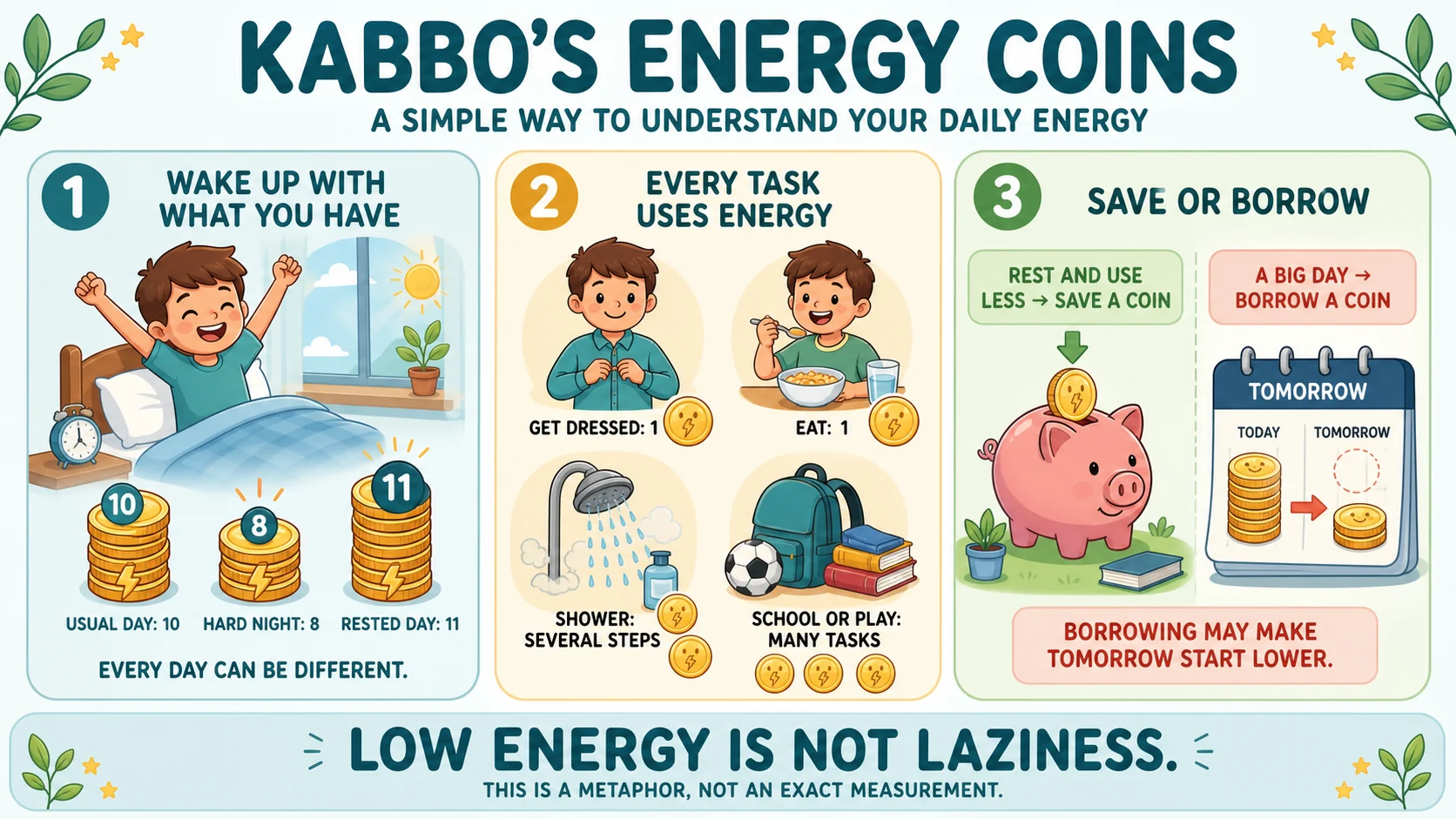
Mind & Mental Health
Kabbo’s Energy Theory: Borrowing From Tomorrow
A child-created model for understanding daily energy, rest, borrowing from tomorrow, and what repeated energy debt can teach us about burnout.
Read the guide →The shape of this section
What you can find here
Understand the words
Clear explanations of commonly used mental-health and therapy terms, including what they can mean and what they do not automatically mean.
Notice patterns
Visual comparisons and everyday examples that can help a reader describe an experience more clearly.
Find a next step
Questions to consider, kinds of support that may exist, and signs that professional or urgent help may be appropriate.
How the guides are made
What every guide should make clear
- what the article discusses and any content note;
- which statements are evidence, general guidance, or personal reflection;
- where location-specific health or legal information applies;
- the sources used and when the page was last reviewed; and
- where qualified or urgent support can be found when the subject requires it.
This collection provides general education. It does not diagnose, investigate, or replace individual medical, legal, therapeutic, or crisis support.