Name the feeling · check for safety · practise one small step
The “Dhuk Dhuk” in His Chest
Teaching My Son What Anxiety Means—One Small Win at a Time
- Published
- Last reviewed
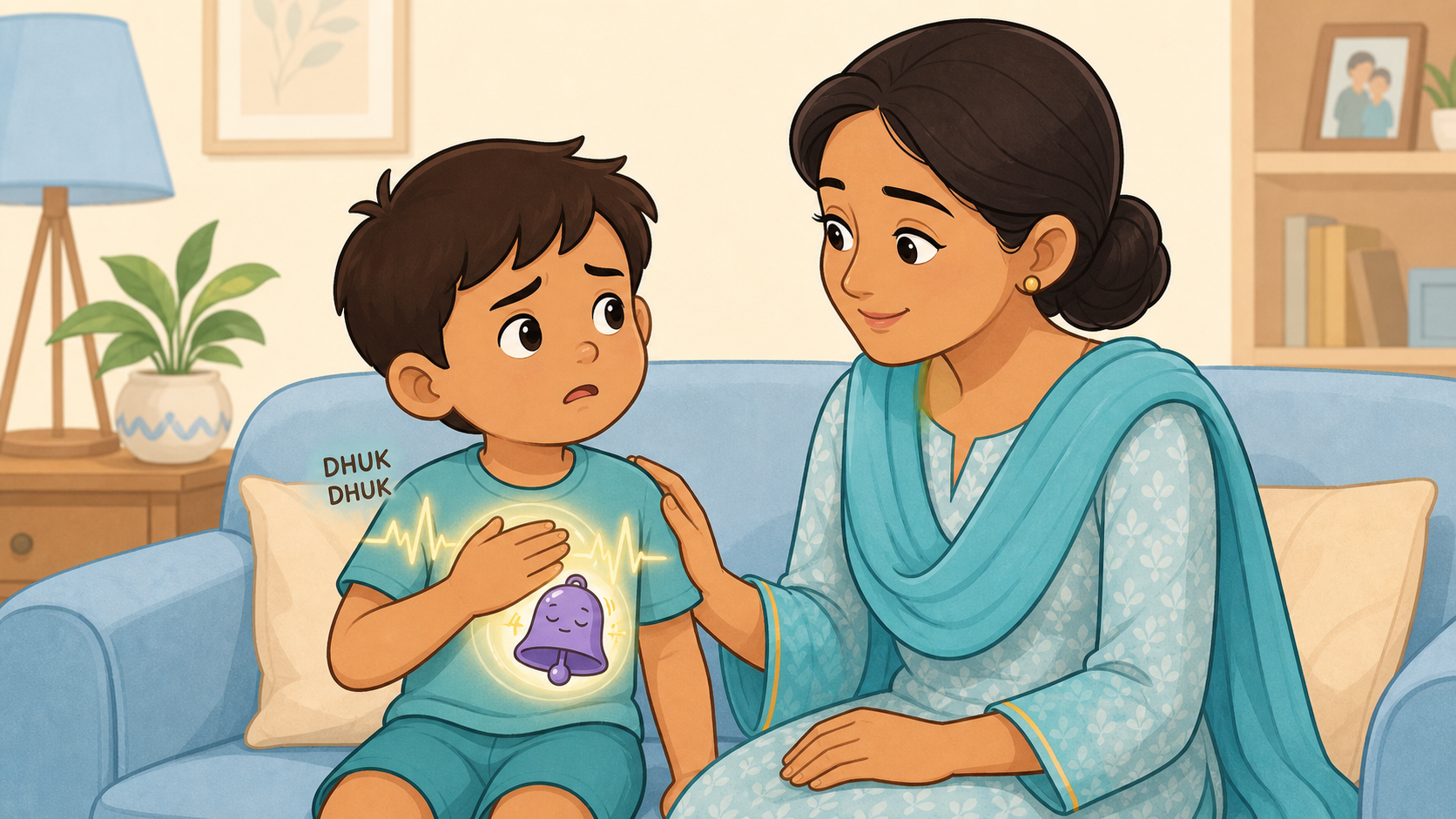
My son has watched Inside Out 2 and played with the LEGO® Joy, Sadness & Anxiety set, too, so naturally he asked me, “What is anxiety?”
Then came the follow-up questions.
“How is anxiety different from worry?”
“Does everyone have anxiety?”
And finally:
“How is it fair that I have it and some people don’t?”
That last question was the hardest because, honestly, what was I supposed to say? It is not fair. Our bodies do not have a fair little distribution system carefully handing everyone the same number of struggles.
Then he told me, “I don’t like this feeling.”
He calls it the “dhuk dhuk” in his chest.
That description made perfect sense. Anxiety may be a big, complicated word, but dhuk dhuk is something he can feel. It is the fast heartbeat, the strange feeling in his chest, the uncomfortable warning that something may be wrong—even when he cannot explain what that something is. Over the past four years, he has slowly learned to recognize that feeling. Not overnight. Not because we found one magical breathing exercise and anxiety packed its bags forever. We simply kept naming it, talking about it, and trying different ways to help his body feel safe.
What Is Anxiety?
I explained it to him like this:
Imagine that your brain and body have an alarm system. Everyone has one. Its job is to protect you. If there is a fire, an angry animal, or someone is trying to hurt you, the alarm rings. It makes your heart beat faster, tightens your muscles, and prepares you to run, hide, freeze, call for help, or protect yourself. That alarm is important. We need it. But sometimes the alarm notices something uncertain and mistakes it for danger. Sometimes it rings too early, too loudly, or for much longer than we need it to. Your heart goes dhuk dhuk. Your tummy may hurt. Your hands may become sweaty. Your body may feel shaky or frozen. You may want to escape even though you do not fully understand what you are escaping from.
That feeling is anxiety.
Anxiety is not your body being naughty. It is not proof that you are weak, dramatic, or incapable. It is your body trying very hard to protect you—sometimes from something dangerous and sometimes from something it has only guessed might be dangerous.
The first thing we do is check. Is something unsafe? Is someone hurting you? Is the room painfully loud? Is the light hurting your eyes? Is somebody touching you when you do not want them to? If so, the answer is not to ignore your alarm and force yourself to stay. The answer is to get help and make the situation safer. But if we check and discover that we are safe, we can help the alarm understand that it does not need to ring quite so loudly.
Worry and Anxiety Are Not Exactly the Same
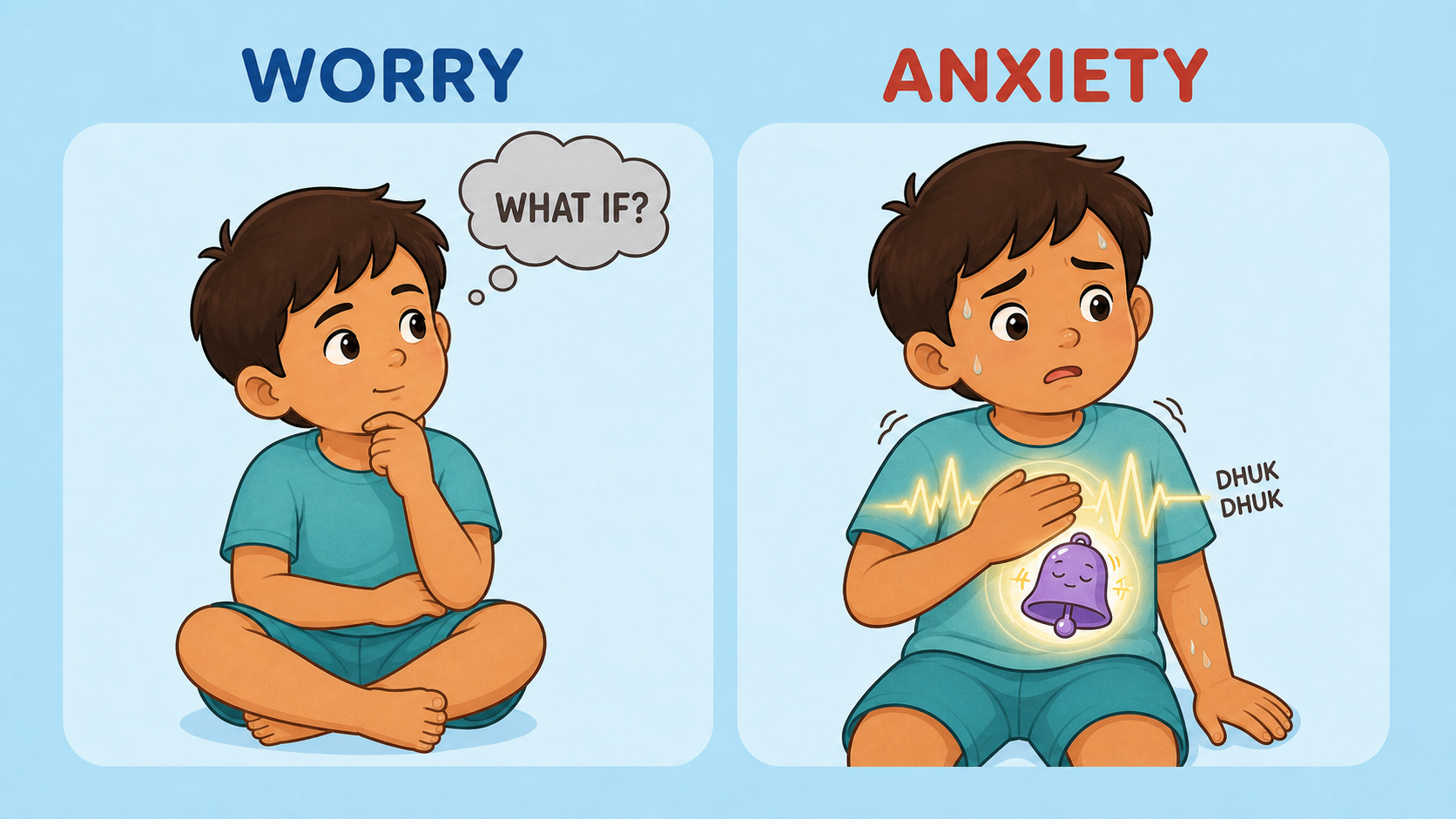
A worry is often a thought:
“What if nobody plays with me?”
“What if I forget what to say?”
“What if my drawing is not perfect?”
Anxiety is often what the brain and body do after that thought begins to feel like danger.
The worry says:
“What if?”
The anxiety answers:
“Watch out! Something bad is happening!”
Then comes the dhuk dhuk, the tight tummy, the sweaty hands, or the feeling that your feet simply cannot move.
Worry and anxiety often arrive together, but they do not always follow a neat order. Sometimes the worried thought comes first. Sometimes the body alarm rings before you can identify any thought at all. That is why I tell him he does not have to explain everything perfectly before asking for help. “I have the dhuk dhuk” is already enough information.
Does Everyone Have Anxiety?
Everyone has an alarm system, and almost everyone feels anxious sometimes. A person might feel anxious before an exam, on the first day of school, before speaking in front of people, or when entering an unfamiliar place.
But not everyone’s alarm rings with the same volume or frequency.
Some people feel anxiety occasionally. Some people have an alarm that is particularly sensitive. It rings more often, reacts more strongly, and takes longer to settle. Some people need extra support or professional help to manage it.
So when my son asks, “How is it fair that I have this and some people don’t?” I cannot pretend that it is fair.
I can only tell him:
“No, it isn’t fair that some things feel harder for you. You did not cause it, and you are not being punished. But you do not have to figure it out alone. We can learn what helps your body together.”
What Can Anxiety Look Like?
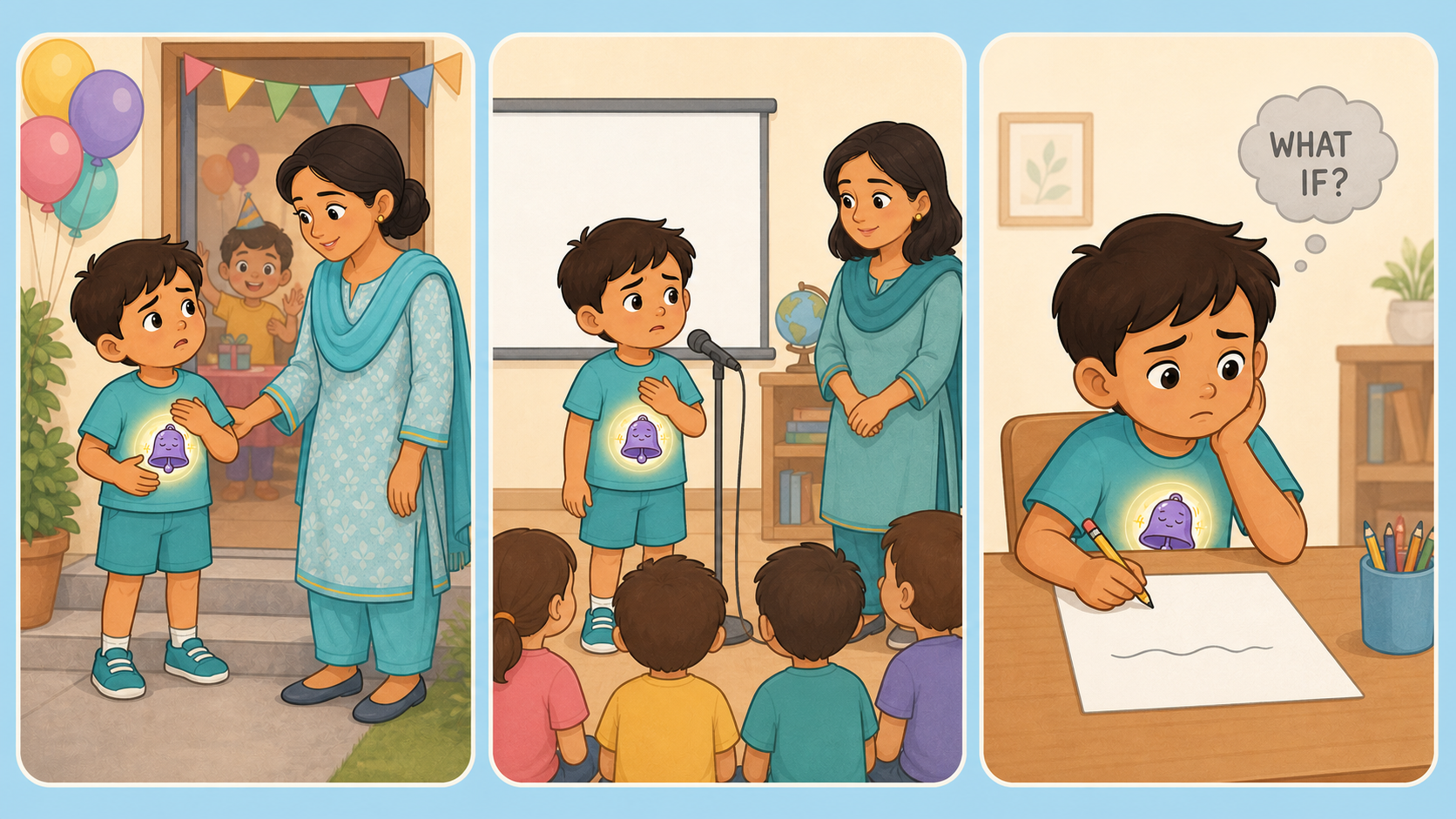
Anxiety does not always look like crying or saying, “I am scared.”
It might look like stopping outside a birthday party because the people, noise, and uncertainty on the other side of the door feel enormous.
It might look like standing silently in front of a classroom even though the child knew exactly what they wanted to say five minutes earlier.
It might look like refusing to draw because one imperfect line suddenly feels unbearable.
From the outside, these things can be mistaken for stubbornness, rudeness, laziness, or attention-seeking.
From inside the child’s body, an alarm may be screaming.
That does not mean every uncomfortable situation should be avoided forever. Avoiding something can make the alarm quieter for the moment, but it may also teach the alarm that the situation really was dangerous.
At the same time, not every refusal is anxiety that needs to be pushed through. A noisy party may be genuinely overwhelming. A child may need headphones, a quieter room, more information, a break, or permission to leave.
The job is not to force the child through the door.
The job is to understand what is happening and help them find one safe, manageable next step.
What Helps the “Dhuk Dhuk”?
The first thing that helped my son was learning to identify the feeling.
“I have the dhuk dhuk.”
That sentence tells me more than “I’m fine” ever could. It gives us somewhere to begin.
Now, he often asks me for a hug when the feeling appears. The hug does not magically solve everything, but it gives his body comfort, pressure, connection, and the reassurance that he is not facing the feeling alone. Sometimes he does not want a hug, and that is okay too. Comfort only works when it is actually comforting to the person receiving it.
We also practised slow breathing. At first, I had to remind him. We would breathe in slowly, count, and breathe out slowly. Again and again.
Now, there are times when I notice him taking deep breaths without anyone prompting him. That may look like a tiny thing to someone else. To me, it is enormous. He felt the alarm. He recognized it. He remembered a tool. Then he used that tool by himself. That is not a tiny achievement. That is four years of learning happening inside one breath.
Other things that may help include:
- Saying, “I feel anxious,” or, “My alarm is ringing.”
- Asking for a trusted person to stay nearby.
- Taking three slow breaths.
- Tightening the muscles like a robot, then letting them relax like a floppy rag doll.
- Using headphones or moving somewhere quieter.
- Asking what is going to happen next.
- Breaking one frightening task into much smaller steps.
- Taking a break and trying again later.
Anxiety does not always need a battle.
Sometimes it needs language. Sometimes it needs connection. Sometimes it needs accommodation. Sometimes it needs practice. And sometimes it needs professional help.
What Does Success Look Like?
Success does not mean that the dhuk dhuk never comes back.
It does not mean entering every party, speaking into every microphone, or forcing yourself to remain somewhere painful just to prove that you are brave. Success can mean noticing the feeling before it becomes overwhelming.
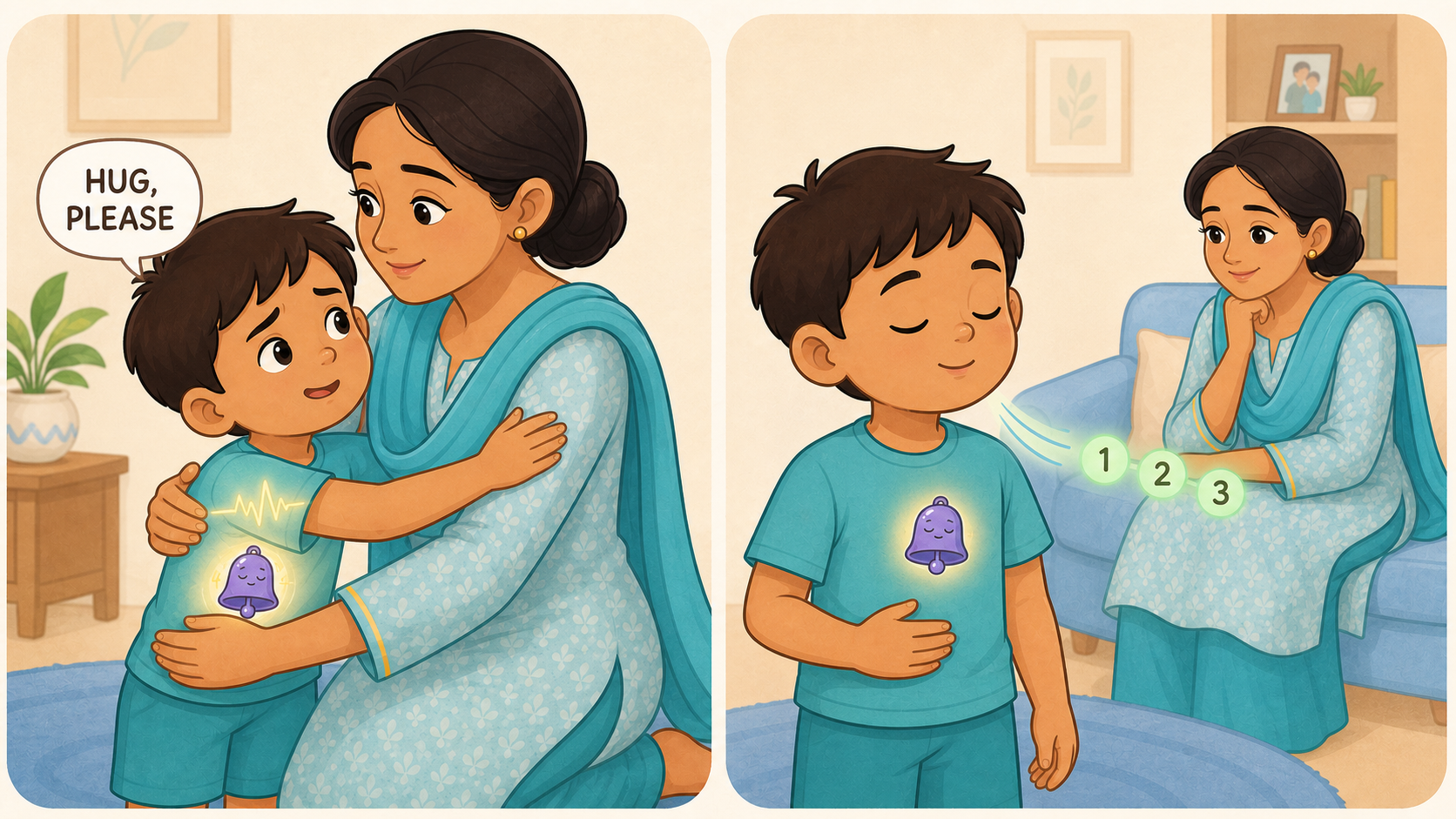
It can mean saying:
“I need a hug.”
“I need a break.”
“Please stay with me.”
It can mean taking a breath without being reminded. It can mean standing outside the party today, stepping through the door tomorrow, and saying hello to one person another day.
Going inside is a win. Standing at the doorway for one minute can also be a win. Asking for help is a win. Drawing one imperfect line is a win. Leaving an unsafe or painfully overwhelming situation is also a win.
My son still experiences anxiety. The alarm has not disappeared. But now he can sometimes recognize it, name it, ask for what he needs, and help his own body settle. That is what success looks like to me. Not a child who never feels anxious, but a child who is slowly learning:
“I know this feeling. I know what it is called. I know what might help. And I do not have to face it alone.”
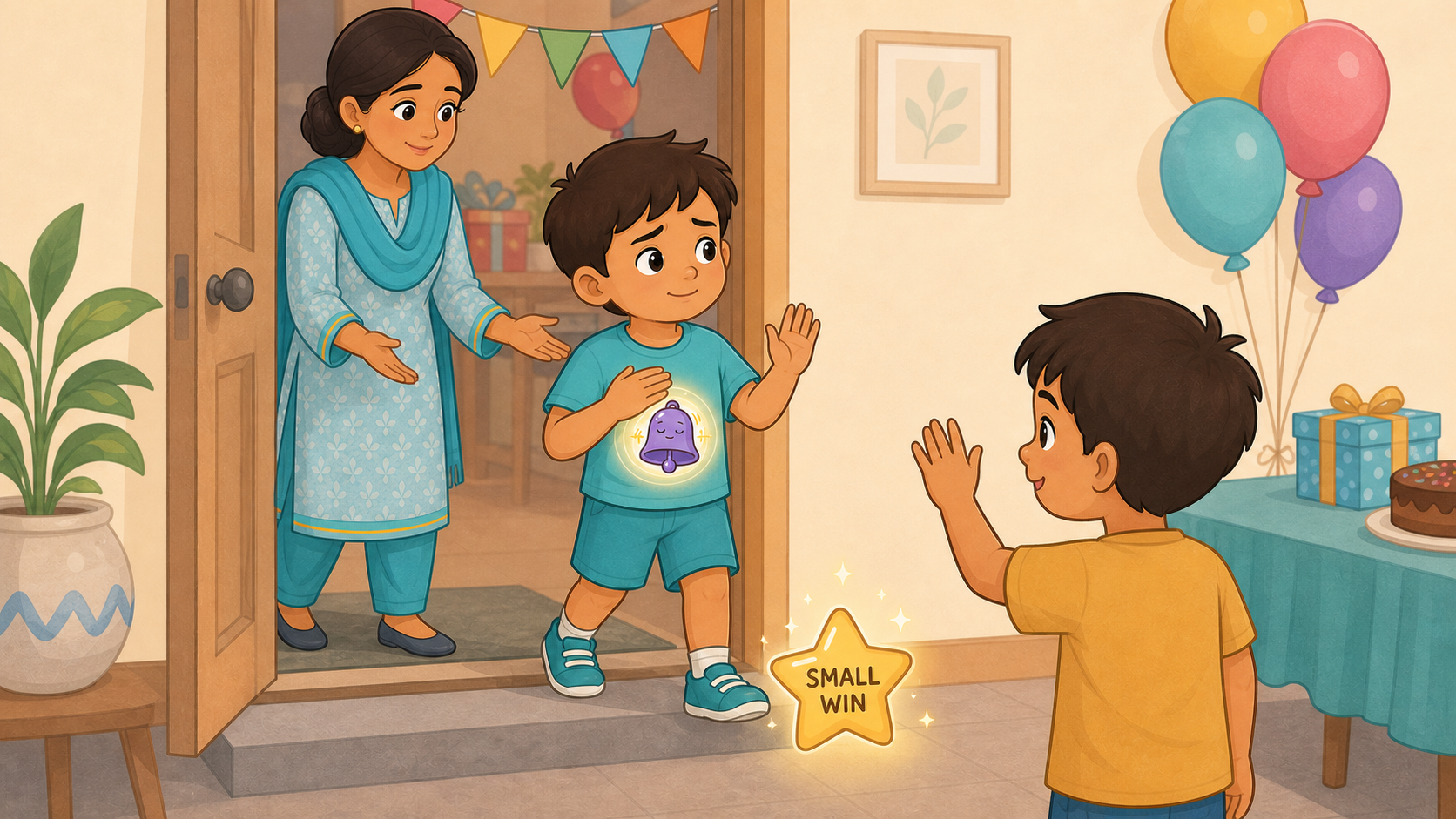
Small wins are still wins. Sometimes one deep breath is the small win.
And sometimes that one breath contains four years of courage.
A Note for Parents and Caregivers
This is a child-friendly explanation, not a diagnostic guide. Anxiety is a natural response to stress, but it may require professional support when it becomes very strong, continues over time, or interferes with school, sleep, relationships, daily activities, or things a child enjoys. Gradual, supported practice can help children approach safe situations that anxiety makes them avoid, but it should not be confused with forcing a child through pain, sensory overload, bullying, or genuine danger.