Neurodivergence Needs More Awareness
One terrible gymnastics session, one missing visual map, and why accepting neurodivergent children is not the same as being prepared to include them.
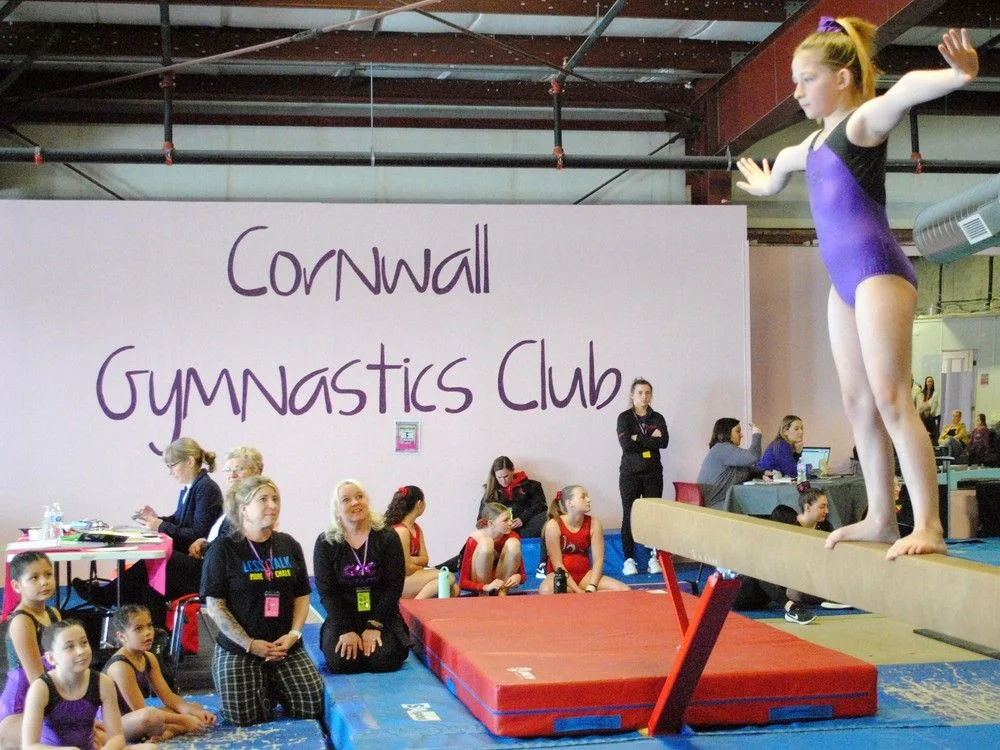
Today I want to talk about this.
My son’s gymnastics session went horribly today. Not because he suddenly stopped liking gymnastics. Not because he is a difficult child. Not because he went there intending to disrupt a class. It went horribly because the people who knew how to communicate with him are gone, and the support system that made gymnastics work for him did not follow him when the staff changed.
Over time, his previous coaches and I had worked through trial and error to figure out how to make gymnastics work for him. Eventually, we discovered something incredibly simple: draw him a map of the gym and give him a checklist. That’s it. Show him where he is going. Show him what comes next. Let him check things off as he goes.
With that little piece of paper, he can move through the gym, do the activities, and enjoy himself. The coaches spend less time redirecting him. He knows what is expected of him and, more importantly, he knows what the session is going to look like. It is such a small thing—just a piece of paper—but with it, everything becomes easier. Without it, especially when the people around him are unfamiliar, he can become lost in the environment.
Today, all of his familiar coaches were gone. The coaches working with his group now are new. They do not know him, and as far as I can tell, they did not know that he is autistic or that we had already established strategies that worked for him. When he went inside the gym, nobody approached him with his map. So he went back to his default mode.
He ran around.
To someone who does not know him, I understand what that might look like. Here is a six-year-old who is not staying with the group and not following verbal instructions. A coach’s instinct may be to tell him to stop, repeat the rules, become firmer when that does not work, and assume he is choosing not to listen. But this is exactly why people who work with children need at least some understanding of neurodivergence. More verbal instruction is not necessarily the solution for a child who is not processing verbal instruction.
For my son, we already knew the solution.
Show him.
I do not know exactly what happened next, and that is important for me to say. I do not want to accuse anyone of saying something when I was not close enough to hear the conversation. I saw two coaches trying to communicate with him.
Then my son started crying.
Not frustrated whining. Not “I don’t want to do this” complaining. Crying. Inconsolable crying. My son does not easily cry in public these days. He is growing up and knows he can choose how he reacts to things. But he is still a child, and there are times when he will be hurt and cry. This was that. Once he started, I could not get him back into the session.
Later, he told me that someone had said, “Boys are not allowed in the gym.” He kept repeating that he was not allowed because he was not a girl.
I do not know the context. I do not know whether those exact words were said, whether he misunderstood something, or whether an adult was trying to communicate a completely different rule and that was what he managed to process. But I do want to know, because whatever happened in that interaction, my six-year-old walked away believing he was not allowed to be there.
And that matters.
Once it became obvious gymnastics was not happening anymore, I tried to take him home. That did not work either. Going home early was not the plan. Gymnastics was supposed to end at a particular time, and his brain had prepared for gymnastics to end at that time. So we were stuck in this horrible middle ground where he could not cope with being in the gym, but he also could not cope with unexpectedly leaving it.
We stayed.
There was a lot of talking. A lot of reassurance that he was safe with Mum. A lot of breathing. Eventually, he calmed down. I spoke with Ms. Tiffany while we were there, and she was extremely understanding. Honestly, her understanding helped us get through what had become a really difficult situation.
But my son is now anxious about going back.
And that is what hurts.
The previous coaches and I worked hard to get here. Gymnastics was not automatically easy for him. We had to understand what was not working, try different things, and eventually figure out how to give him enough structure that he could participate independently.
And then something wonderful happened.
He started enjoying it. The gym became familiar. The coaches became familiar. The map made sense. He knew what happened there. It became one of his safe places.
Today felt like watching some of that work unravel in a single session. Maybe not permanently. I hope very much that it is not permanent. But when your child leaves something he previously loved and is already anxious about returning, it is difficult not to feel that something has been lost.
Maybe that is also why today hit me so hard. He is six. His classroom changed. His teachers changed. His classmates changed. His gymnastics coaches changed. There is a new baby in the family. These might sound like ordinary life changes to an adult. To him, that is an enormous amount of his predictable world changing at once.
And my little boy has been trying.
He is trying to understand his new classroom, new adults, new children, new expectations, and a day that does not always behave the way he expected it to.
I cannot remove change from his life. Nor do I want to. But I do expect the adults responsible for children to understand that not every child’s brain processes change, language, and instruction the same way.
This is the part I keep coming back to. I do not expect teenage or young adult gymnastics coaches to be autism specialists. I do not expect them to diagnose children, provide therapy, or magically know exactly what every individual child needs.
But if you coach children, you will coach neurodivergent children.
Some will have diagnoses their parents have disclosed. Some will not. Some parents may not know yet. Some children will have ADHD, autism, language-processing differences, anxiety, sensory sensitivities, developmental disabilities, or other needs.
Basic training should not be extraordinary.
What does an overwhelmed child look like? What is the difference between “won’t” and “can’t right now”? What do you do when repeating an instruction more loudly is not working? How can you use visual instructions? How do you redirect without shaming? What do you do when a child becomes distressed? And maybe most importantly: when something is not working, can you become curious before you become angry?
Because sometimes the difference between a child who appears “difficult” and a child who participates beautifully is a hand-drawn map and a checklist.
I know that because I have watched it happen.
This is something children’s programs sometimes get wrong. Inclusion is not simply: we accept neurodivergent children.
That is admission.
Actual inclusion requires some capacity to support the child once he gets inside.
For my son, that does not require another staff member following him around. It does not require an elaborate individualized program. It requires a few accommodations we already know work: a visual plan, clear and concrete instructions, showing rather than endlessly telling, patience when his response does not look like another child’s response, and an adult who understands that running around because you do not know what is happening is different from deliberately trying to ruin a class.
Once he understands what is expected, he is actually quite easy to coach. That is what makes today particularly frustrating. We already did the hard part. We figured out what works.
The knowledge simply did not follow him when the staff changed.
I have asked myself all day whether I should have given every new coach a guide.
Maybe.
Not because I think what happened today was my son’s fault, or because parents should be solely responsible for teaching children’s programs how to accommodate neurodivergent children. But because I know my child better than anyone there. If one sheet of paper saying THIS IS HOW ISAAC WORKS BEST can prevent another day like today, I will make the sheet.
I will laminate the damn thing.
I will make ten.
Because ultimately, I am less interested in deciding whose responsibility it should have been than I am in making sure my six-year-old does not go through this again. But I also want the organization to meet us halfway. I want his support information to survive a staffing change. I want a new coach to know, before things go wrong, that the child running around is not necessarily refusing to participate. And I want coaches working with children to have enough basic neurodiversity awareness to stop and think:
Maybe I need to communicate this differently.
That is where we are tonight.
A place that had become safe suddenly does not feel quite as safe. Tomorrow, I will start helping him rebuild that. We will draw the map again. We will talk about what happened. We will figure out who his coaches are. We will make the unknown known. And hopefully, gymnastics will become gymnastics again.
But I do not want today’s lesson to be only for my son.
The adults can learn something from it too.
Neurodivergent children are not difficult children who need firmer instructions. Sometimes they are children being given instructions in a form they cannot use. Change the communication, and you may change the child you think you are dealing with.
My son taught us that a long time ago.
I just wish everyone coaching him had been given the chance to learn it too.