Topicals & My Drool-Troll Chin
More than a month with Topicals Faded: a less-obvious patch of pigmentation, a very unglamorous sleep habit, and no fairness-cream miracles required.
Personal review, not medical advice. This is my experience with one skincare product on my own skin. Pigmentation can have many causes, and a healthcare professional can help if a skin change is persistent, worsening, painful, or otherwise concerning.
Affiliate disclosure: The Amazon.ca link is an affiliate link. If you buy through it, I may earn a commission at no extra cost to you. As an Amazon Associate I earn from qualifying purchases.
I am going to say something deeply glamorous: I drool when I sleep.
Not cute princess drool. Not one delicate drop at the corner of the mouth. I mean I drool like a troll who has given up on dignity.
And over time, I noticed that the skin from my chin to around my mouth had become darker than the rest of my face. For a long time, I just thought, okay, this area looks dull. Maybe it needs more scrubbing. Maybe it is dry. Maybe I need more hydration. Maybe my face has simply decided to create its own shadow beard.
Lovely.
Saliva really can irritate skin. DermNet’s explanation of lip-licker’s dermatitis describes how repeated saliva contact and the constant wet-dry cycle can disrupt the skin barrier, cause inflammation, and sometimes leave post-inflammatory hyperpigmentation.
That page is about lip-licking; it is not a diagnosis of my chin, and I am not diagnosing myself from the internet. But the mechanism gave me a plausible explanation for why my nightly troll activities might not be completely innocent.
How Topicals entered the chat
This whole Topicals thing started because I went to Sephora with my mother-in-law. She has pigmentation around her cheek that had started to look almost like a deep birthmark. I do not know exactly what caused it, so I do not want to diagnose her face like I am a dermatologist wearing a Sephora basket.
But she has spent years around kitchen heat, Bangladesh heat, sun, and pollution, and it made sense to look for something that targeted hyperpigmentation. Heat and light are not completely random guesses here either: Cleveland Clinic explains that ultraviolet, visible, and infrared—or heat—radiation can contribute to melasma and make it worse.
That does not mean my mother-in-law’s pigmentation was melasma. It only means heat and light can matter in some pigment conditions, which is one more reason not to diagnose a dark patch by standing under Sephora lighting and squinting at it.
We approached the Sephora helper person, explained the pigmentation situation, and she guided us toward Topicals Faded. She said customers rated it highly and that they recommended it too.
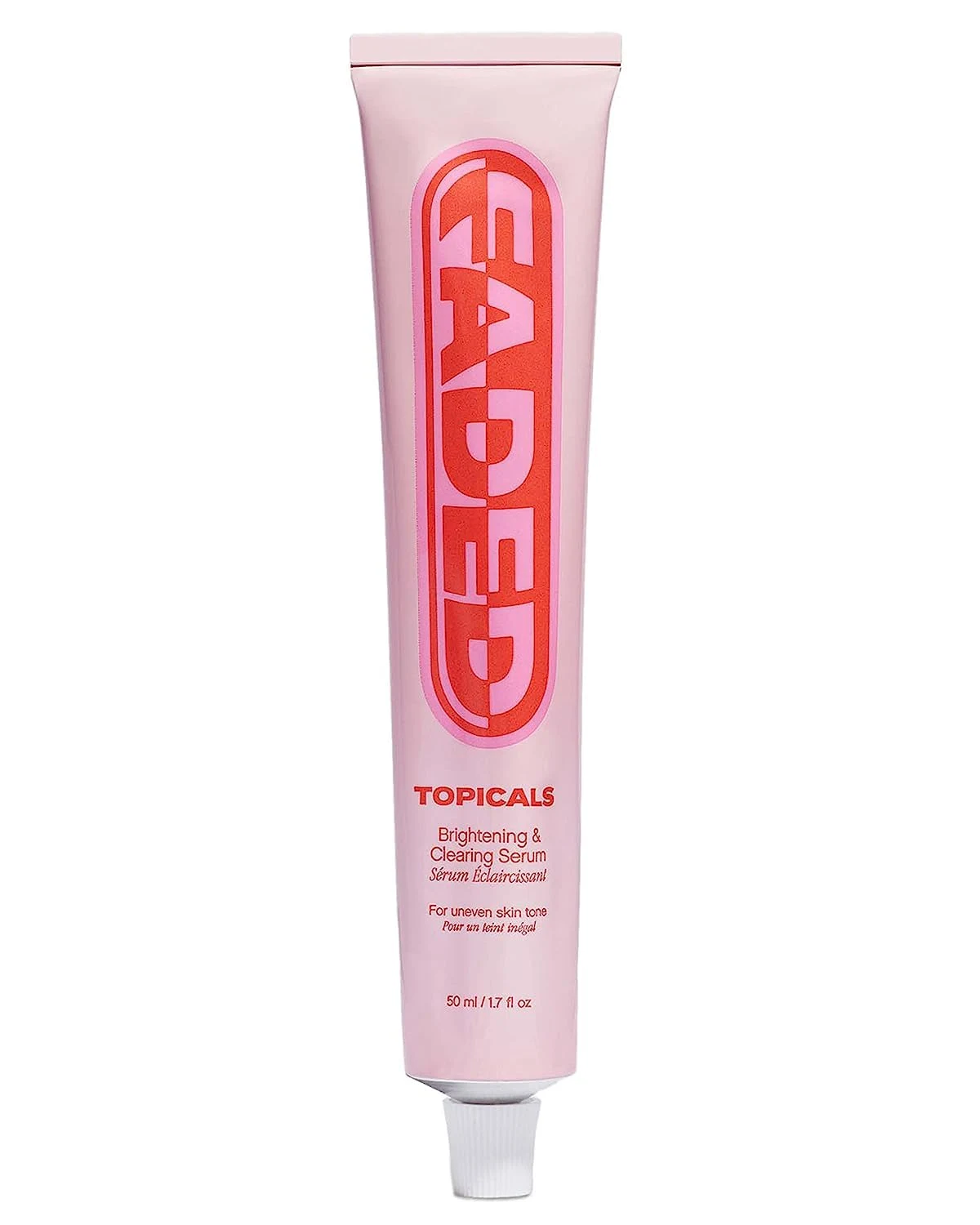
The product itself is marketed as Faded Brightening + Clearing Serum for dark spots and discoloration—not technically an ointment, but in my head it is “that pigmentation ointment thing” because that is how my brain files skincare. Topicals says it is intended to visibly even skin tone and texture and reduce the look of dark spots, post-breakout marks, and scars. Its highlighted ingredients include tranexamic acid, niacinamide, azelaic acid, kojic acid, and melatonin.
My mother-in-law tried it first. A few days later, she said she could already see her spot becoming lighter.
That got my attention because, listen, I am easily influenced by visible results in my own house. Influencer who? My mother-in-law’s cheek review was enough.
So the next time I went, I picked up a tube too.

What changed for me
I have now been using it for more than a month, but only on my chin and mouth area. My routine is otherwise still my routine: CeraVe cleanser, Medicube serum, all the usual things. I am not putting this all over my face like a glazed-donut experiment. I use it specifically where the drool damage and darkness are.
And yes, I can see a difference.
Not an astonishing “Fair & Lovely ad from the early 2000s where someone becomes three shades lighter and suddenly gets a job, husband, and personality” difference.
Absolutely not. We are not doing that nonsense.
But my chin area is definitely less dark than before. It looks closer to the colour of my cheeks. It no longer looks like it needs a brutal scrub, two layers of foundation, and a hydration ceremony just to behave like the rest of my face.
That is the real win for me. Not perfection. Just less mismatch.
I also like that it does not feel like a fake instant-brightening product. Post-inflammatory hyperpigmentation can take time. DermNet explains that these darker patches can develop where skin was previously inflamed or injured and may become darker with sun exposure. It lists topical options including azelaic acid, kojic acid, niacinamide, and others, while noting that results vary and combinations are often needed for significant improvement.
So my expectations are realistic. I am not expecting one tube to erase my history of sleeping like a leaky goblin. But if consistent use makes the chin-to-mouth area calmer, lighter, and less “why is this part of your face a different chapter?” then I am happy.
Skin is not a dirty pan
One important thing: this is still an active skincare product. Topicals’ current directions say to apply it after cleansing, follow daytime use with SPF, patch-test before use, and avoid layering it directly with AHAs, BHAs, or retinoids.
I think that matters because when something works, it is tempting to start using it aggressively.
But skin is not a dirty pan. More scrubbing and more actives do not always mean better results.
Topicals Faded has been good for me. Not magic. Not overnight. Not dramatic. But good.
My mother-in-law saw improvement in her cheek pigmentation, and I saw improvement on my drool-troll chin. That is enough for me to keep using it.
If you are dealing with stubborn uneven pigmentation and are patient enough to use something consistently, I think this is worth considering—with realistic expectations, gentle use, and sunscreen. And if you do not know what caused the pigmentation, it is sensible to ask a healthcare professional rather than letting a skincare aisle and an internet search diagnose your face.
For me, it did exactly what I wanted: it made the darker area less obvious and helped my chin look more like it belongs to the same face.
And honestly, for a product fighting years of sleep drool, that is respectable work.