Clean gently · protect the skin · know when to get help
Tiny Bottoms, No Guesswork: A Picture Guide to Nappy Hygiene
A calm, illustrated guide to safer nappy changes: what to prepare, how to clean baby girls and boys gently, what never to force, and when to seek medical help.
- Published
- Last reviewed
You bring home an entire baby, and suddenly you are supposed to know everything. Some of us watch the nurses. Some ask Nana. Some Google. But bruh, loving your child and knowing how to clean every fold are not the same thing.
I remember being ridiculed for bringing up urinary problems with my OB. By my OB. That is exactly the hush-hush nonsense I want our children to grow up without. Bodies need care. Questions deserve answers. This guide is for mums, dads, and anyone else on nappy duty.
The pictures use covered dolls and fabric demonstrations to show cleaning direction and order. They are not anatomical diagrams, so the instructions are also written out below.
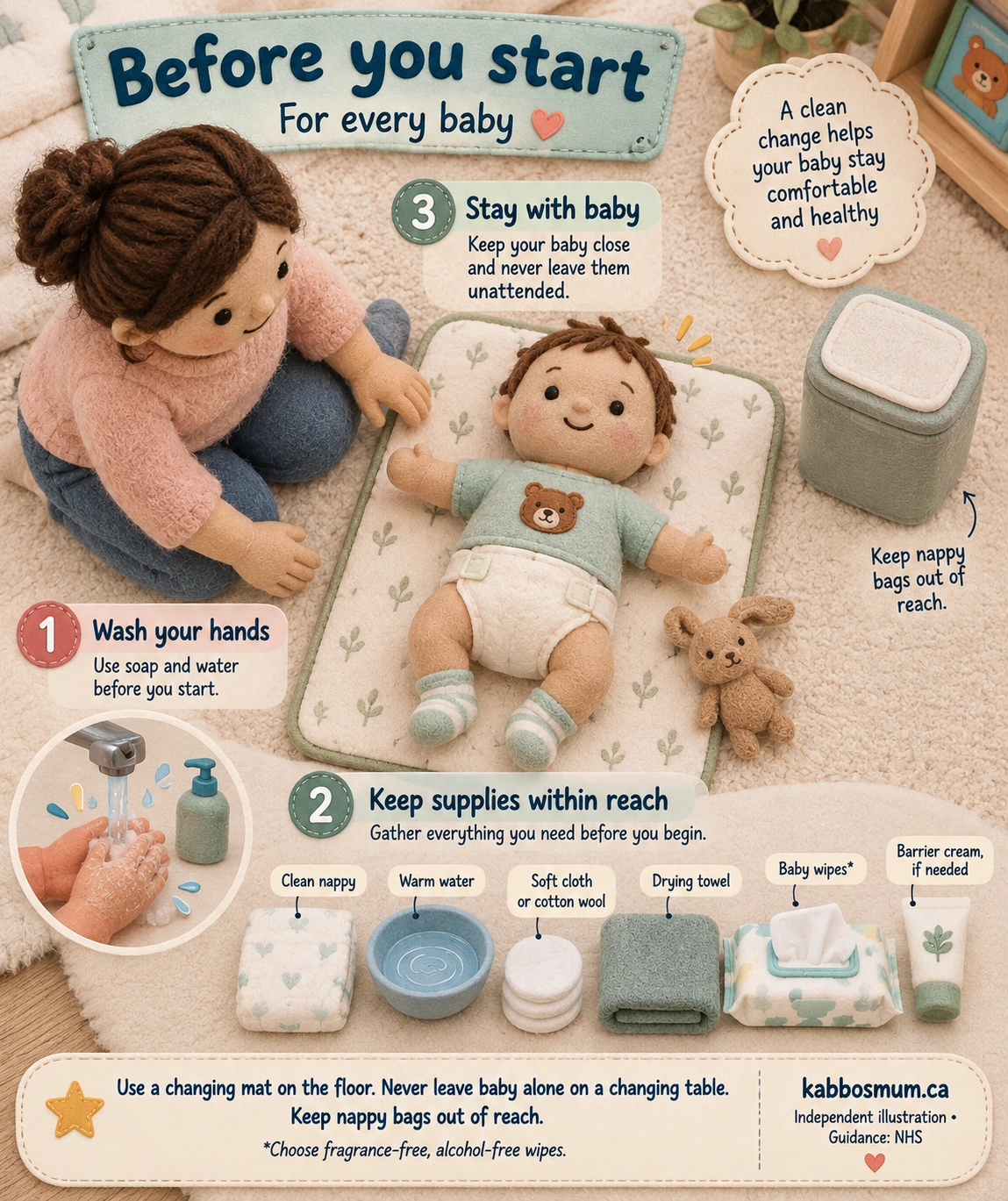
Before you start — for every baby
Wash your hands and gather everything within reach: a clean nappy, a drying towel, and comfortably warm water with cotton wool or a soft cloth—or fragrance-free, alcohol-free baby wipes. A thin layer of suitable barrier cream can help when needed; follow the product instructions.
Use a changing mat or towel on the floor where possible. If you use a raised changing surface, stay beside your baby and never turn or walk away. Keep disposal bags and the nappy bin out of your baby’s reach.
The NHS nappy-changing guide recommends gathering supplies first, using a floor mat where possible, and never leaving a baby unattended on a changing table.
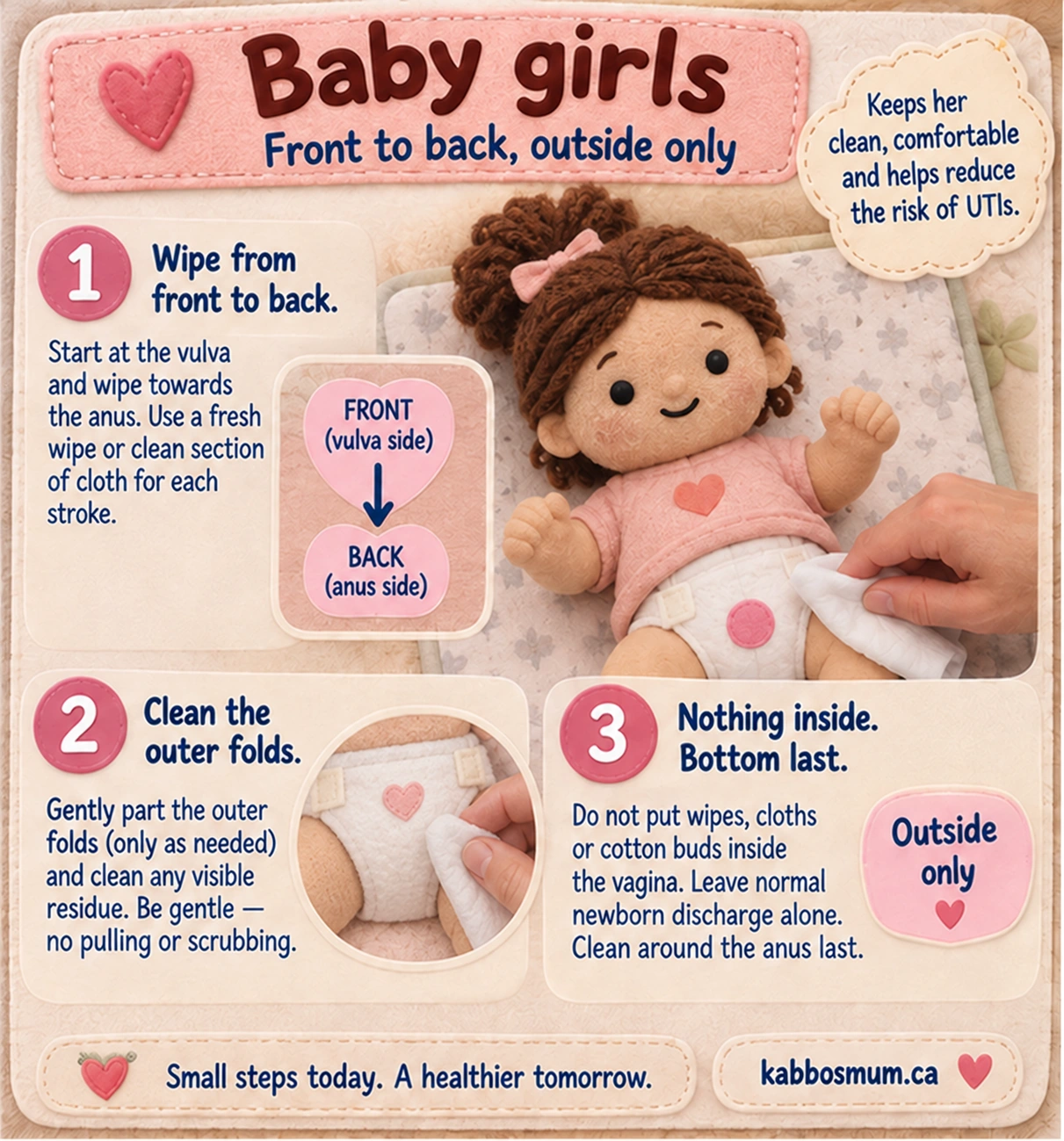
Baby girls: front to back, outside only
- Wipe front → back. Move from the vulva towards the anus, keeping poo away from the urinary opening. Use a fresh wipe or a clean section of cloth for each pass.
- Check the outer folds. Gently part the outer vulval folds only as much as needed to remove visible poo or cream. Use soft, damp strokes—no pulling or scrubbing.
- Nothing inside. Bottom last. Never put wipes, cloths, or cotton buds inside the vagina. Clean around the anus last.
The NHS notes that a newborn girl may have a white discharge for a few days after birth because of hormones from pregnancy; do not try to clean inside the vagina to remove it. The NHS, HealthLink BC, and the Canadian Paediatric Society’s Caring for Kids all advise cleaning a baby girl from front to back.
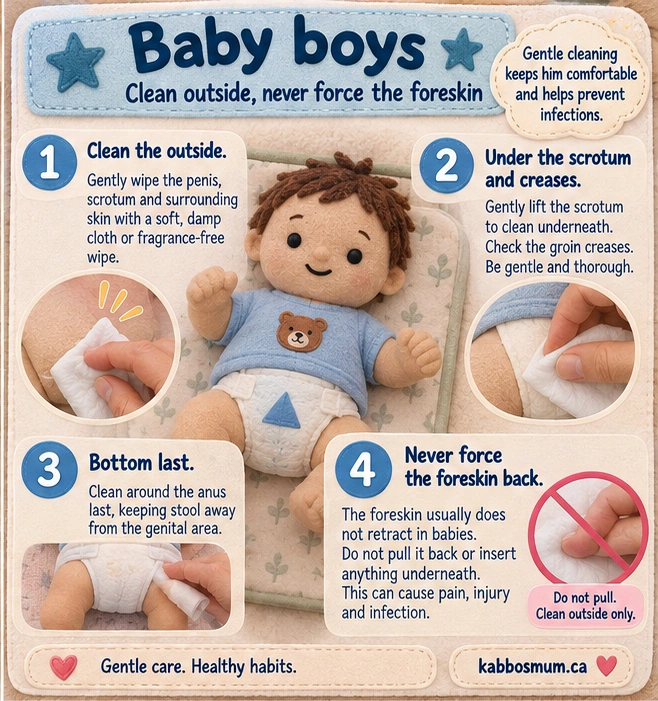
Baby boys: clean outside, never force the foreskin
- Clean the outside. Gently wipe the outside of the penis, scrotum, and surrounding skin.
- Check underneath and between folds. Gently lift the scrotum to clean underneath it, then check the groin creases.
- Bottom last. Clean around the anus last, moving poo away from the genital area.
- Never force the foreskin back. A baby’s foreskin commonly does not retract. Forcing it can cause pain, injury, and scarring. Clean only the outside; do not pull it back to clean underneath or insert anything beneath it.
The Royal Children’s Hospital Melbourne and the Canadian Paediatric Society both confirm that a baby’s foreskin should not be forced back. After a recent circumcision, follow the clinician’s specific aftercare instructions.
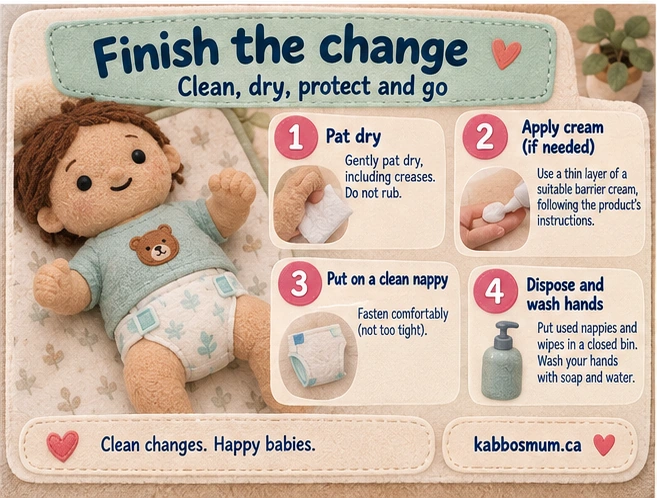
Finish — for every baby
Pat the skin dry gently, including the creases. Apply a thin layer of suitable barrier cream if needed, following its instructions. Fasten a clean nappy comfortably, dispose of the waste safely, and wash your hands.
Change wet or dirty nappies promptly. Skip talcum powder and fragranced products on irritated skin. The NHS nappy-rash guidance recommends keeping the skin clean and dry, using fragrance-free and alcohol-free wipes when needed, and avoiding talcum powder.
When cleaning is not enough
This section is medical guidance beyond the cleaning steps.
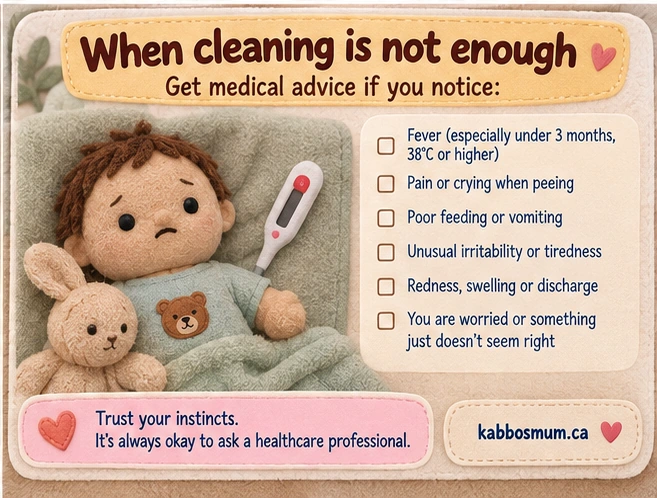
Pain when peeing, unexplained fever, poor feeding, unusual fussiness, vomiting, or diarrhoea: contact a healthcare professional. Babies can have a urinary tract infection without obvious urinary symptoms, and a urine test is needed to know for sure. Boys can get UTIs too. NIDDK
A baby under three months with a temperature of 38°C or higher: seek urgent medical advice now. NHS
A child who cannot pee, or whose foreskin has been pulled back and is stuck: go to the nearest emergency department. Royal Children’s Hospital Melbourne