The Lost Metal — GraphicAudio Version
GraphicAudio made Wayne even more alive, which meant The Lost Metal's ending hit even harder. Five stars emotionally. Zero stars for my peace of mind.
Spoiler warning: This review talks openly about the ending of The Lost Metal. If you have not finished Mistborn Era 2 yet, please go away lovingly and come back later. I am not responsible for emotional damage after this point.
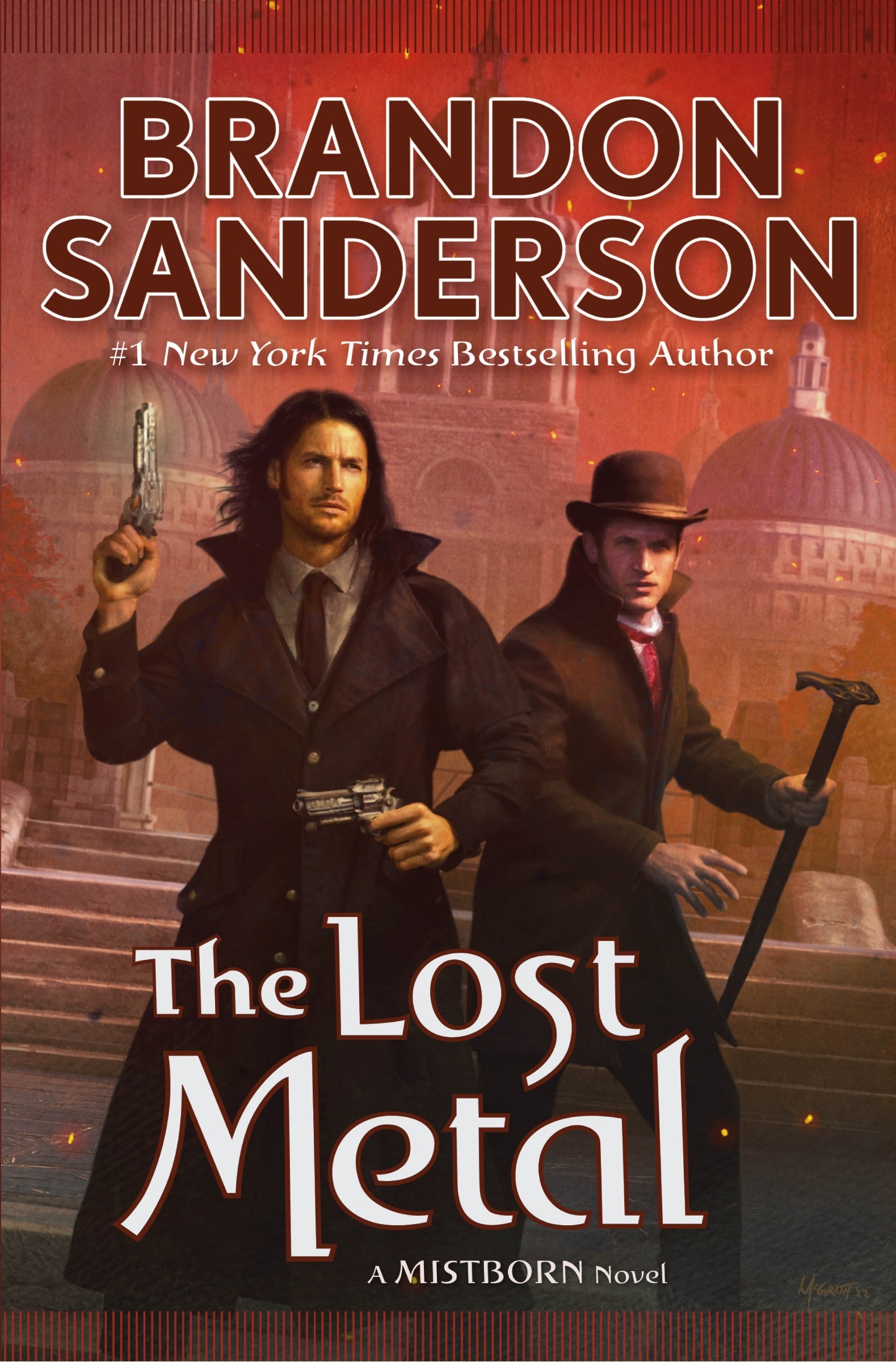
Listening details: The Lost Metal by Brandon Sanderson · Two-part GraphicAudio dramatized adaptation · Approximately eight hours per part.
Affiliate disclosure: The Amazon.ca link is an affiliate link. If you buy through it, I may earn a commission at no extra cost to you. As an Amazon Associate I earn from qualifying purchases.
I listened to the two-part GraphicAudio dramatized adaptation of The Lost Metal, the last Mistborn book out so far, and honestly, I needed more than 15 days before I could even try writing about it. Not because I did not like it. Because I liked it too much. And then it hurt me.
The Lost Metal is the seventh Mistborn book and the final book of Mistborn Era 2, the Wax and Wayne era. Brandon Sanderson’s official series page describes it as the final volume of the second Mistborn saga, while GraphicAudio frames it as the “earth-shattering conclusion” to that era. The story brings Waxillium Ladrian, Wayne, Marasi, Steris, Harmony, the Set, Trell, Bilming, and bigger Cosmere threads together into one massive ending. So yes, I knew this was supposed to be big. I knew this was supposed to be an ending.
But Brandon. BRANDON. How could you do this?
Wayne, obviously
Wayne is obviously my favourite character. No contest. I love the ridiculousness, the humour, the hats, the accents, the constant performance of stupidity while actually being far more emotionally complicated than he lets on. Wayne is the type of character who walks into a scene and immediately makes everything better. And the GraphicAudio version made that even stronger for me. Bradley Foster Smith voices Wayne, with Chris Genebach as Wax, Dani Stoller as Marasi, Eva Wilhelm as Steris, and Terence Aselford as narrator. You cannot convince me Wayne has any other voice now. That is Wayne. That accent, that timing, that emotional crack behind the humour—locked in. No alternate interpretation accepted.
And that is why the ending destroyed me. I know it was good storytelling. I know. I am not saying it was badly written. That is the worst part. It was a good ending. It made sense. It completed something important. It gave Wayne weight and purpose and tragedy and beauty. But I do not like this kind of ending. No. Absolutely not.
This was a Game of Thrones-style punch to the gut. And I need fantasy because real life already has enough reality, thank you very much. I do not come to magic systems, metal powers, gods, guns, and witty idiots with emotional trauma because I want to be reminded that sacrifice hurts and endings can be unfair. I come here for escape. For wonder. For a world where somehow, after all the explosions and bad decisions, my favourite people are still standing.
But between recently reading Babel and now finishing The Lost Metal, I feel cornered by fantasy. Babel already hit me with empire, abandonment, language, violence, and being useful to people who do not truly love you. Now The Lost Metal comes and says, “Oh, you wanted comfort? Here is grief with excellent pacing.” Great. Wonderful. Very rude.
And still, I cannot deny how good this book is. Sanderson knows how to build momentum. He knows how to make systems click together. He knows how to take a character who has been comic relief for books and suddenly make you realize he was never just comic relief. Wayne’s humour was not a side dish. It was armour. It was rhythm. It was grief management. It was identity. It was a way of surviving himself.
That is why it hurts. Because when a character like that goes, it does not feel like losing a plot piece. It feels like losing the sound of the room.
The formula still works
I will say something slightly critical too. I do feel like Sanderson has a character formula sometimes. There is the quirky, ridiculous, emotionally devastating character—Wayne here, obviously. There is the strange, smart, messy, almost Shallan-esque girl energy. There is the serious man carrying duty like a disease—Wax. There is the competent, stabilizing wife or partner figure—Steris. Once I noticed the pattern, I could not fully unsee it.
But the annoying thing is, it still works. I can see the structure, and I still care. I can see the formula, and I still fall for the characters. That is either skill or witchcraft. Probably both.
Steris especially deserves credit. She could have easily been written as the “wife character,” but she is not. She is practical, precise, competent, and wonderfully herself. Wax is the serious one, yes, but Steris is not just decoration beside him. She is structure. She is strategy. She is the person who makes plans because somebody has to, and honestly, respect.
Marasi’s arc also carries that “bigger Cosmere” feeling. The book opens the world wider than Wax and Wayne’s immediate problem, and that is exciting, but also a little overwhelming. At some points I felt like I needed a small degree in Investiture to keep up. Still, it made Scadrial feel like part of something enormous, not just its own isolated setting.
A movie in my mind
The GraphicAudio production deserves a whole separate thank you. These dramatized adaptations have completely changed how I experience books. Reading in print and listening to a full-cast audio drama are not the same experience at all. GraphicAudio literally brands itself as “A Movie in Your Mind”, and honestly, yes. The music, the sound effects, the cast, the direction, the pauses, the emotional delivery—all of it makes the book feel alive in a different way. Part 1 and Part 2 are each listed at approximately eight hours, with Nathanial Perry credited as director, adapter, dialogue editor, and sound designer.
For me, at least 50% of my investment came from how well the cast performed it. Maybe more. Wayne’s voice, Wax’s seriousness, Steris’s precision, Marasi’s resolve—they are no longer abstract in my head. They have voices. They have breath. They have timing. And when the ending came, the audio made it hit harder. Betrayal by production quality, basically.
Five stars, zero peace
So where does that leave me? I loved this book. I hate this book. I respect this book. I am mad at this book. I am mad at Brandon Sanderson personally in the parasocial reader way where obviously he wrote an excellent ending but also how dare he.
It is a very good book. It is probably exactly the ending this era needed. I still have not made peace with it. And maybe that is the sign that it worked. Not every fantasy book has to comfort me. Some of them apparently get to walk into my life, make me love a character beyond reason, destroy me, and then leave me sitting there for 15 days unable to form words.
Fine.
Five stars emotionally. Zero stars for my peace of mind.
Wayne forever.
Book and listening links
- The Lost Metal by Brandon Sanderson: Goodreads · Amazon Canada (affiliate link) · Audible · GraphicAudio Part 1 · GraphicAudio Part 2
- A Game of Thrones by George R. R. Martin: Goodreads · Amazon Canada (affiliate link) · Audible
- Babel by R.F. Kuang: Goodreads · Amazon Canada (affiliate link) · Audible