My son loved the spinning chair. I lasted about a minute.
My son wanted more spinning. I wanted it to stop. Our very different experiences with the same chair sent me looking into sensory preferences and motion sickness.
About this review
- Subject
- Spinning chair
- Purchase / disclosure
- Bought by me; three chairs ordered for home and school.
- Use at time of review
- About a year or so.
- Important limitation
- My son enjoyed spinning; I felt nauseated after about a minute.
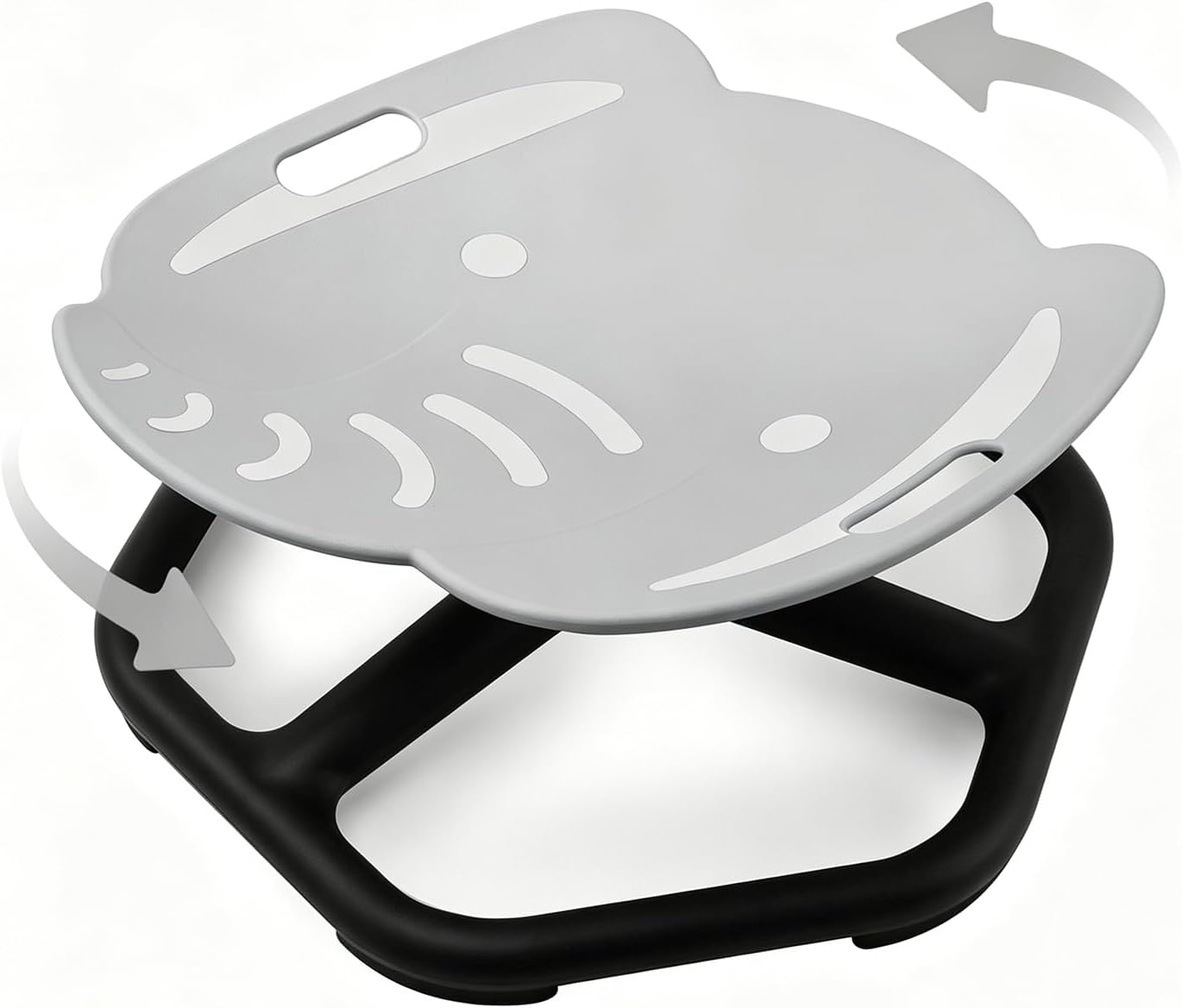
About a year or so ago, one of my son’s teachers told me that he was stimming a lot in class. She suggested looking into something that would let him move while keeping him more in one place and reducing his chances of getting hurt. I did not quite understand what she was suggesting. After about five minutes of a conversation that I suspect was becoming increasingly frustrating for her, she spelled it out for me. She meant a spinning chair.
I came home and ordered one to try. When it arrived, my son took to it immediately. He did not want to get off. While he was using it, he was occupied with spinning instead of running around the house and randomly falling on his face. That seemed like progress. I could also see why his teacher thought it might be useful in a room full of children. So I ordered two more and sent them to school. His immersion programme involved switching classrooms on alternate days, so two made sense. This year, he no longer needs to change classrooms, and his teachers sent one back.
Together with the one we already had at home, that left us with two spinning chairs. The little one was quite excited about this development. He thought we could try them together. He sat on one. I sat on the other. Mine seemed to start spinning all by itself, and I could not get it to stop. About a minute later, I felt like throwing up. He continued spinning for a while longer. Apparently, we were having very different experiences of the same family activity.

We are both on the spectrum. We both stim. He runs around the house and flaps his hands. I shake my feet or rock back and forth because sitting completely still does not come naturally to me either. So why was this movement something he wanted more of, while my body wanted the whole experiment cancelled?
Why does spinning feel so different to us?
Inside our ears are tiny parts that help our brain know when we are moving. They send messages about turning, tipping and going up or down. Together with our eyes and body, they help us keep our balance. This is called the vestibular system—a big name for our body’s movement and balance helpers. NIH: How balance works. But the same movement can feel very different to two people. Think about a swing. One person wants to go higher and faster. Another wants a gentle push. Someone else wants their feet back on the ground.
Sensory seeking means looking for more of a feeling. Sensory avoiding means trying to get less of a feeling because it is uncomfortable or too much. A person can seek some feelings and avoid others. National Autistic Society: Sensory differences. Based on what happened with our chairs, my son seems to be a sensory seeker when it comes to spinning, while I seem to be a sensory avoider. He enjoyed it and kept going. I felt sick and wanted it to stop. That also explains why my own stims do not contradict this. I can enjoy rocking or shaking my feet without enjoying going round and round. Those movements feel different, and I can choose how much I do. We are both on the spectrum, but our bodies do not have to enjoy the same things. He wanted more spinning. I had quite enough, thank you.
Why did it remind me of a roller coaster?
I have been on a roller coaster once in my life. Once was sufficient. I have no intention of repeating the experience, and that minute on the chair reminded me very clearly of why. There was that horrible feeling in my chest, followed by the distinctly pukey feeling. My son’s enjoyable spinning activity had somehow become an unwelcome reminder of my entire roller-coaster career.
A well-supported explanation for motion sickness involves a mismatch between movement signals and what the brain expects. Information from the eyes, inner ears and body may not fit together as anticipated. That conflict can activate the brain pathways involved in nausea and vomiting. Sweating, pallor and dizziness can come along too. People differ considerably in how susceptible they are. CDC: Motion sickness
A spinning chair and a roller coaster produce different movements and forces, but both can provoke motion sickness. That makes the resemblance understandable. The chest sensation is harder to explain precisely from my description alone: sudden movement and the body’s automatic responses may contribute, but I cannot confidently label it an adrenaline surge or a particular reflex.
The feeling of control may also matter. Being able to anticipate or control movement can affect motion sickness. In my case, the chair seemed to have taken charge of proceedings. That may have contributed, although it cannot explain our different reactions on its own. CDC: Motion sickness and controllability
My nausea was real. It also does not require an autism-specific explanation. Motion sickness happens to autistic and non-autistic people.
What, then, is the chair doing for my son?
The clearest answer starts with what I actually observed: he enjoyed it, wanted to keep using it and could get movement while staying in one place. That matters. When his teacher first suggested the chair, the practical concern was his movement around a classroom and the possibility of getting hurt. At home, I could see how the chair offered another way to move.
There are also plausible sensory benefits. Autistic people describe stimming as helping them manage overwhelming input, stay calm, concentrate, express excitement or simply enjoy a sensation. The same movement can serve different purposes at different times. My son’s spinning could be pleasurable, regulating, or some combination of the two. National Autistic Society: Stimming and its purposes
But I need to be careful with the claim that spinning necessarily calms his nervous system. Staying in one place does not tell me whether he feels calmer, more alert, excited or deeply entertained. Spinning can also become overstimulating. A chair that looks useful from the outside still needs to be useful to the person sitting on it.
For me, the questions worth paying attention to are practical ones. Does he seem comfortable while using it and afterwards? Can he stop comfortably? Does access to movement help him take part in the things he wants or needs to do? What do his teachers notice beyond the fact that he remains in one spot?
An occupational therapist can help assess those individual responses and work with a family and school on suitable supports. The American Occupational Therapy Association recommends assessing a child’s specific sensory difficulties before using sensory-based interventions as treatment. Buying a spinning chair and observing that a child enjoys it is useful information; it is not a complete assessment. AOTA: Practice Smart
Enjoyment also does not remove the possibility of too much movement. Children’s occupational therapy guidance advises stopping an activity if it causes sickness, pallor or prolonged dizziness, and adjusting future movement accordingly. His willingness to keep spinning is something to notice alongside how he feels and functions afterwards. NHS children’s occupational therapy: Vestibular guidance
What I can understand better now is how we can both need movement and still have such different responses to this particular movement. My rocking and foot shaking already tell me that I have preferences. His enthusiasm for the chair tells me something about his.
He wanted to share something he enjoyed with me. I can appreciate that, and understand a little more about why he enjoys it, without signing up for another round.
I have had my one roller-coaster ride and my one minute on the spinning chair. That feels like quite enough research.
The chair mentioned in this article: View our spinning chair on Amazon.ca (affiliate link).
The Amazon.ca link is an affiliate link. If you buy through it, I may earn a commission at no extra cost to you. As an Amazon Associate I earn from qualifying purchases.