Sciatic Pain: Managing It
What decades of sciatic pain taught me about the difference between aggressive stretching and gentle, consistent nerve mobility.
Sciatic pain is difficult to explain to someone who has never experienced it. It is not always easy to describe. Sometimes it feels like a sharp, burning pain. Sometimes it is almost electrical—a sudden shooting sensation that travels from the lower back or hip down one leg. Sometimes it feels like it is a living thing stretching down my leg.
Then there are the strange nerve sensations: tingling, pins and needles, numbness, or a leg or foot that simply does not feel quite right.
What makes it especially frustrating is how ordinary movements can suddenly make it worse. Sitting for too long, bending forward, coughing, sneezing, moving the wrong way, or even sitting on the toilet and straining during a bowel movement can send the pain shooting down the nerve again. And once the nerve is irritated, simply “resting” does not necessarily make it disappear.
Pain Medication Helps the Pain. It Does Not Solve My Problem.
Pain medication can help me when the pain becomes difficult to tolerate. But for me, that relief has always been temporary.
The thing that has made the biggest difference is movement—specifically, movements intended to mobilize the sciatic nerve and the tissues around it. That distinction took me a while to understand. And when I say a while, I mean decades.
I used to think:
Pain → stretch more.
Pain → walk more.
Pain → lose weight.
But simply stretching my legs, hamstrings, or back did not reliably help. Walking for hours sometimes increased the pain twofold. Sometimes aggressive stretching could actually irritate things further. And losing upward of 20 kg did not fix it either; it mostly just came with frequent dizzy spells.
What I eventually found much more useful was sciatic nerve mobilization, often called nerve flossing or nerve gliding.
The goal is not to pull the nerve into the biggest stretch possible. It is almost the opposite. The idea is to move gently back and forth through a comfortable range, without yanking on or further irritating an already sensitive nerve.
Another very important part is consistency. Doing one enormous stretching session after the pain becomes severe does not work nearly as well for me as doing a few gentle, targeted movements regularly.
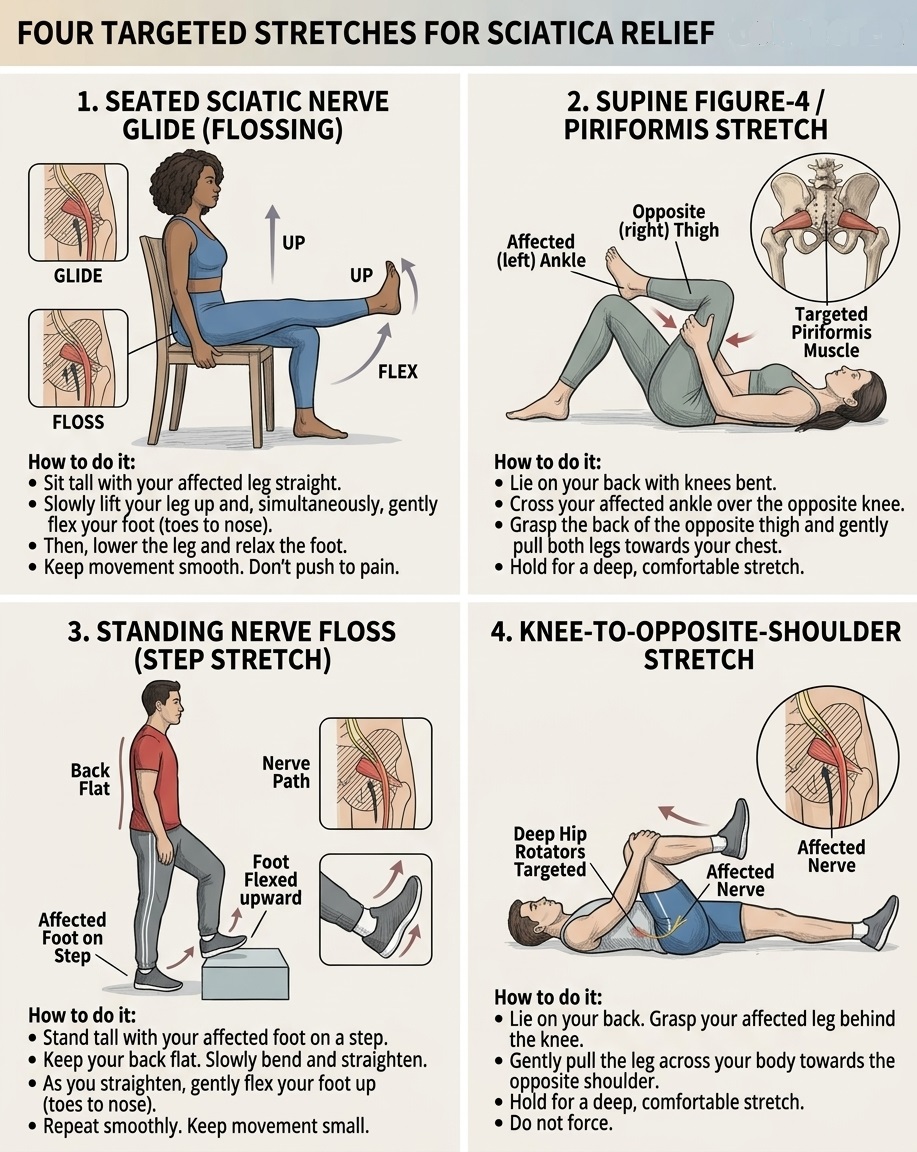
These are the four movements I keep coming back to. They are descriptions of my routine, not a prescription for anyone else. There are different versions of nerve glides, and a qualified healthcare professional or physiotherapist can help someone choose movements that fit their symptoms.
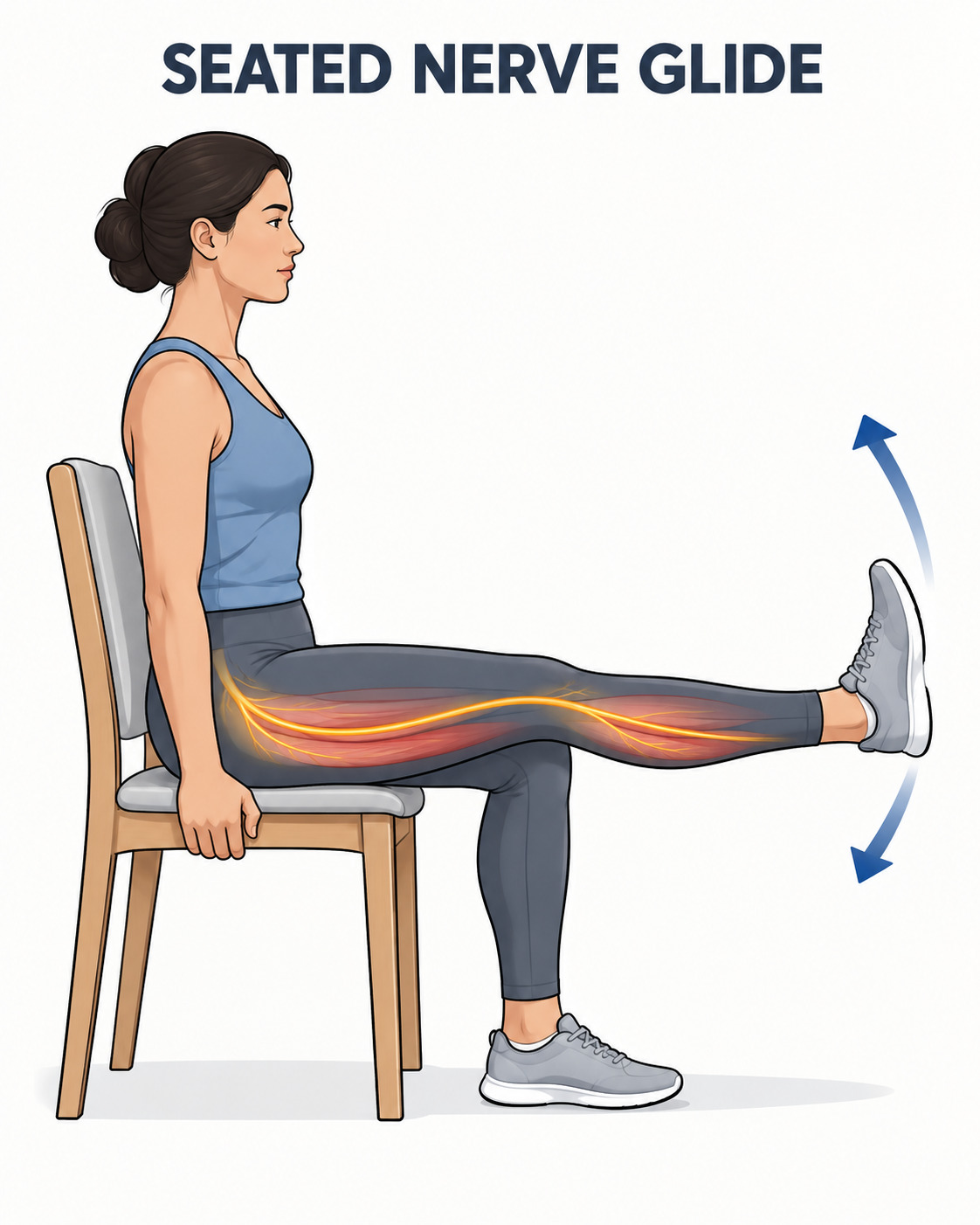
1. Seated Sciatic Nerve Glide
I sit upright near the edge of a firm chair.
I slowly straighten the affected leg in front of me while bringing my toes toward me, only as far as feels comfortable. Then I lower the leg and relax the foot again.
The movement should be smooth and gentle.
I think of this less as a “stretch” and more as allowing the nerve to slide back and forth.
I usually aim for around 10–15 gentle repetitions.
The important word here is gentle. If I am getting a strong electric or shooting sensation, I have pushed too far and I stop.
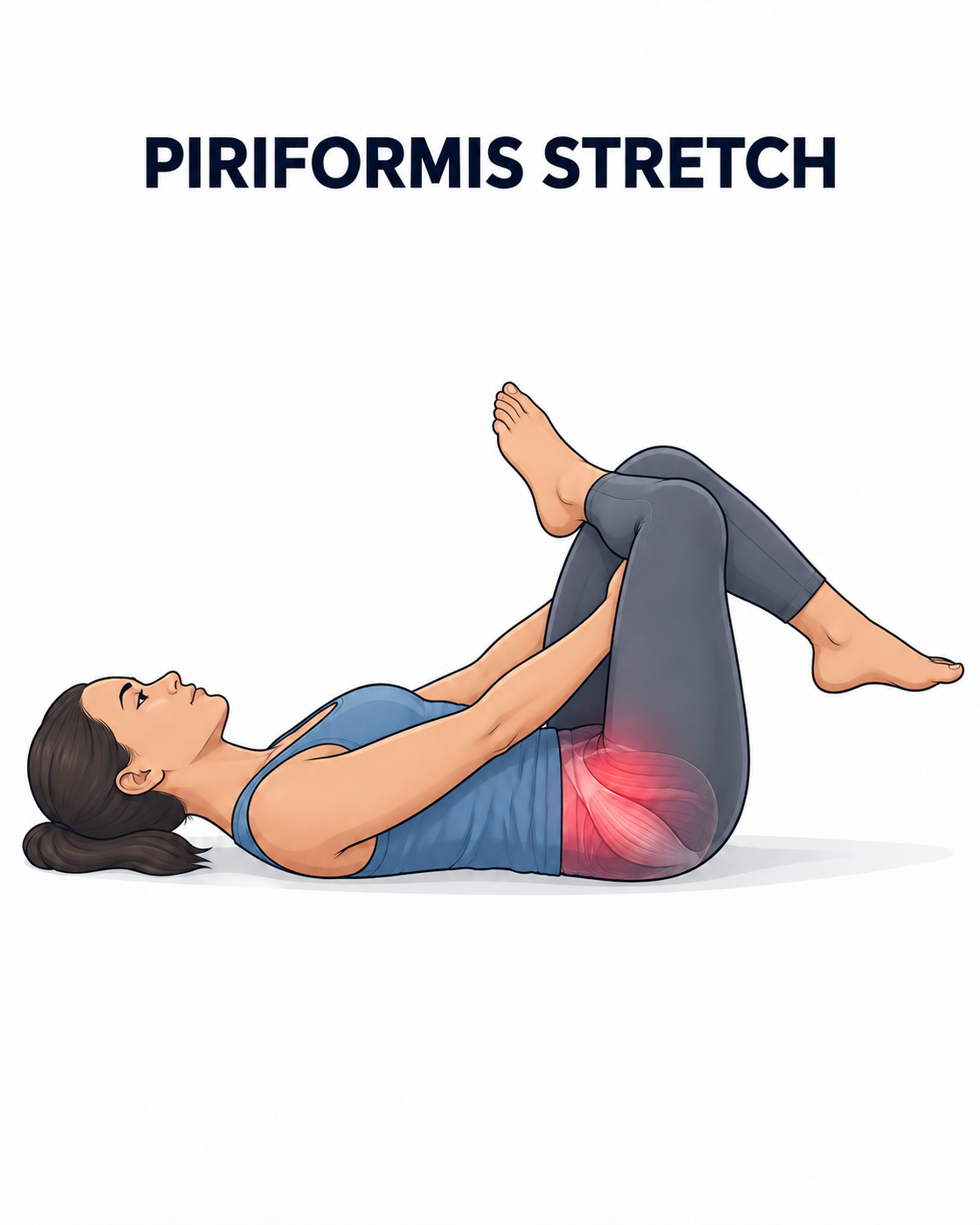
2. Piriformis Stretch
I lie on my back with my knees bent.
I cross the ankle of the affected leg over the opposite knee, creating a figure-four shape. Then I gently bring the uncrossed leg toward my chest.
I feel the stretch around the buttock and deep hip area.
I usually hold this for around 20–30 seconds, then repeat it a couple of times.
This one feels different from nerve flossing because it is more of a traditional muscular stretch, particularly around the deep hip and piriformis area.
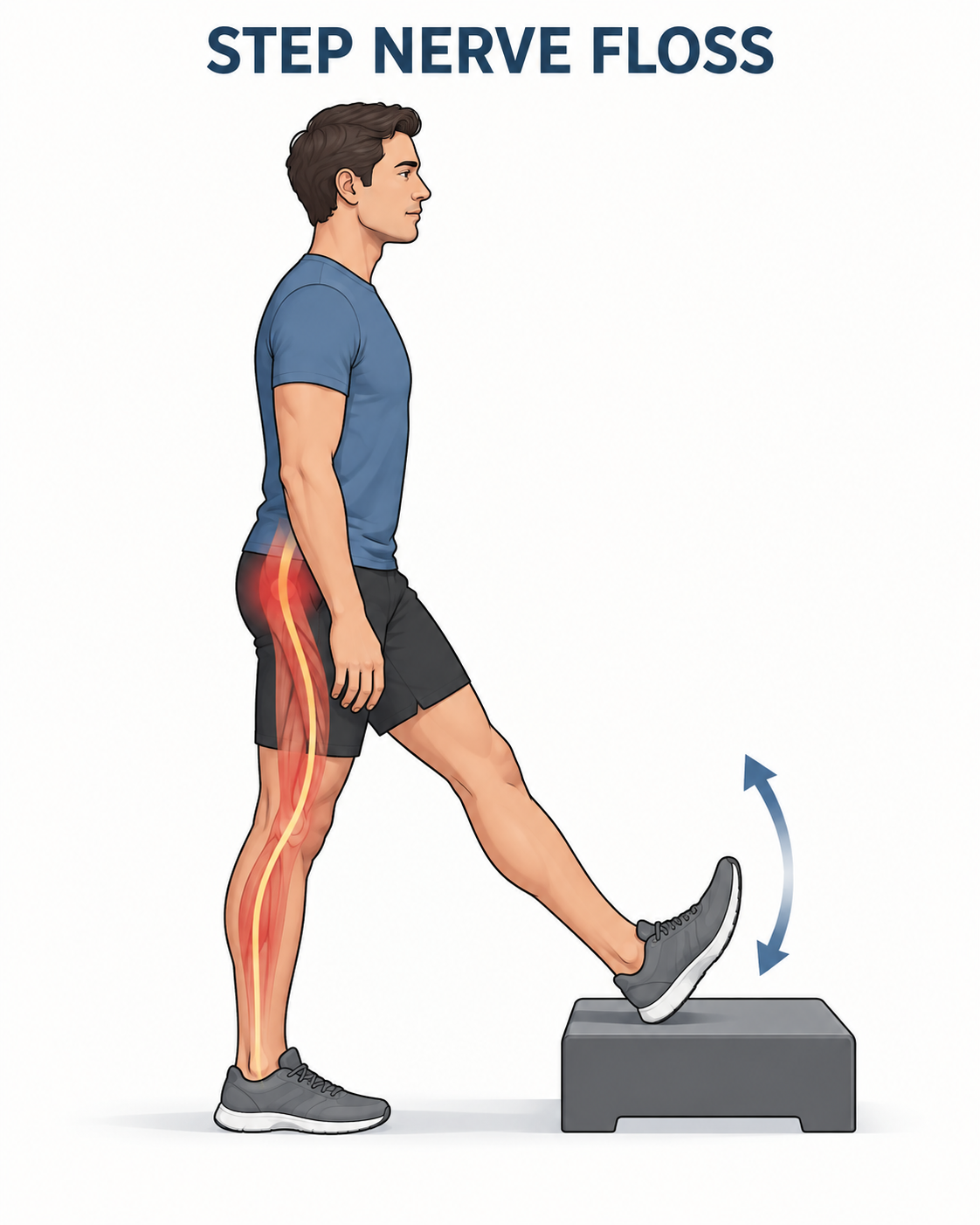
3. Standing Nerve Floss
I place the affected foot on a low step.
I keep my back relatively straight and gently hinge forward from the hips while bringing my toes upward. Then I ease back out of the position.
Again, the goal is not to bend as far as possible. It is a controlled movement along the pathway running through the back of the leg.
Around 10–15 slow repetitions work much better for me than holding an aggressive stretch.
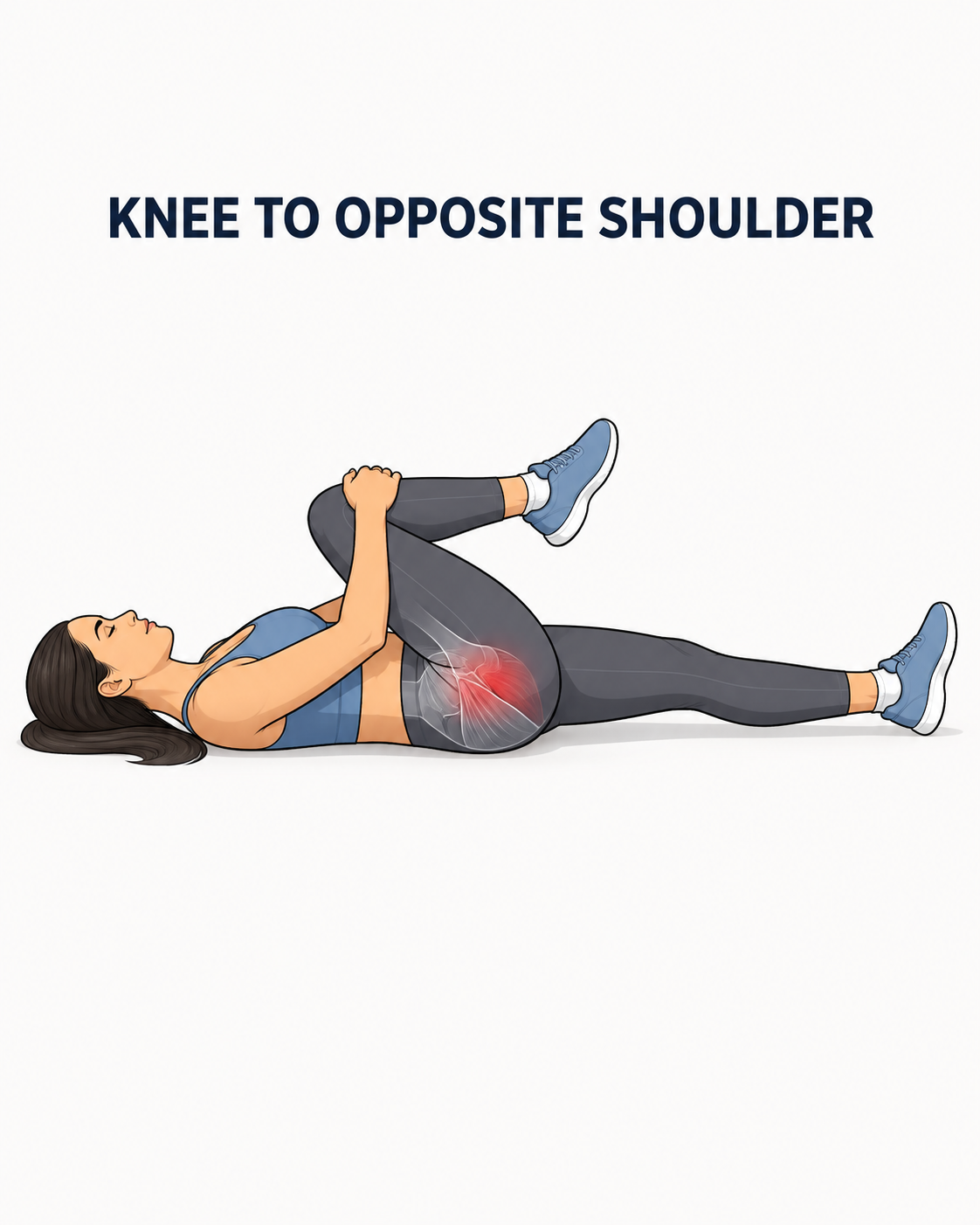
4. Knee Toward the Opposite Shoulder
I lie on my back.
I bend the affected leg and gently bring the knee diagonally toward the opposite shoulder.
I feel the movement deep around the glute and hip rather than forcing the knee as far as it can possibly go.
This is another movement I find useful when the area around the hip feels particularly tight.
The Biggest Lesson: Consistency Beats Intensity
If there is one thing sciatic pain has taught me, it is this:
Doing the right movement gently every day works better for me than attacking the pain with an enormous stretching session once it becomes unbearable.
For me, maintenance matters. A few minutes of targeted nerve glides and stretches each day can make a noticeable difference. I also try not to stay in the same position for too long. If I have been sitting, getting up and walking for a few minutes helps.
The combination of gentle walking and nerve mobility seems to work much better for me than remaining still for hours. And I never try to “push through” a sharp electrical pain during nerve flossing. That is not the goal. The movement should feel controlled.
My Rule Now
I have essentially reduced my approach to three things:
- Move the nerve gently.
- Do it consistently.
- Do not wait until the pain is unbearable.
That is what has helped me manage sciatic pain better than anything else I have tried.
It may not be the answer for every cause of sciatica. Persistent or worsening symptoms—including new weakness—deserve prompt medical assessment.
New loss of bladder or bowel control, difficulty starting or passing urine, numbness around the genitals, anus, or bottom—the “saddle” area—or severe or worsening weakness or numbness in both legs need emergency medical assessment.
But in my own experience, learning the difference between generic stretching and targeted sciatic nerve mobility completely changed how I manage the pain.
This article shares my personal experience, not a diagnosis or treatment plan. Sciatica can have different causes, and exercises are not suitable for everyone. A healthcare professional or physiotherapist can help assess persistent symptoms and choose appropriate movements. NHS sciatica guidance lists the emergency warning signs, and its exercise safety advice says to stop an exercise if it causes pain.
Four movements · consistency over intensity
The movements I keep coming back to
Use the arrows, numbered buttons, keyboard arrow keys, or swipe to move through the four illustrations. These are visual summaries of my personal routine, not individualized medical instructions.
1 / 41. Seated sciatic nerve glide