If Wishes Could Kill Review: A Creepy Little App, Bloody Consequences, and Just Enough Chaos
A cursed app, terrified teenagers, genuinely unsettling death scenes, and a story that knew how to keep moving—even if it did not haunt me afterward.
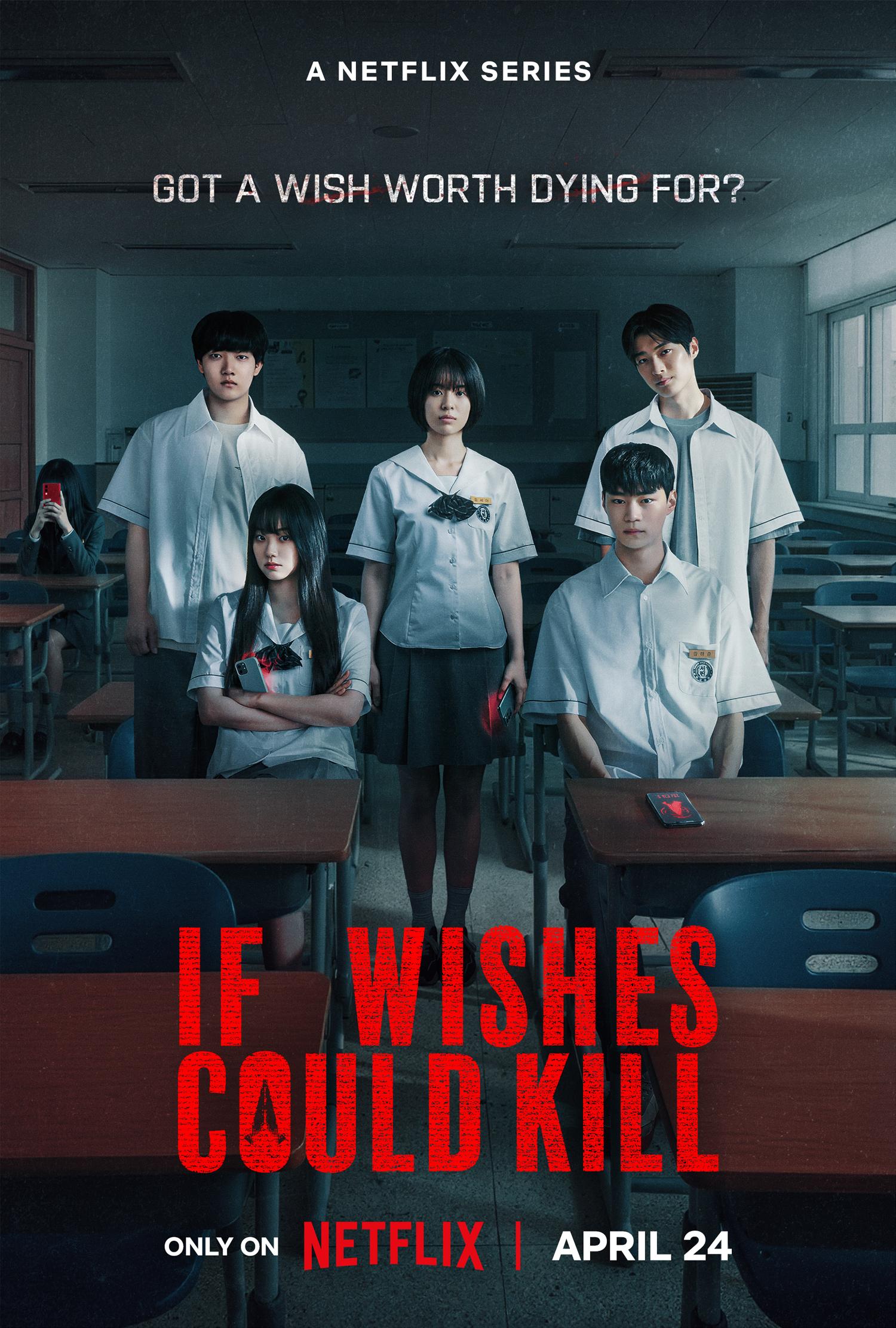
I watched If Wishes Could Kill some time ago, and I remember thinking: okay, this one actually worked.
It is a Korean YA horror series about high school students who get tangled up with a cursed wish-granting app called Girigo. Netflix describes it as its first Korean YA horror series, centred on ordinary school life being shattered when the app starts granting wishes under terrifying conditions.
The basic deal is simple and immediately suspicious: you make a wish through the app, the wish comes true, and then there is a deadly price to pay.
Because apparently even supernatural apps now have terms and conditions nobody reads.
The story follows a group of students at Seorin High School—Yoo Se-ah, Lim Na-ri, Kim Geon-woo, Kang Ha-joon, and Choi Hyeong-wook—as they try to understand what Girigo is, why people are dying, and how the curse began. The show mixes school friendship drama, jealousy, betrayal, shamanism, spirit-world horror, and technology in a way that could have gone very stupid very fast, but mostly does not.
And that is probably the biggest compliment I can give it: the haunted-app thing did not feel ridiculous.
That is not easy. Technology plus supernatural horror is a dangerous combination. Too often it becomes either “phone bad” boomer panic or something that sounds like it was invented during a cannabis session where someone said, “Bro, what if Instagram was possessed?”
But If Wishes Could Kill managed to make the app feel modern and the curse feel old. The horror sits somewhere between phone-screen dread and traditional occult fear, and that combination gives the show its flavour. India Today made a similar point in its review, describing the show’s distinct identity as the intersection of the technological and the spiritual—where the app behaves less like normal software and more like a conduit for something older.
That is exactly the part I liked.
Spoiler warning
From here onward, I am going to talk about plot details, deaths, the curse, and the ending. So if you have not watched it and want to go in clean, stop here, go watch the show, and come back later.
Or don’t. I am not your app-curse supervisor.
What worked for me
The death scenes were the part that actually freaked me out.
Not just because they were bloody, although yes, they were. What got me was the helplessness. Once the curse started moving toward someone, it had this horrible inevitability. The characters could see something awful coming, but they could not stop it properly. They could struggle, shout, run, try to intervene—but the scene kept moving toward blood anyway.
That is the kind of horror that gets under my skin. Not necessarily because it is the deepest thing ever written, but because it makes you feel trapped inside the scene with the characters. You are watching them fight for their lives, but the curse has already put its hand on the steering wheel.
The storytelling also kept me watching. The show did a good job giving just enough answers to keep the mystery moving while still holding back the larger origin of the curse. You know there is something wrong with Girigo. You know the app is not just an app. You know there is a past tragedy, a shamanic connection, and some kind of hidden emotional rot behind it all.
But the show does not throw everything at you in the first episode and say, “Here, memorize this curse syllabus.”
It unfolds.
The shaman thread also worked better than I expected. Ha-joon’s sister, Haetsal, being connected to shamanism could have felt randomly inserted, but it gave the show a useful second layer. The kids are dealing with a modern curse on their phones, but the older generation of spiritual knowledge still matters. Rituals, spirit work, and the curse’s origin all become part of the same mess. So the supernatural side does not feel like decoration. It actually matters to the plot. Netflix’s own series description and episode guide explicitly connect Haetsal, Bangwool, their rituals, and the group’s hunt for the source of Girigo’s curse.
And I liked that the show eventually becomes more complicated than “evil ghost bad.” The group misunderstands what is haunting them. They think one thing is the root problem, but the real source of the curse is somewhere else, tied to old betrayal, humiliation, and a wish that should never have been made. The ending explanation from The Cinemaholic lays out that misdirection: Hye-ryung is not the spirit orchestrating the attacks, and the students have been looking toward the wrong wound.
That twist worked for me. Not because I sat there stroking my chin and saying, “Ah yes, the intergenerational metaphysics of digital resentment.”
No.
It worked because I like when horror lets you think you understand the monster, then goes: actually, you were looking at the wrong wound.
The characters and the messy teen emotions
What I remember most is that all the kids are fighting for their lives, but they are also still teenagers. That matters. They are scared, jealous, in love, guilty, defensive, and stupid in the very human way teenagers can be when everything feels enormous.
There is a couple at the centre of the emotional mess, and two other people are in love with them or tangled around them. One of those people helps cause a major part of the disaster but stays hidden until very late. That worked because it made the curse feel less like random horror and more like the worst possible outcome of jealousy, resentment, and secrets.
The girl in the main couple keeps trying to save the person she loves, and she does it with the help of the guy who loves her. That emotional triangle could have become annoying, but because everyone is being chased by a death curse, there is not much time for soft-focus romantic nonsense.
Thank God. We have bigger problems, people. The app is killing classmates.
I also liked Haetsal and her partner, Bangwool, guiding the spirit-world parts. When Se-ah goes into the spirit dimension to face the evil behind the curse, the show becomes more visually and spiritually ambitious. That could have gone full nonsense, but it mostly stayed watchable and creepy.
The symbolism people talk about
There are definitely symbolic readings people can make here. The internet has made them, naturally, because the internet sees one cursed app and immediately opens a seminar.
Some viewers and critics read Girigo as a metaphor for modern technology amplifying old human ugliness: jealousy, humiliation, revenge, social pressure, and the speed at which harm spreads. Auralcrave frames the curse as a chain reaction of hate, where one act of resentment creates more suffering and then keeps reproducing itself. India Today reads the wish system almost like an offering, with every gain balanced by loss.
And sure. I see why people say that.
But do I personally think the show has some enormous hidden depth that needs to be unlocked with a symbolic crowbar?
Not really. For me, If Wishes Could Kill is a good horror show. That is enough.
I do not need every cursed phone app to represent late capitalism, digital alienation, intergenerational trauma, and the collapse of youth culture under algorithmic despair. Sometimes an app is just cursed. Sometimes teenagers make terrible choices. Sometimes the ghost is angry. Sometimes the phone should simply be thrown into the sea.
That does not mean the show has no themes. Obviously it has themes: jealousy, guilt, betrayal, revenge, consequences, friendship, and the terrible danger of wanting something badly enough that you ignore the cost.
But I did not walk away feeling like the show had deep symbolic layers I would be thinking about for months. I finished it and thought: that was creepy, that was fun, those death scenes were nasty, and the app-shamanism combination worked better than expected.
And then I moved on with my life. That is not an insult. That is actually part of the charm.
What did not stay with me
Here is the thing: I enjoyed the show while I was watching it, but it did not really stay with me afterward.
I remember the feeling more than the details. I remember the kids fighting for their lives. I remember the death scenes freaking me out. I remember the spirit-world section. I remember the hidden person who caused so much of the mess. I remember thinking they had misunderstood the haunting and then realizing the real evil was elsewhere.
But if you asked me to recite every subplot, I would not. My brain kept the vibes and threw out the filing cabinet.
And I think that says something about the show. It is not the kind of horror that burrows into your soul and rearranges your furniture. It is not one of those stories where, two weeks later, you are still staring at the ceiling thinking about the meaning of suffering.
It is more like: you watch it, it keeps you tense, it gives you some strong creepy scenes, and then it politely leaves.
Honestly? Fine by me.
Not everything has to haunt me forever. I have enough tabs open in my brain.
Final thoughts
I think If Wishes Could Kill is one of the better recent horror shows I have watched, especially because it understood how to make technology and supernatural horror work together without becoming laughable. The app curse was creepy. The shamanism thread added texture. The death scenes were genuinely unsettling. The helplessness of the characters made the horror feel immediate. And the mystery had enough movement to keep me watching.
Was it a masterpiece? No. Was it secretly profound? Not to me. Was it effective horror? Yes.
And sometimes that is exactly what I want. Not homework. Not symbolism wearing a trench coat. Just a cursed app, terrified teenagers, a few bloody scenes that make me regret watching at night, and a story that knows how to keep moving.
So yes, I liked If Wishes Could Kill.
It did not change my life. It did not follow me around emotionally. But while it had me, it had me.
And for horror, that counts.