Listen up, kiddo
That white buildup around your vulvar folds? Auntie has a name for it: smegma.
Smegma is not an STI, a disease, or proof that you are dirty. It is a soft buildup of natural skin oils, shed skin cells and moisture that can collect in warm, enclosed folds.
No shame. No scented “feminine” nonsense. And no scrubbing your skin like it owes you money.
I’m not a doctor. I’m an older woman sharing lived experience and sourced, plain-language education. I can help you understand the words and know when to ask for professional care, but I cannot diagnose or treat you.

First, what exactly is it?
Think of smegma as ordinary body material that has gathered in a sheltered crease. It can look white or pale, feel soft or cheesy, and develop an odour if it builds up.
Skin oils
Natural sebum from nearby skin.
Shed skin cells
Cells your skin normally lets go of.
Moisture
Sweat and other normal moisture in the fold.
Where can it collect?
Vulvas first, because nobody should leave you guessing about the anatomy you can actually see and wash. Foreskin is covered too.
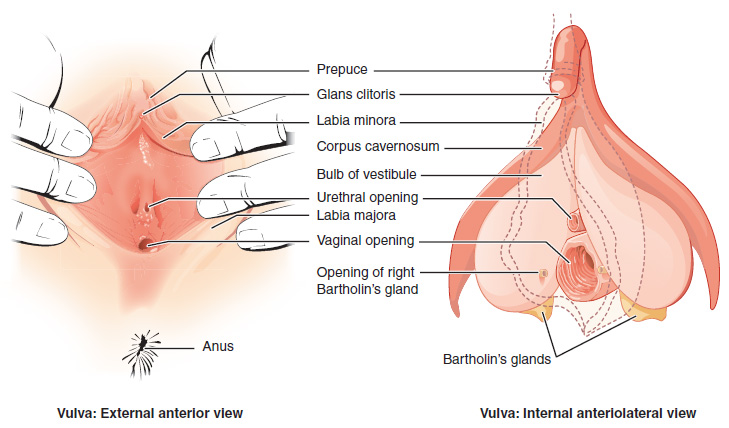
External vulvar folds
Smegma may collect around the labial folds or beneath a clitoral hood that moves comfortably. Clean the outside only—the vagina cleans itself.
OpenStax College, “The Vulva,” Figure 28.2.2. Licensed under CC BY 3.0. Image shown without anatomical alteration. Source record.
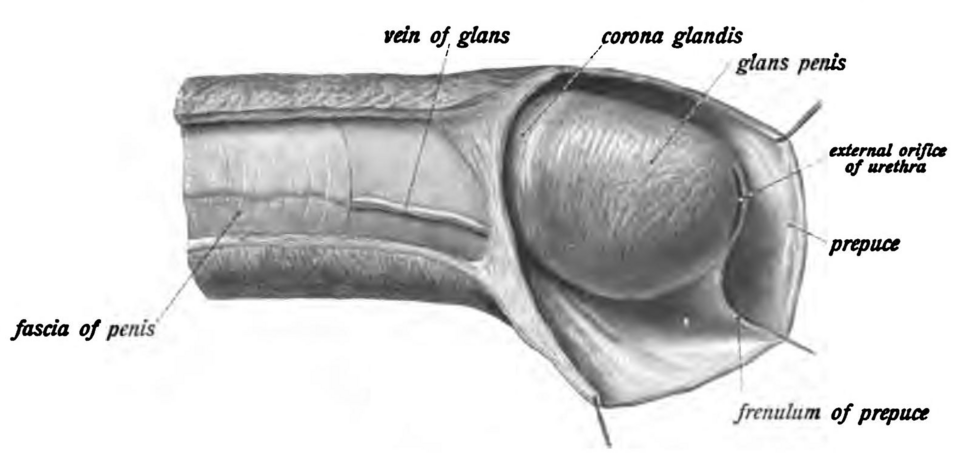
Under a retractable foreskin
Once a foreskin retracts easily, buildup can collect between it and the glans. Never force retraction—especially in a child.
Johannes Sobotta, Figure 493 (1906). Public domain. Source and anatomy review record.Auntie’s gentle wash rules
The goal is to remove buildup without irritating delicate skin or disturbing the vagina.
Open only what moves easily
With clean hands, gently separate the outer folds. Move the clitoral hood or foreskin only as far as it goes without pain or resistance.
Rinse, don’t attack
Use warm water. A small amount of mild, fragrance-free cleanser may be used on external skin if it does not irritate you. No cleanser inside the vagina.
Pat dry and reset
Pat gently with a clean towel. If you retracted a foreskin, return it to its normal forward position.
When washing is not the answer
Simple buildup should come away gently. Symptoms that persist can mean irritation, infection or another skin condition—and guessing with random creams can make things worse.
- Redness, swelling, itching or pain that persists
- Bleeding, cracks, blisters, ulcers or other sores
- Pain or burning when you pee
- Unusual vaginal discharge or a strong odour that continues after gentle washing
- A foreskin that is painful, suddenly difficult to move or keeps becoming inflamed
- Any symptom that worries you or keeps returning
Sources Auntie checked
Publication record
- Experience-led guide by Auntie Gyn-y / Learn My Body
- Published and last updated: 10 August 2026
- Health information checked against the cited sources
- Not written or reviewed by a doctor
- Anatomy illustrations used under CC BY 3.0 and Public Domain terms
Lived experience and education—not medical advice. Auntie Gyn-y is not a doctor. This page shares sourced general information and cannot tell you what is causing your symptoms or replace individual care from a qualified professional. Bodies vary, and anatomy illustrations are teaching guides—not beauty standards.