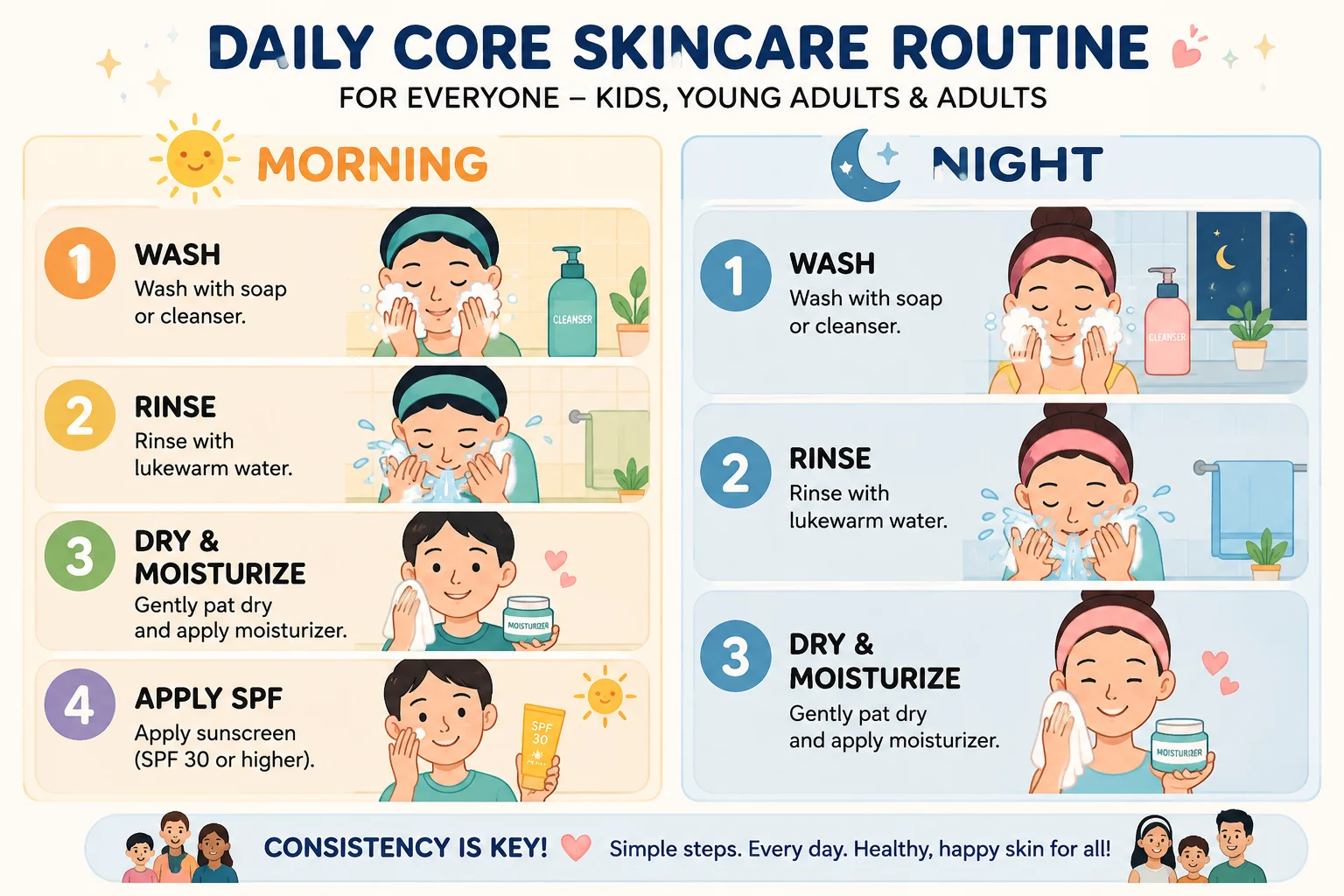
Printable visual guide
Skin care: visual steps
A simple printable morning-and-night skincare routine designed to build independence, reduce resistance, and make the daily steps easier to remember.
View and downloadPut the steps where the routine happens
Everyday routines broken into visible steps. Download a full-size image, print it, and adapt the way you use it to suit your child and family.
The complete collection
Printable visual guide
A simple printable morning-and-night skincare routine designed to build independence, reduce resistance, and make the daily steps easier to remember.
View and download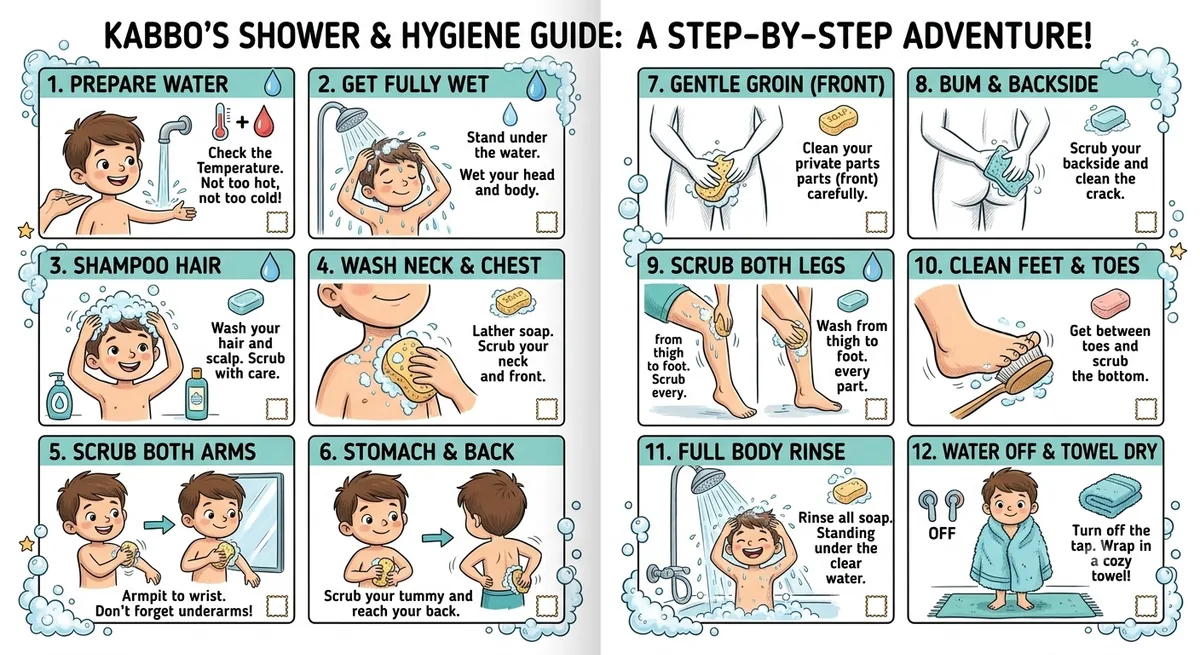
Printable visual guide
A printable twelve-step shower and hygiene guide that makes the whole routine visible, from preparing the water to rinsing and drying.
View and download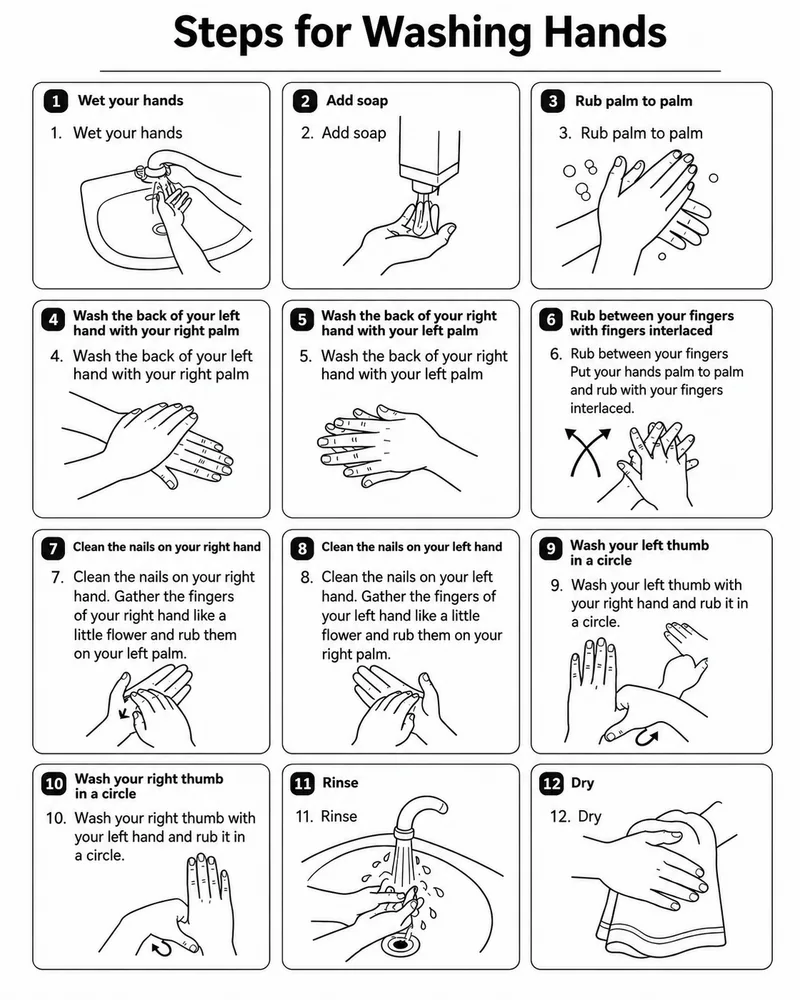
Printable visual guide
Printable hand-washing steps and visual routine for children, created to free up a child’s precious human RAM for more important things.
View and download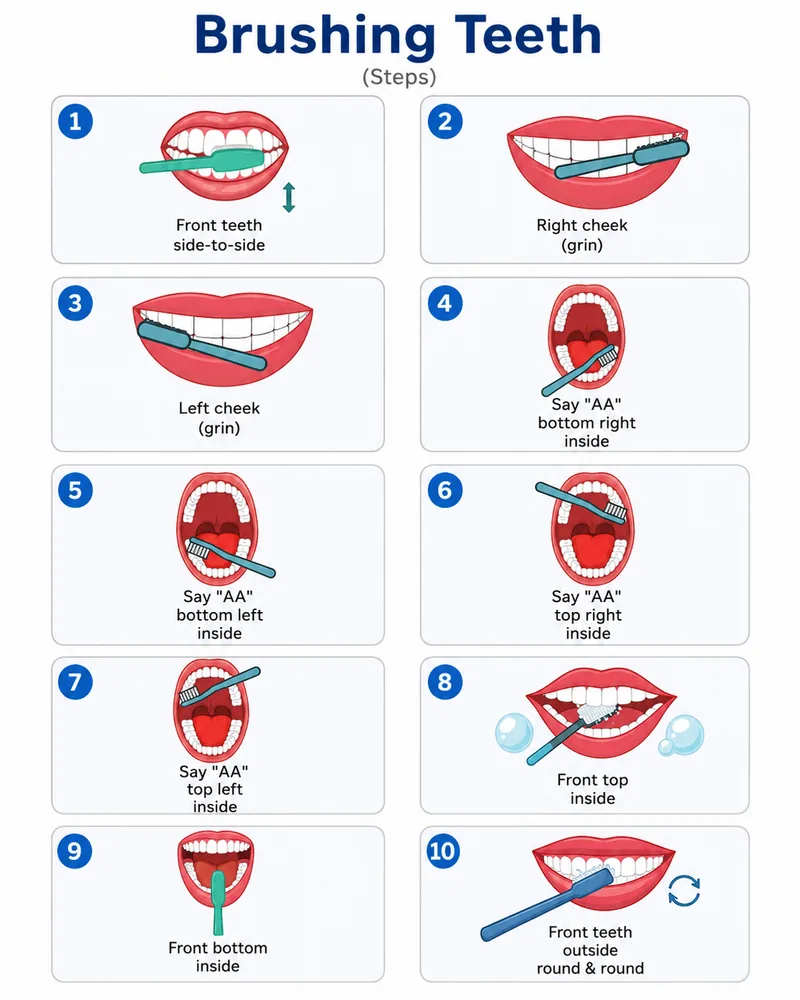
Printable visual guide
Printable brushing-steps visual routine for children, created to move the tooth-brushing sequence out of a child’s head and onto the wall.
View and downloadA routine you can see
Printed visuals turn spoken or written instructions into something visible, stable, and easy to revisit. A clear chart can show the order of a routine at a glance, stay available without notifications or scrolling, and reduce how much information someone has to remember while completing the task.
Pictures, short labels, and numbered steps show what happens now and what comes next.
The instruction stays in view, so the whole routine does not have to be held in working memory.
A familiar visual can become a prompt someone checks for themselves instead of waiting for another reminder.
Young children, language learners, students, autistic and other neurodivergent people, adults who find memory, attention, or task initiation difficult—and anyone who prefers a simple, repeatable routine. Visuals are tools, not a one-size-fits-all solution; the useful amount of detail differs from person to person.
Many useful visuals already exist, but some include too many steps, use unfamiliar language, or are simply too complicated for us to maintain every day. I make versions that match what we actually do at home. The goal is not the most comprehensive guide—it is a clear enough prompt to help us begin, continue, and finish a routine without using quite so much brainpower or turning every step into another verbal battle.